ISLAMABAD/LAHORE: Pakistan recorded a significant drop in water flows in the Chenab River at Marala Headworks over the weekend, intensifying concerns over upstream regulation by India and its implications for bilateral relations.
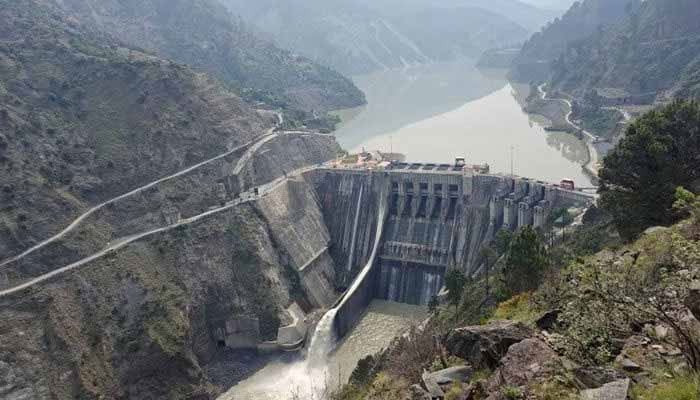
According to initial official accounts, Chenab flows on Saturday — May 2, 2026 went down to 9,037 cusecs from around 20,930 cusecs, indicating a sharp reduction of about 11,893 cusecs, reportedly as India halted water to fill the Baglihar Dam. Authorities said the river experienced fluctuations throughout Saturday.
The development comes at a critical time for Punjab, Pakistan’s main agricultural hub, where the Kharif sowing season is underway. Farmers are currently preparing fields for cotton, raising rice nurseries and irrigating orchards and other vegetation. Officials warn that such sudden dips in river flows could disrupt sowing activities and impact crop output.
When contacted, Pakistan’s Indus Waters Commissioner Syed Mehr Ali Shah said: “Yes, there is a dip. In the absence of any rainfall in the catchment, this event is due to regulation of upstream works in Indian Illegally Occupied Jammu and Kashmir. The magnitude of reduction is such that it cannot justify the requirements of para 15 of Annexure D to the treaty. Hence it is in violation of the treaty.”
He added: “I have asked my Indian counterpart to provide the details and explain the reasons for such significant fluctuations in flows of Chenab River observed at Marala.”
Data indicates high volatility; inflows rose 31.5 per cent from April 28 to May 1 before plunging 40.3 per cent over the last 48 hours. Official data shows that from around 12 noon on Saturday, flows began declining from about 20,930 cusecs to 19,553 cusecs by 3pm, before dropping further to 12,370 cusecs at 6pm and 10,174 cusecs at 7pm. The flows fell to around 9,037 cusecs by 3am on Sunday and remained at that level until 6am. On May 3, the Chenab contributed only 11.4 per cent to total system inflows, compared to 33.2 per cent from the Indus.
Thereafter, the river showed partial recovery, rising to 16,675 cusecs at 7am of on Sunday, dipping slightly to 14,605 cusecs at 9am, and then increasing again to 16,675 cusecs before reaching about 20,980 cusecs by 1pm, a level maintained at 2pm.
Sources said India initially released water stored at the Baglihar Hydropower Plant before shutting the gates to impound water, a direct treaty violation. A Punjab Irrigation Department confirmed reduction in Chenab flows and warned that a continued downward trend could adversely impact farmgate irrigation requirements, as Pakistan lacks storage infrastructure on the Chenab.
Historically, Chenab flows at Marala during May 2-3 range between 30,000 and 35,000 cusecs. This year, the average dropped to about 14,214 cusecs, reflecting a significant deviation from normal seasonal levels.
The latest episode comes amid ongoing tensions over the Indus Waters Treaty. In April 2024, India announced it was placing the agreement in abeyance, a move rejected by Pakistan, while a Court of Arbitration later clarified that the treaty remains legally binding and cannot be unilaterally suspended.
Officials also pointed to similar fluctuations during the last winter season, when India first released a large volume of water into the Chenab at Head Marala and then reduced flows drastically to as low as 870-1,000 cusecs for four consecutive days. Pakistan has described such patterns as a “water war,” while India maintains that variations are consistent with normal hydropower operations.
Former Indus Waters Commissioner Jamaat Ali Shah stressed that IWT provisions are the only way to verify these low flows, noting that historical data typically shows higher levels during this season. He suggested the reduction could either be due to low releases from Baglihar or Salal, maintenance of Indian projects or increased withdrawals in the Ranbir Canal near Jammu.
Shah urged an examination of the previous flow records to determine if this indicates upstream diversion or repair work, noting that “these things can be verified on the spot only”.
Sheraz Jamil Memon, a former senior official of commission, termed the treaty’s suspension unfortunate and called for site inspections to determine if the cause is operational or otherwise.
The dip in river flows raises concerns for Kharif irrigation in central and South Punjab, where the Chenab feeds key canals through Trimmu and Panjnad.
Seasoned politician Mohsin Leghari urged the government to take the issue of low Chenab flows seriously. He said Pakistan must raise the matter of Indus Waters Treaty violations at appropriate international forums. With water demand rising, any dip in river flows would be directly felt by growers and could hurt crop productivity, he warned. Against this backdrop, he stressed the need for a proactive role by Pakistan’s Indus Waters Commission.
It is interesting to note that ongoing reduction in Chenab River supplies follows a similar incident on May 5 last year, when inflows plummeted from 35,000 to 3,100 cusecs as India filled the Pakal Dul, Baglihar and Salal reservoirs at the expense of downstream agricultural needs. Later, India was also accused of almost stopping water flows into Pakistan from the Chenab River in December 2025. It was reported that a sharp, unexplained decline in river flows at Marala noticed from December 10-16, 2025.