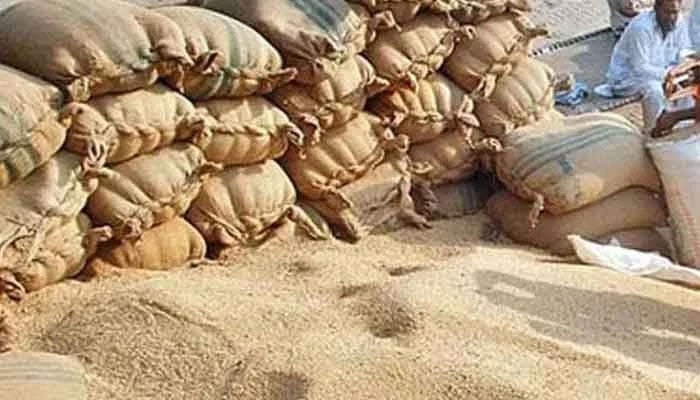
LAHORE: In a desperate move after failure in buying wheat from growers, food officials have allegedly threatened middlemen, millers and farmers with jail through verbal orders over what it calls grain price hike and storage, choking open market.
The Punjab Food Department on Monday imposed a cap on wheat prices through oral announcements and WhatsApp messages. The move comes following sharp drop in arrivals in South Punjab markets in recent days with rising wheat prices. The good (chakki) quality wheat was sold for as high as Rs4,100 per 40 kilograms in the open market in Sadiqabad, Rahim Yar Khan against the Rs3,500 per 40kg official purchase price.
The average rate for mill quality wheat was reported at Rs3,700 to 3,800 per 40 kilograms at many places. Farmers say they prefer to hold back their wheat in the hope of better prices to cover their cost of production. Consequently, most of purchase center set up by aggregators on behalf of Punjab government presents a deserted look.
In a knee-jerk reaction, food officials have warned that any sale above Rs3,500 per 40 kilograms is a “crime” that can lead to a fine or imprisonment. This action has contributed in effectively shutting down or depressing supply in the open market at different stations. In one such recorded message, Food official referred to “orders of the Director General Food” and said that legal action would be taken against any farmer or trader who buys or sells wheat above official price. He said, those who have wheat should purchase and sell it as per the government’s price. If this is violated, he warned, strict action will be taken.”
He also said that permits for private movement of wheat are no longer being issued. All stocks must now be unloaded at the local government godown, where public sector company, is buying wheat with payment promised within 72 hours. The crackdown against ‘violators’ increased in the last 24 hours, as a similar directive sent to flour millers said: “All flour mill owners beware. No mill should buy wheat above the government’s notified rate. If any mill buys wheat above the notified rate, strict action will be taken against it under SOP.” It means if farmer gets more than 3500, it’s a crime, said an insider.
The directive pointed out a contradiction in policy. It said on one hand CM wants the farmer to get the best rate possible for farmers and on the other hand department assess he doesn’t deserve more than Rs3500. If free market economy and demand supply mechanism gets him a good rate why not, insiders posed a question. This shows clear signs of high-handedness by officials. Regrettably, they observed, the price of Rs3,500 per 40 kilograms is being enforced through verbal orders and WhatsApp messages, not through formal government notifications.
The open market has been suspended because no permits are being issued for private movement of wheat, and all wheat is being sent to state godowns allotted to chosen private companies. The department has virtually criminalised trade by declaring that farmers who receive more than official indicative price and mills that pay more are liable for action under SOP, including fines or jail. No law has been cited, and the enforcement is based only on “DG orders”. This action comes at a time when Punjab’s wheat procurement for the 2026–27 season has started without financing from commercial banks for the first time in history.
Traders say the Food Department is taking wheat at will through coercive administrative pressure. Several farmers and millers, who did not want to be named, described the situation as “virtual invasion of the trade and mandis.”
They said the measures are forcing farmers to sell their wheat to government channels at lower rates. Meanwhile, food officials allegedly activated teams for seizing wheat from rice warehouses in Gujranwala Division under the verbal recorded order of senior Food officials. All information and recorded messages were shared with senior food officials for comments. However, the official didn’t deny or accept serious allegations against the provincial government.