ISLAMABAD: The Economic Coordination Committee (ECC) of the Cabinet on Monday noted emerging price stability in key commodities even as the State Bank of Pakistan (SBP) maintained a tight monetary stance, keeping the policy rate at 11.5 per cent.
The ECC approved Rs6 billion for settlement of liabilities of Pakistan International Airlines (PIA) and cleared a proposal to allow the export of donkey meat and hides to China.
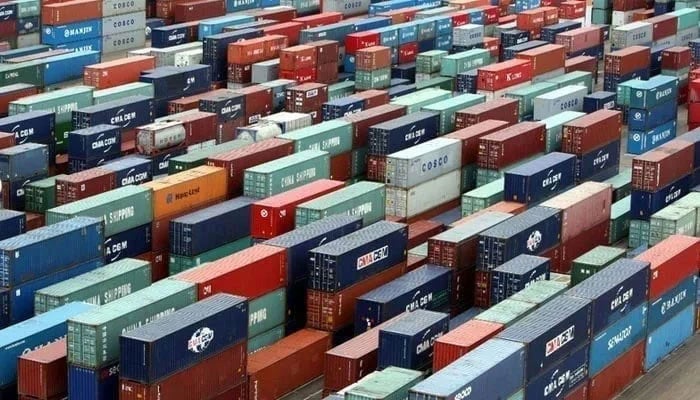
The committee also approved amendments to the Import Policy Order (IPO), 2022, as proposed by the Commerce Division, to align with Pakistan’s obligations under International Labour Organisation conventions, including the introduction of a prohibitory clause on the import of goods produced through forced labour.
The ECC meeting, chaired by Finance Minister Muhammad Aurangzeb at the Finance Division, was briefed by the Chief Economist of the Ministry of Planning, Development and Special Initiatives on recent trends in key economic indicators, with particular focus on inflation dynamics and prices of essential commodities.
The committee was informed that, following a period of volatility, recent data indicates gradual stabilisation in prices supported by coordinated efforts at the federal, provincial, and district levels. Institutional mechanisms, particularly through the National Price Monitoring Committee, have strengthened market oversight and enabled timely interventions.
The presentation noted that inflationary pressures, while present, are showing signs of moderation, with emerging trends pointing toward improved price stability. Weekly monitoring data reflects that, after a temporary uptick, the pace of increase in prices of essential items has slowed, with recent weeks showing a declining trend in the Sensitive Price Index (SPI). Several essential commodities, including tomatoes, onions, wheat flour, garlic, LPG, etc., have witnessed price reductions, while sugar has also shown a downward trend. At the same time, prices of items such as eggs, chicken, pulses, cooking oil, bread, and milk have recorded only marginal increases, indicating a broader easing in price pressures.
The ECC was further apprised that prices of key food and household items are gradually converging toward more stable levels, with some commodities returning close to pre-volatility benchmarks. This trend has been attributed to effective administrative measures, improved supply chain monitoring, and enhanced coordination between federal and provincial authorities. Regular data sharing and targeted interventions at the district level have strengthened the government’s ability to respond swiftly to localised disruptions and prevent undue price escalation.
Overall, the committee noted with satisfaction that the combination of timely policy responses, strengthened monitoring mechanisms, and coordinated implementation has begun to yield positive outcomes, with clear indications of stabilisation in the prices of essential items and improved market sentiment. The ECC stressed the importance of sustaining these efforts to consolidate gains and ensure continued price stability in the coming months, in line with the government’s commitment to protecting consumers and maintaining macroeconomic balance. The sources reminded that the SBP’s Monetary Policy Committee hiked the policy rate by 1 per cent and raised from 10.5 per cent to 11.5 per cent.
Later, the ECC took up regular agenda items and approved a number of proposals, including Technical Supplementary Grants (TSGs) across ministries and divisions. These included Rs100 million in favour of the Cannabis Control & Regulatory Authority (CCRA) under the Cabinet Division for renovation and operationalisation of its facilities; Rs311 million in favour of the Government of Balochistan under the Finance Division to support the Prime Minister approved incentive package for PAS/PSP officers posted in the province; Rs372 million in favour of the National Accountability Bureau (NAB) under the Ministry of Law and Justice to support digital transformation and implementation of AI-based systems; and Rs30 million in favour of the Ministry of Inter Provincial Coordination for grant of financial rewards to the Pakistan National Hockey Team for qualifying for the FIH Hockey World Cup after eight years, as approved by the Prime Minister.
The ECC also discussed a summary submitted by the Ministry of Defence regarding allocation of Rs5.985 billion in favour of PIA Holding Company Limited (PIAHCL) for settlement of liabilities of Pakistan International Airlines Corporation Limited (PIACL). Out of the total amount, the Committee approved funding for reimbursement of medical and pension payments as well as for salary disbursements and asked for taking up the matter regarding payment to the National Insurance Company Limited (NICL) with the relevant revenue authority for adjustment, in line with the recommendations of auditors.
In another summary submitted by the Commerce Division, the ECC approved amendments to the Import-Cum-Export Scheme of IPO, 2022 and Export Facilitation Scheme (EFS), 2021 to allow temporary import of used vehicles and auto parts for repair, refurbishment, and subsequent re-export under a pilot project, with directions for review after one year.
The ECC also considered a summary submitted by the National Food Security & Research Division seeking approval of recommendations regarding export of donkey meat and hides from Gwadar Donkey Slaughter House, and approved a proposal for disposal of existing inventory as per the applicable regulations and export protocols.
The ECC further considered a summary submitted by the Power Division regarding the Public Service Obligation (PSO) Agreement with Ex-WAPDA Distribution Companies (XWDISCOs) and asked for referring the matter to the Cabinet Committee on State-Owned Enterprises (CCoSOEs), for it being the suitable forum.