Pakistan faces many challenges but the convergence of two forces poses an existential threat like none other. The critical intersection between rapid population growth and accelerating climate change are converging to reshape the country's economic, social, and environmental landscape. With a population exceeding 240 million and growing by roughly 5 million annually, the country is experiencing a widening gap between demand for basic resources and their sustainable supply. This imbalance is eroding quality of life, deepening inequality, and undermining long-term development.
At the heart of this challenge lies a simple but stark reality: unsustainable growth in numbers outpacing capacity. Pakistan's water availability per capita has declined from over 5,000 cubic meters in the 1950s to below 1,000 cubic meters today, placing it in the category of water-stressed countries. Food systems are under pressure from erratic rainfall, glacial melt, and rising temperatures, while energy shortages persist despite significant investments. Climate change is intensifying these pressures through floods, droughts, and heatwaves, further constraining already limited resources.
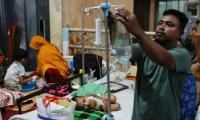
The implications for households are severe. As basic commodities become scarcer and more expensive, affordability declines. Families are forced to make difficult trade-offs between essential needs such as food, healthcare, and education. Pakistan already has over 25 million children out of school, and among those enrolled, learning outcomes remain alarmingly poor. Meanwhile, nearly 40% of children suffer from stunting, a clear indicator of chronic malnutrition. Healthcare systems, already under-resourced, struggle to meet rising demand, leaving large segments of the population vulnerable to preventable diseases.
Climate shocks compound this vulnerability and reverse development gains with just one disaster. For low-income households, disasters are not temporary setbacks but long-term disruptions that push them deeper into poverty. As these events become more frequent and intense, the ability of families to recover diminishes. In such a context, a rapidly growing population magnifies exposure and reduces resilience.
Yet, policy responses have often failed to address the structural roots of the problem. One of the most contentious examples is the National Finance Commission (NFC) Award, which allocates federal resources to provinces largely on the basis of population size. While intended to ensure equitable distribution, this mechanism inadvertently creates a perverse incentive: higher population growth translates into greater fiscal transfers. In doing so, it undermines efforts to promote population stabilisation and shifts the focus away from human development indicators such as education, health, and productivity.
The issue is not merely about numbers. It is about the quality of human capital. Pakistan's current trajectory reflects a troubling imbalance: high population growth accompanied by low investment in human development. Without addressing this imbalance, economic growth will remain constrained, and inequality will deepen.
The role of women is central to any meaningful solution. Evidence from across the world consistently shows that when women are educated, economically empowered, and have access to reproductive health services, fertility rates decline and birth spacing improves. Birth spacing (Waqfa) is vital for both maternal health and infant mortality. The risks are significantly higher if the new baby is born too early and weighs too little. However, in Pakistan, deeply entrenched gender norms continue to limit women's agency. Female labour force participation remains low, access to education is uneven, and decision-making power within households is often restricted.
This is why the population policy has not succeeded. Encouraging smaller families without addressing gender inequality is little more than a rhetorical exercise. Investments in girls' education, access to healthcare, and economic opportunities are essential. Women must be recognised not merely as beneficiaries of policy but as equal partners in shaping the country's future.
Had the population stabilised at 150 million, we would have had significantly lower pressure on resources. Per capita water availability would be higher, food systems more manageable, and energy demand less strained. Public services such as education and healthcare could be better funded and economic growth, instead of being diluted across a rapidly expanding population, would have translated into tangible improvements in living standards. In such a scenario, the state's capacity to respond to climate shocks would also be stronger, reducing vulnerability and enhancing resilience.
Instead, the current trajectory is putting us on a collision course with nature. Each year, the addition of 5 million people effectively offsets progress and limits the country's ability to move forward.
Looking ahead, the intersection of population growth and climate change is likely to intensify social tensions. As resources become scarcer, competition will increase, potentially leading to conflict between communities, regions, and interest groups. The struggle over water, land, and energy will not merely destabilize society but degrade life quality of the next generation.
The path forward requires a fundamental shift in both policy and societal attitudes. Population management must be reframed as a development priority, closely linked to climate resilience and economic sustainability. Fiscal policies such as the NFC Award need to be revisited to align incentives with long-term national goals. Most importantly, gender equality must be placed at the centre of the development agenda.
The issue is not complex in its diagnosis, but it is challenging in its execution. Empowering individuals-particularly women-with knowledge, resources, and freedom to make informed choices is essential. Without this, calls for reducing population growth will remain aspirational rather than actionable.
Eventually Pakistan's future will be determined not just by how many people it has, but by how well it invests in them. At present, the country is high on numbers but low on quality. Reversing this trend is imperative for survival in an era defined by climate uncertainty and resource scarcity.
The writer is a climate policy analyst. She can be accessed at: [email protected]