ISLAMABAD: Global exchange markets plunged into a state of high-velocity “whiplash” on Monday as a fragile window of diplomatic optimism shattered.
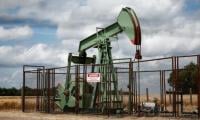
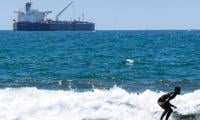
A sudden reversal in the Middle East sent stocks on a volatile trajectory, with major indices in London and Paris retreating, while Asian markets displayed a stark divergence between a surging China and a cautious India. This “tug-of-war” between record-high valuations and a fresh energy shock comes as Iran reimposed a total blockade on the Strait of Hormuz, sending oil prices into a violent upward spiral. Brent Crude surged by more than 5.4% to trade above $95 per barrel, while West Texas Intermediate (WTI) jumped nearly 6%, effectively erasing the dramatic “truce-driven” price collapse witnessed just last Friday.
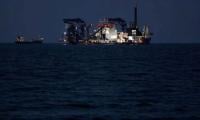
The latest escalation follows a high-stakes maritime confrontation on Sunday. Despite Tehran’s Friday declaration that the waterway was “completely open”, the United States maintained its strict naval blockade of Iranian ports. The situation turned kinetic when the USS Spruance intercepted the Iranian-flagged container vessel Touska. According to reports, U.S. Marines seized the ship after it allegedly bypassed enforcement measures and refused to comply with boarding orders. In a swift retaliatory strike, the Iranian Revolutionary Guard Corps (IRGC) declared the Strait closed once more, citing U.S. “piracy” and the continuation of the “illegal naval blockade”.
The “whiplash” effect has left investors scrambling. In the United States, the S&P 500 attempted to maintain its 7,000-point threshold, though high-tech firms faced a sharp reality check. Microsoft shares are now trading 22% below their record high, as the “AI premium” is weighed down by soaring energy costs and fears of a sustained inflationary spike.
In Dubai, the impact was felt immediately at the pump. Retail fuel prices were hiked by approximately 30% today, with Super 98 climbing to AED 3.39 per litre. However, the city’s real estate and financial sectors showed remarkable resilience, with Nasdaq Dubai reporting record debt listings as investors sought “safe haven” assets in the Middle East’s commercial hub.
The “Mega Tech” giants—the traditional engines of global growth—found themselves at the epicentre of a market “tug-of-war”, exposing a stark divergence in how the digital economy handles a geopolitical crisis. While the broader market grapples with the energy shock, these industry titans are “braving” a painful but necessary transition: moving away from the speculative hype of the early 2020s towards a mandate for earnings-proven growth.
In a day defined by high-velocity volatility, Apple (+2.59%) and Alphabet (+1.99%) emerged as the market’s unlikely “safe havens”. Investors, fleeing the uncertainty of energy-sensitive sectors, flocked to these cash-rich giants. With balance sheets that resemble sovereign treasuries, Apple and Alphabet are being treated as defensive fortresses capable of weathering both inflationary spikes and supply-chain disruptions.
Meanwhile, Tesla (+3.01%) found renewed momentum. As oil prices surged towards $96 per barrel, the narrative shifted back to the long-term necessity of energy independence, reigniting investor interest in electric alternatives as a hedge against fossil fuel volatility. Conversely, Microsoft has become the primary focus of what analysts are calling the “AI Reality Check”. Currently trading roughly 23% down year-to-date and significantly below its 2025 peak, the software pioneer is caught at a dangerous crossroads.
Investors are now grappling with two critical questions: Can the massive capital expenditure on AI infrastructure deliver immediate, bottom-line returns? How will the soaring cost of energy—exacerbated by today’s blockade—impact the operation of the massive, power-hungry data centres required to fuel the AI revolution?
Despite the struggles in the software layer, the “physical infrastructure” of the digital age remains undeterred. AI supply-chain leaders like Nvidia and Samsung saw steady gains on Monday. Market sentiment suggests that while software applications may face scrutiny, the demand for high-performance semiconductors is now “de-linked” from immediate energy fluctuations—viewed instead as a strategic necessity that global powers cannot afford to pause.
The geopolitical fallout has also stalled the “Islamabad Process”. Iran announced on April 20, 2026 (Monday), that it has “no plans” to attend the second round of negotiations previously scheduled in Pakistan, calling U.S. demands “unrealistic”.
While China’s markets surged on the back of domestic tech gains, and India’s Nifty 50 remained flat under the pressure of regional security risks, the global consensus is one of high alert. “We are seeing a stacking of risks,” noted one market analyst. “Friday was a relief rally, but today is a reality check. As long as the U.S. blockade and the IRGC’s response remain in a deadlock, the world’s most critical energy artery is essentially a dormant volcano.”