History offers a distinct breed of military commander -- men who convert battlefield command into diplomatic leverage. Not all generals are alike. A few operate at the intersection of force and negotiation. They shape outcomes not just on maps, but across tables.
This breed of military commanders falls into four distinct archetypes:
Type I: The Coalition Builder -- the (General) Eisenhower model. A general who manages alliances, balances egos, and delivers collective victory. Type II: The National Resurrector -- the (acting Brigadier-General) De Gaulle model. A soldier who restores national prestige through diplomacy.
Type III: The Hegemon-in-Uniform -- the (General) MacArthur model. A commander who exercises near-sovereign authority over a theatre. Type IV: The Strategic Power Player -- the (Field Marshal) Ayub Khan model. A ruler who monetises geography and extracts concessions from great powers.
General Eisenhower, a five-star general in the United States Army, is the gold standard of the soldier-diplomat. He interacted adeptly with allies such as Winston Churchill, Field Marshal Montgomery and General Charles de Gaulle. He also dealt with Soviet Marshal Zhukov, his Russian counterpart.
General Eisenhower’s diplomatic genius was fundamentally horizontal -- managing equals and near-equals within a wartime coalition. Field Marshal Munir’s diplomacy is more vertical and more audacious. Where Eisenhower had the enormous institutional weight of the US Army behind him, Munir operates as the representative of a middle power with a troubled economy. To achieve outcomes comparable to Eisenhower’s -- mediating between Washington and Tehran -- with far weaker structural resources is arguably more impressive.
De Gaulle is the archetype of the soldier who uses diplomacy to resurrect national standing. De Gaulle forced the great powers -- Roosevelt, Churchill, Stalin -- to acknowledge Free France as a legitimate sovereign actor through sheer willpower, tactical maneuvering, and the power of a compelling national narrative. Under Munir, Pakistan’s diplomatic standing has reached unprecedented heights. Yes, this is Munir’s Gaullist moment. Like de Gaulle, he has taken a nation whose international credibility was in serious decline and rebuilt it through the force of personal diplomacy and strategic positioning.
Charles de Gaulle used military legitimacy to elevate France’s diplomatic centrality. He made France impossible to ignore.
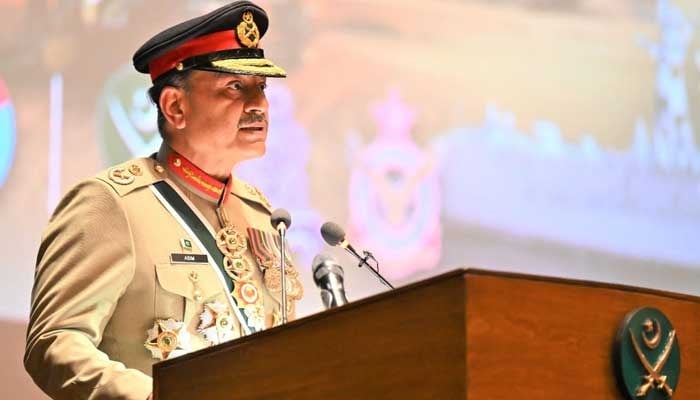
The resemblance is striking: Field Marshal Asim Munir has positioned Pakistan as a decisive gatekeeper in the global security equation.
Five-star General MacArthur’s post-war administration of Japan represents the most extreme case of a soldier-diplomat. He was, in effect, the de facto sovereign of a foreign nation. He directed economic reform, drafted a constitution, managed diplomatic relations and prevented famine -- all while wearing a uniform. Field Marshal Munir echoes General MacArthur in one crucial respect: Pakistan’s diplomacy now runs through a leader who also controls the military instrument and manages Pakistan’s regional security partnerships, giving Pakistan speed and coherence.
Munir’s fusion of military command and diplomatic authority -- the ability to credibly threaten and negotiate simultaneously -- is the MacArthur model applied to a sovereign state. Unlike MacArthur, however, Munir does not have the backing of a superpower patron writing blank cheques. He must finance his diplomacy through the credibility of his own statecraft.
Field Marshal Ayub Khan used Pakistan’s geography -- its proximity to the Soviet Union and China -- as a bargaining chip. He was, quintessentially, a Type IV strategic power player.
The parallels with Munir are striking. Both men leveraged Pakistan’s geographic position and intelligence assets to become indispensable to Washington. But the differences are equally instructive. Ayub was operating in a bipolar cold-war world; Munir operates in a more fluid multipolar world and has simultaneously cultivated Saudi Arabia, Iran, China and the US -- rivals who would never have sat at the same table during Ayub’s era.
Lo and behold, across the sweep of military-diplomatic history, three features of Munir’s approach stand out as genuinely novel. One, No major soldier-diplomat in modern history has previously led both a domestic intelligence service and a foreign intelligence service. This gives Munir an information asymmetry advantage in diplomatic negotiations that Eisenhower, de Gaulle, MacArthur and Ayub Khan never possessed.
Two, Ayub could only play the American card. Munir plays the American card, the Saudi card, the Chinese card and -- most daringly -- the Iranian card, all simultaneously.
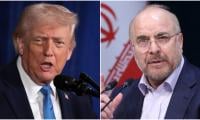
Three, no historical soldier-diplomat has so explicitly turned a foreign leader’s personality into a diplomatic instrument as the Trump–Munir dynamic now appears to do.
Field Marshal Munir has opened doors that were long shut. He has placed Pakistan at tables where it was once absent. But presence is not power. Access is not outcome. Field Marshal Munir has delivered access -- to Washington, to Tehran, to Riyadh, to Beijing. History will now ask a simpler question: what did Pakistan earn from it?