KARACHI: Pakistan’s climate and energy challenges are intensifying, ranging from rising costs and energy security concerns to unreliable access and mounting pressure to decarbonise.
At the same time, the ecosystem needed to address these issues remains underdeveloped, with early-stage startups lacking structured support, gaps in skills development and limited data for informed policymaking.
Against this backdrop, Climate Innovation Pakistan (CLIP) has been launched as a joint national platform by Renewables First and New Energy Nexus to foster climate and clean energy innovation. The initiative aims to combine global expertise with local context to support Pakistan’s transition towards a low-carbon, climate-resilient future by connecting founders, investors, industry and policymakers.
A central component of CLIP is its 12-week incubator programme, designed for startups at various stages, from ideation to beyond the minimum viable product stage. The programme offers capacity building, tailored mentorship, investor access, regulatory guidance and strategic support, while integrating founders into a global network of climate innovators.
Unlike traditional incubators, CLIP adopts a market-first approach, requiring startups to demonstrate whether their solutions are viable in Pakistan both technically and financially, and at scale.
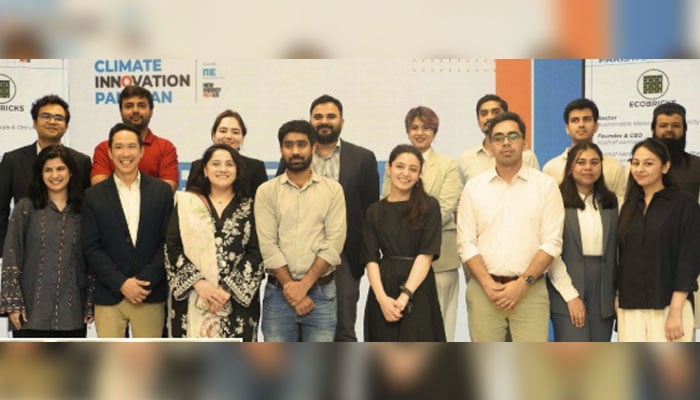
The inaugural cohort was presented at CLIP’s Demo Day, where 11 startups showcased solutions tailored to Pakistan’s climate challenges. Over the course of the programme, participants progressed through validation, pilot testing, business model refinement and investor readiness, turning early-stage ideas into investable ventures.
Secretary at the Ministry of Climate Change Aisha Moriani said the startups reflected the type of innovation the government aims to support as it seeks to advance climate resilience and a clean energy transition. She added that, with Pakistan facing a deepening energy crisis, such initiatives are both timely and necessary to unlock scalable, locally developed solutions in the climate technology space.
The cohort spans sectors including energy, mobility, water systems, agriculture and climate intelligence. In clean mobility, PakPlug is developing a platform likened to an “AirBnb for EV charging”, enabling private charger owners to monetise unused infrastructure and targeting 200 users within its first three months.
Nimbus Labs is deploying AI-based forecasting tools to improve access to reliable weather data for climate-sensitive sectors, while Pani Express is seeking to modernise urban water delivery through smart logistics and IoT-enabled systems. Recycle Bin, founded by Adeela Ali, secured an investment of Rs3 million during the programme, supporting the viability of its business model.
In energy storage, Power Sodium is developing sodium-ion and sodium-lithium hybrid batteries aimed at reducing reliance on lithium imports. The technology is designed for long cycle life and rapid charging, with potential applications in telecom towers, microgrids, data centres and renewable energy systems.
Other startups in the cohort are moving towards pilot projects, partnerships and early-stage commercialisation, indicating growing traction. The event also pointed to a broader shift in Pakistan’s energy landscape, driven by increased solar adoption, emerging electric mobility solutions and rising climate awareness. However, it highlighted a key gap: while the transition is gathering pace, the innovation pipeline required to sustain it remains at an early stage.