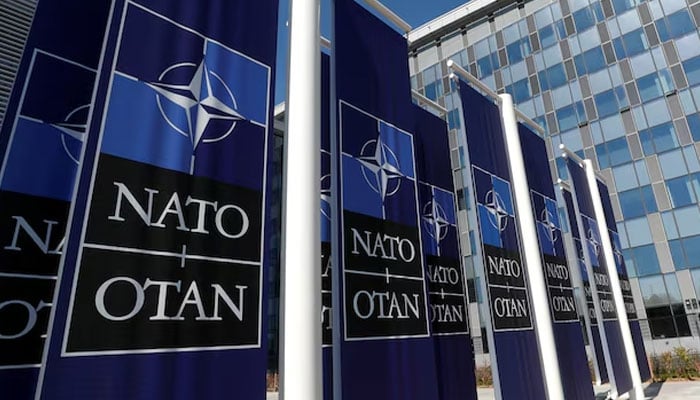
WASHINGTON: A European fallback plan to ensure defence using NATO’s existing structures is gaining traction after getting buy-in from Germany, the Wall Street Journal reported.
The officials working on the plans, which some officials are referring to as “European NATO,” are seeking to get more Europeans into the alliance’s command-and-control roles and supplement U.S. military assets with their own.
The plans—advancing informally through side discussions and over dinner meetings in and around the North Atlantic Treaty Organization—aren’t intended to rival the current alliance, participants said. European officials are aiming to preserve deterrence against Russia, operational continuity and nuclear credibility even if Washington withdraws forces from Europe or refuses to come to its defence, as President Trump has threatened.
The plans, first conceived last year, underscore the depth of European anxiety over U.S. reliability. They accelerated after Trump threatened to seize Greenland from fellow NATO member Denmark and are now gaining fresh urgency amid the standoff over Europe’s refusal to back America’s war in Iran.
The challenge is enormous. NATO’s entire structure is built around American leadership at almost every level, from logistics and intelligence to the alliance’s top military command.
Europeans are now trying to shoulder more of those responsibilities, which Trump has long demanded. The alliance will be “more European-led,” its Secretary-General Mark Rutte said recently. The difference now is that Europeans are taking steps under their own initiative, due to Trump’s growing hostility, rather than as a result of U.S. goading. In recent days, Trump branded European allies as “cowards” and called NATO a paper tiger, adding, in reference to Russian President Vladimir Putin: “Putin knows that too.”
Earlier this month, Trump threatened to leave NATO over allies’ refusal to support his Iran campaign, saying the move was already “beyond reconsideration.” Any withdrawal from the alliance would require congressional approval, but the president could still move troops or assets out of Europe, or withhold support, using his authority as commander in chief.
German Defence Minister Boris Pistorius said current discussions inside NATO aren’t always easy, but if they result in decisions, that would create an opportunity for Europe. He called NATO “irreplaceable both for Europe and the U.S.”
“But it’s also clear that we Europeans must assume more responsibility for our defence, and we are doing that,” Pistorius said. “NATO must become more European in order to remain trans-Atlantic.”
Only after Berlin moved did contingency planning turn into tackling practical military questions, such as who would run NATO’s air-and-missile defenses, reinforcement corridors into Poland and the Baltic states, logistics networks and major regional exercises if U.S. officers stepped aside. These remain the biggest challenges, officials said.
Officials say that reintroducing the military draft is another aspect critical to the plan’s success. Many nations abandoned it after the Cold War. Officials involved want to accelerate Europe’s production of vital equipment in fields where Europe lags behind the U.S., including anti-submarine warfare, space and reconnaissance capabilities, in-flight refueling and air mobility. Officials point to the announcement by Germany and the U.K. last month of a joint project to develop stealthy cruise missiles and hypersonic weapons as an example of the new initiative.
While the European effort marks a fundamental reversal in thinking, realizing the ambition will be difficult. The Supreme Allied Commander for Europe is always an American, and U.S. officials have said they have no intention of surrendering that post.
No European member has sufficient stature inside NATO to replace the U.S. as military leader, in part because only the U.S. can provide the continentwide nuclear umbrella that underpins the alliance’s founding principle of mutual deterrence through strength.
Europeans are stepping into more leadership roles but still lack critical capabilities due to years of underspending and reliance on the U.S. A particularly difficult gap is in intelligence and nuclear deterrence. European officials say no amount of troop reshuffling can quickly replace the U.S. satellite, surveillance and missile-warning systems that form the backbone of NATO’s credibility, leaving France and Britain under pressure to expand both their nuclear and strategic intelligence roles.