ISLAMABAD: After 21 hours of negotiations and a dozen calls to Donald Trump, it took JD Vance less than four minutes to announce that no deal had been struck between the US and Iran, the Telegraph reported.
“They have chosen not to accept our terms,” said the visibly tired and unhappy US vice-president. After just three questions, he left the podium, exited Islamabad’s Serena hotel and headed back to Washington.
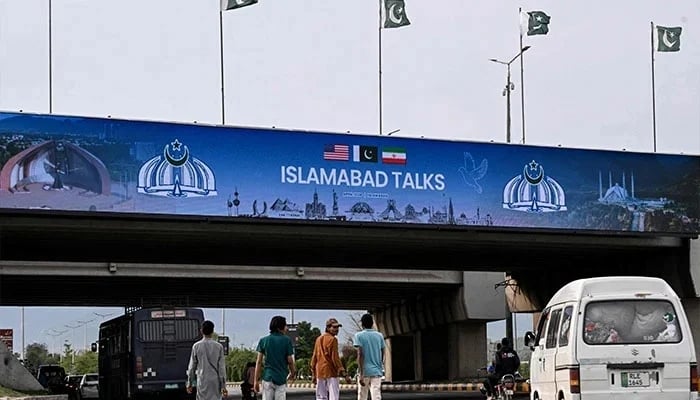
“Islamabad Talks” banners that had blanketed the capital as Pakistan dressed itself for peace were stripped away within hours. A city that had hoped to prove itself a serious player on the world stage had little to show for it.
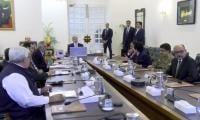
rogress had been good. Mr Vance, Steve Witkoff and Jared Kushner, the US president’s peace envoys, shared written proposals with the Iranian side after the initial phase of talks. The 70-strong Iranian delegation was led by Mohammad Bagher Ghalibaf, the powerful speaker of the Iranian parliament, and included Abbas Araghchi, Iran’s foreign minister.
But talks quickly stalled. Diplomatic sources said the sticking points between the delegations that had brought Iran to war 43 days ago had barely moved. Nearly 400 kilograms of highly enriched uranium remained unaccounted for and Tehran refused to budge on reopening the Strait of Hormuz.
The first signs of strain in the talks appeared when the Iranian media accused the US of making “excessive demands” about the strait, through which one-fifth of the world’s oil is shipped. As part of a peace agreement, Washington is said to have proposed a “joint venture” with Iran to set up tolls for shipments transiting the waterway as a way to recoup costs from a costly conflict.
Iran has charged ships roughly $1 per barrel, payable in cryptocurrencies such as Bitcoin, to pass through – a lucrative scheme for a president unlikely to want to walk away from the war empty-handed.
Tehran’s grip on the strait and ability to cause severe global economic disruption by firing on commercial ships transiting the waterway took the US administration by surprise. Iran views the strait, which it laced with mines, as its right to toll and control.
Now, Mr Trump is launching a US naval blockade, effectively shutting it down on his terms, rather than Iran’s, so that Iran cannot make any money. But the main deadlock Mr Vance ran into was the same as the one that derailed negotiations in Geneva in February and prompted the start of the war – Iran is unwilling to give up its nuclear programme, even as it insists it does not want a nuclear bomb.
In February, Mr Witkoff and Mr Kushner had offered to supply Tehran with free uranium forever, as long as it was used for a civil nuclear programme. But Iran declined, insisting it was its right to be able to enrich uranium as it pleased. It instead offered to “suspend” its nuclear operations for a few years, but not to give up their stockpiles of near bomb-grade uranium or scrap their programme altogether.
To the Americans, that was what Mr Witkoff called “a tell” that Iran was well on its way to building a nuclear weapon and had no intention of just creating a nuclear programme to power the country.
There is another hurdle that negotiators appeared to face: trust. Insiders said Tehran still did not trust Mr Kushner and Mr Witkoff’s proposals at the table. Less than 48 hours after they last met face-to-face, the US carried out military strikes and assassinated the supreme leader, Ali Khamenei.
Esmail Baghaei, Iran’s foreign ministry spokesman, said it led to an atmosphere of suspicion in the locked room in Islamabad, according to Iran’s state news agency IRNA. Mr Ghalibaf added that the US had been “unable” to gain Tehran’s trust.
Experts said Iran’s delegation showed it was serious about leaving Pakistan with a deal. It was the first time since the start of the war that so many top officials could meet in one place without fear of being killed. Their plane’s transponder disappeared from flight-tracking websites shortly after it re-entered Iranian airspace.
By Sunday morning, negotiations had run out of steam. Tehran, unable to trust the US, was unwilling to compromise on its nuclear programme and reopen the Street of Hormuz – its only point of leverage.
Mr Vance, a known opponent of the war, had made up to a dozen calls to the US president and Pete Hegseth, the defence secretary, throughout the talks. Both Iran and Pakistan, which brokered the talks, asked for Mr Vance because of his scepticism towards foreign military interventions.
Mr Trump obliged, opting instead to have Marco Rubio, his secretary of state and an expected competitor for a 2028 run, join him thousands of miles away at the Kaseya Center in Miami for an Ultimate Fighting Championship fight night.
The stakes were high for Mr Vance. Success in Islamabad would have painted him as the statesman who ended the war, smoothing his path for a possible presidential run in 2028. Exhausted and frustrated after 21 hours on the ground, he provided few details as he returned to Washington empty-handed.
“The bad news is that we have not reached an agreement, and I think that’s bad news for Iran much more than it’s bad news for the United States of America,” the vice-president said.
“We have made very clear what our red lines are, what things we are willing to accommodate them on and what things we are not willing to accommodate them on. They have chosen not to accept our terms.”
Iran’s former foreign secretary said his words made it clear why things had gone wrong. “Bingo” Javad Zarif, wrote on X. “No negotiations – at least with Iran – will succeed based on “our/your terms. The US must learn: you can’t dictate terms to Iran. It’s not too late to learn. Yet.”
Iran’s state-affiliated Press TV reported that Israel’s continued bombardment of Lebanon had been one of the points of contention. The US and Israel insist that attacks on Hezbollah in Lebanon are not subject to the ceasefire agreement. Tehran has always disputed this. In turn, Iran refused to stop funding Hamas, a senior US official said.
Officials told The Telegraph that the US informed the Iranian delegation that Lebanon was not Iran’s concern, nor an American priority.
Pakistani sources said that Iran objected to Washington’s refusal to commit to halting Israeli operations in Lebanon and took issue with American security proposals on the Strait of Hormuz.
Officials from Iran and Pakistan were also taken aback by Mr Vance’s decision to leave the negotiations, the sources added. Both sides had expected talks to resume on Sunday.
Mr Trump had said earlier on Saturday that he did not care about the outcome. Hours after Mr Vance’s exit, he announced a naval blockade aimed at choking Iran’s oil supply and curbing its leverage by controlling the strait.
“So, there you have it, the meeting went well, most points were agreed on, but the only point that really mattered, NUCLEAR, was not,” Mr Trump wrote on Truth Social.
“Effective immediately, the United States Navy, the Finest in the World, will begin the process of BLOCKADING any and all Ships trying to enter, or leave, the Strait of Hormuz.”
Pakistan, still desperate to be a peacemaker, was left looking more like a bystander. “Pakistan fulfilled its role by facilitating contact,” one official said, adding that responsibility for any final agreement rests with Washington and Tehran.
Ishaq Dar, the foreign minister, said: “It is imperative that the parties continue to uphold their commitment to ceasefire.”