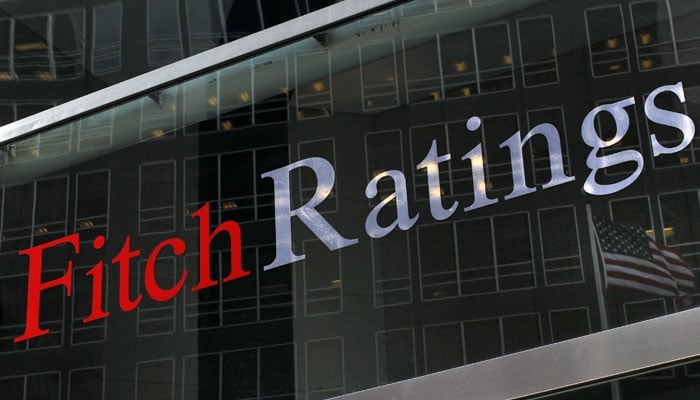
Fitch Ratings on Monday affirmed Pakistan’s long-term foreign currency issuer default rating at ‘B-’ with a stable outlook, reports Geo.
“Pakistan’s rating affirmation reflects progress on fiscal consolidation and macro stability measures, broadly in line with its International Monetary Fund (IMF) programme and supporting its funding capacity. Foreign exchange buffers rebuilt over the past year provide a cushion against the economic impact of the war in the Middle East, while Pakistan’s role as a ceasefire broker may provide tangible benefits and partly offset external pressures,” the agency said in a statement.
The US-based agency highlighted that the country’s high exposure to the global energy price shock remained a key risk, particularly if it led to a sharp drop in foreign exchange reserves.Highlighting key rating drivers, Fitch said the authorities reached a staff-level agreement with the IMF on its loan programmes in March, unlocking a combined $1.2 billion.
The programme will continue to provide a key policy anchor, particularly for the fiscal framework, and will help mobilise additional multilateral and bilateral support, it added.“Pakistan sources up to 90 per cent of oil from the Gulf and has limited storage capacity, creating high exposure to the Middle East conflict and constricted energy supply via the Strait of Hormuz,” it said, adding the fuel subsidies since early March had been funded by reallocating expenditure from other areas of the budget, while costs had been reduced by large pump-price hikes and the switch to a more targeted support scheme from April.
“We expect the overall impact on the fiscal deficit to be contained, as the government is likely to cut other spending,” the rating agency added.On inflation, the rating agency said that higher world energy prices will raise inflation in the coming months, especially with the switch to more targeted subsidy support and base effects.
“We expect inflation to average 7.9 per cent in FY26 (ending June 30, 2026), above the FY25 level but well below the 23.4 per cent in FY24,” it added.
The State Bank of Pakistan (SBP) cut the policy rate to 10.5 per cent by the end of 2025, from 22 per cent at the end of May 2024, and market interest rates fell in tandem. However, the term interbank rate had risen to about 100bps above the policy rate by early April, on inflation concerns tied to the tight energy supply.
“The shock will detract from GDP growth, but we still expect growth of 3.1 per cent in FY26, up slightly from 3.0 per cent in FY25, due to improved confidence from lower borrowing costs,” the agency said.
The rating agency anticipated external debt amortisations to rise to $12.8 billion (2.9 per cent of GDP) in FY26, from almost $8 billion in FY25.It anticipated external debt amortisations to rise to $12.8 billion (2.9 per cent of GDP) in FY26, from almost $8bn in FY25. A $3.5 billion deposit was repaid to the United Arab Emirates (UAE) in April, the agency said. It said the amortisation projections exclude another $9.2 billion in bilateral deposits and loans expected to be rolled over.
“We expect debt to be financed mainly by the IMF and other multilateral and bilateral inflows, followed by commercial financing. Pakistan plans to issue a panda bond this fiscal year,” it added.