ISLAMABAD: Prime Minister Shehbaz Sharif said Friday said that while a temporary ceasefire has been announced by the US and Iran, the real challenge lies in sustaining the ceasefire and resolving the complicated issues as Islamabad prepares to host crucial peace talks between the two states on Saturday.
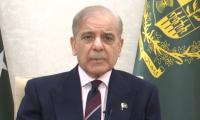
“A temporary ceasefire has been announced, but now the even more difficult stage is that of sustaining the ceasefire and of resolving the entangled issues through negotiations. This is a make or break phase,” the prime minister said in his address to the nation.
He said that the leadership of both countries would be in Islamabad on Saturday, and Pakistan’s leadership would play its fullest role to ensure the success of the negotiations.
He termed the peace talks between Iran and the United States in Islamabad a historic occasion and a moment of pride for the entire Muslim world.
“I am addressing you on a historic occasion when there is talk of peace in the Gulf, not war. The countries that were at war and the region stood on the verge of destruction — today, Alhamdulillah, both parties have agreed to resolve their differences through dialogue,” the prime minister said.
He expressed gratitude to Iran and the United States leadership for accepting his proposal for a temporary ceasefire and for accepting his invitation to hold peace talks in Islamabad.
“Allah has blessed Pakistan with the opportunity to host these crucial talks, This is a moment of pride not only for our country but for the entire Muslim world,” he remarked.
The prime minister paid rich tribute to the efforts made by Pakistani leadership in bringing the two sides to the negotiating table.
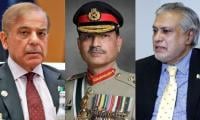
He particularly praised Deputy Prime Minister and Foreign Minister Ishaq Dar and Field Marshal Syed Asim Munir, and their respective teams, and all others for their untiring efforts in securing a temporary ceasefire and convincing both parties to come to Islamabad for talks.
“History will always remember in golden words the significant role played by the Field Marshal in these efforts,” he added.
Appealing to the nation to pray to Allah Almighty for the success of the talks, the prime minister emphasized that it was crucial to save the lives of numerous people and restore lasting peace in the region.
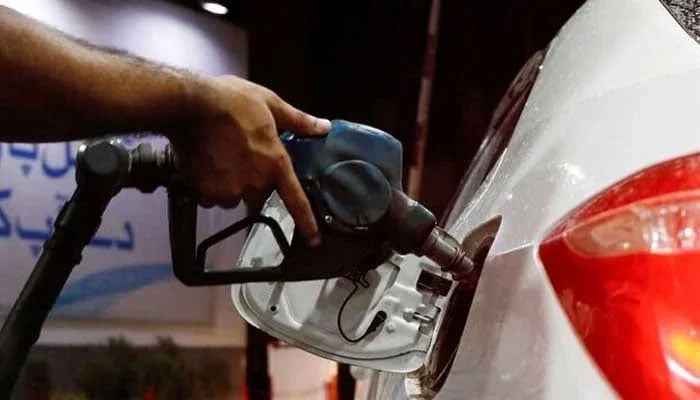
During the address, the prime minister also announced a major relief to the masses by slashing diesel price by Rs135 per liter, and petrol by Rs 12 per liter, passing on the full impact of the reduced international oil prices to the common man.
He said that keeping in view the ongoing wheat crushing season, the need to keep commodity prices affordable, and to reduce transport fares, the government has reduced the price of diesel from Rs520 per liter to Rs385 per liter, while petrol has been brought down from Rs378 per liter to Rs366 per liter.
He said that the targeted subsidy announced by him, in coordination with the provincial governments to support two-wheelers and transporters, would continue unchanged.
Earlier, Prime Minister Shehbaz Sharif received a telephone call from Prime Minister of the United Kingdom, Keir Starmer on Friday evening.
Prime Minister Starmer deeply appreciated Pakistan’s effective diplomatic efforts in facilitating the US-Iran ceasefire and the initiation of dialogue. He felicitated Prime Minister Muhammad Shehbaz Sharif on hosting the peace negotiations in Islamabad and offered his best wishes for the success of this endeavor.
Reaffirming Pakistan’s sincere commitment to regional peace and stability, Prime Minister Muhammad Shehbaz Sharif welcomed the joint statement issued by key European and international leaders, including Prime Minister Starmer, endorsing Pakistan’s peace initiatives. Both leaders emphasised the importance of ensuring that the ceasefire remains in place and creates the necessary conditions for lasting peace and stability in the region.
The two leaders agreed to work together to lend fresh impetus to the longstanding friendly ties between Pakistan and the United Kingdom, across all spheres of mutual interest.
The prime minister reiterated his cordial invitation to Prime Minister Starmer to undertake an official visit to Pakistan.
A message from UK’s Downing Street said Starmer spoke to Prime Minister of Pakistan, Shehbaz Sharif this afternoon. Starmer, Pakistan PM agreed upcoming talks were vital to progress ceasefire towards lasting peace.
Prime Minister Shehbaz Sharif on social media platform X said, “Received a warm call from Prime Minister Keir Starmer of the United Kingdom, this evening.
Appreciate his support for Pakistan’s sincere diplomatic efforts that helped facilitate the Iran–US ceasefire and advance dialogue. I also welcome the joint statement by key European and international leaders, including PM Starmer, endorsing our peace initiatives.
We agreed on the importance of sustaining the ceasefire to create the conditions for lasting peace and stability in the region.
Also discussed ways to further strengthen Pakistan–UK relations across all areas of mutual interest. I look forward to welcoming PM Starmer to Pakistan.”
Meanwhile, Mohammed bin Abdullah Al-Jadaan, Finance Minister of the Kingdom of Saudi Arabia, who was on a one-day visit to Islamabad called on Prime Minister Muhammad Shehbaz Sharif at the Prime Minister House.
Deputy Prime Minister and Foreign Minister Muhammad Ishaq Dar and Chief of Defence Forces Field Marshal Syed Asim Munir also attended the meeting.
Welcoming the Saudi dignitary, the prime minister conveyed his respectful regards to the Custodian of the Two Holy Mosques, His Majesty King Salman bin Abdulaziz Al Saud, and His Royal Highness Crown Prince Mohammed bin Salman bin Abdulaziz Al Saud.
The prime minister fondly recalled his recent warm and cordial telephone conversation with His Royal Highness the Crown Prince. He expressed appreciation for the Crown Prince’s deep affection towards Pakistan as well as for the Kingdom’s longstanding economic and financial support to Pakistan over the years that had played a vital role in Pakistan’s economic stability.
The prime minister reiterated that the people and government of Pakistan had always stood shoulder to shoulder with their Saudi brothers and sisters at all times, and this was an abiding bond between both countries, that had grown stronger under the patronage of His Royal Highness the Crown Prince.
The prime minister emphasised Pakistan’s strong commitment to expanding its cooperation with the Kingdom in all spheres, particularly in trade, investment, and economic development.
The Saudi finance minister thanked the prime minister and reaffirmed the resolve of the Kingdom of Saudi Arabia to further strengthen the longstanding deep-rooted fraternal bonds between Pakistan and Saudi Arabia, as envisioned by His Royal Highness Crown Prince Mohammed bin Salman.
Meanwhile, Prime Minister Shehbaz Sharif in his address to the nations announced significant reduction in diesel price by Rs135 per litre along with decreasing petrol price by Rs12 per litre.
“Today there is some reduction in prices of oil in the international market and I consider it my moral and political responsibility that each and every penny of this benefit is passed on to the people,” the prime minister in his televised address to the nation said.
He said with the decision the new price of diesel from after Friday midnight would reduce from Rs520 to Rs385 per litre and that of petrol from Rs378 to Rs366 per litre.
He said that he was advised to pass on some benefit of trend of oil prices reduction in the international market to people and some part of benefit should be spent to subside Rs129 billion which were made available from different resources to extend relief to the masses.
“But I rejected the advice keeping in view the fact that people suffered from the price hike,” Shehbaz Sharif said adding that along with reducing diesel and petrol, the government has also decided that the targeted subsidy to goods transport, motor bikes and other sectors would continue.
The government, on April 2, decided significant increase in diesel and petrol prices to Rs520 and Rs458 per litre. However, a day later the petrol price was reduced by Rs80 to Rs378 per litre.
He recalled that there had been unprecedented hike of prices around the world and Pakistan also felt brunt of the same saying that now he is fulfilling promise made with the people to pass on benefit of reduction in oil prices to them.
He said the government through financial discipline and reducing expenses from other resources attempted to provide maximum relief to the masses.
He said that it was also required to reduce price of diesel as wheat harvesting season is about to start.
He maintained that the federal government with support of the provincial governments would not let the people along and it was aware of their problems and future of their generation.
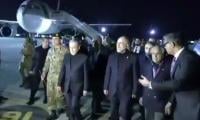
Earlier, Saudi Arabia’s Finance Minister Mohammed Al-Jadaan arrived in Pakistan on Friday for high-level visit focused on strengthening economic cooperation between the two brotherly Islamic countries.
Pakistan’s Finance Minister Muhammad Aurangzeb received the Saudi visiting minister in Islamabad at a time when Islamabad has become the centre of major diplomatic efforts to ensure a permanent ceasefire between the US and Iran.
It is relevant to mention here that Pakistan had forwarded eight requests to KSA for seeking its assistance. At the moment, Pakistan is all set to repay $2.5 billion to the United Arab Emirates (UAE) on April 17 and 22, while another $1 billion might be repaid in the coming months in July 2026 on maturity of deposits.
This visit follows recent high-level diplomatic and economic engagements between the two nations aimed at boosting investment in sectors like energy and mining.
“Nothing is finalised yet,” said one top official of the Shehbaz Sharif government when asked by The News on Friday evening about rampant speculations that the Kingdom of Saudi Arabia is all set to provide major financial assistance to Pakistan.
During the parleys to boost economic ties, Pakistan had made eight requests to the KSA under long-term economic cooperation. It included the conversion of short-term existing deposits of $5 billion into a long-term facility of 10 years, enhancing the oil facility on deferred payment from $1.2 billion to $5 billion with increased tenor, securitisation of Pakistani diaspora’s remittances of $10 billion, and some others.
The details of the forwarded requests showed that Pakistan asked for the conversion of existing deposits of $5 billion lying with the SBP into a long-term facility. This request was made to convert short-term deposit of $5 billion into a long-term facility of 10 years with favourable pricing.
The second request was to jack up the oil facility on deferred payment under which KSA was asked to enhance the facility of $1.2 billion to $5 billion.
The tenor period for repayment may also be increased from one year to three years whereby repayment of every tranche is made after three years.
The third request was made to KSA for the securitisation of the Pakistani diaspora’s remittances. This kind of securitisation can boost forex reserves and reduce costly foreign borrowing.
For the fourth request, the KSA may consider providing a guarantee for Pakistan’s new endeavours for international Sukuk issuance in order to allow Pakistan to raise international capital at lower rates.
Pakistan has made a fifth request to KSA for a concessional credit line to the EXIM Bank of Pakistan. The government of Pakistan has established a new EXIM Bank in order to achieve export-led growth under the IMF programme.
Islamabad has also made a sixth request to KSA for the consideration of waiving off bank guarantee requirements for import-related transactions with Pakistan.
The KSA was asked to consider the seventh request related to investment in the country, especially in the Public Investment Fund (PIF), to explore investment opportunities in the country.
The government of Pakistan made its eighth request to the KSA to help Islamabad in adjustments in primary surplus targets in line with the IMF programme to accommodate the proposed tax rationalisation. The expenditures remain highly rigid, curtailing further cuts, so the fiscal deficit may rise further, but the long-term impact will be positive.