LONDON/COLOMBO/ISLAMABAD: Sanoj Weeratunge thought this would finally be the year his tour firm put Sri Lanka’s spate of crises behind it. Then the Iran war erupted 2,700 miles away, the government hiked fuel prices by 35 per cent and business slumped almost a third.
“We have had a very difficult road over the past six years to recover and were very hopeful that this would finally be the year where we reach pre-COVID levels,” Weeratunge said from his office in Colombo. “But now this economic shock will affect us.”
Sri Lanka, like Egypt and Pakistan, belongs to a group of crisis-scarred, lower-income countries that analysts fear have been thrust back towards trouble as the energy imports on which they rely become more expensive due to the speaking to AFP, credited China with pushing Iran to accept the two-week ceasefire, barely an hour before a deadline was to expire on his genocidal threat to destroy all of Iranian civilization.
But China’s own statements have been circumspect, saying it backs the ceasefire but hardly trumpeting its own diplomacy.
Yun Sun, director of the China program of the Washington-based Stimson Center, said China’s reticence was out of character and suspected Iran may have strategically tried to emphasize Beijing’s power of persuasion.
“Iran has singled out China as a potential security guarantor so there is an incentive on the part of Iran in presenting the optics of China playing an oversized role, in the hope that China would then be accountable for the implementation of the ceasefire,” she said.
“China doesn’t provide security guarantees and how do you even try to guarantee something with President Trump? It would just create problems for China down the road,” she said.
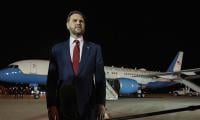
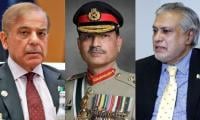
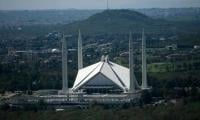
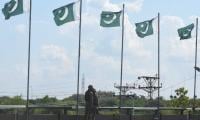
Vice President JD Vance will open talks Saturday (today) with Iran in Pakistan, which has close relations with China and has also been aggressively courting Trump, in part as it seeks support against India.
Liu Pengyu, spokesman for the Chinese Embassy in Washington, said China “welcomes all efforts conducive to peace and supports Pakistan in actively undertaking mediation.”
“As a responsible major power, China will continue to play a constructive role and make efforts to de-escalate tensions and quell the conflict,” he said.
China, the world’s second largest economy, imports about half of its oil needs from the Middle East but has reduced reliance by embracing renewable energy.
China is the biggest defier of years of unilateral US sanctions on Iranian oil. China now stands to benefit after Iran exerted control over the Strait of Hormuz, the narrow gateway for tankers into and out of the Gulf.
In 2023, Iran and Saudi Arabia restored diplomatic ties in a meeting in Beijing, although the United States, then led by President Joe Biden, downplayed China’s role.
“China’s strategy in the Middle East has been masterful. It has dominated business and never fired a single bullet, but with the changes in the region it knows it needs a political element,” a diplomat from a Middle East country said.
Lyle Morris, a senior fellow at the Asia Society Policy Institute’s Center for China Analysis, said Trump may also want to give credit to China to sweeten the mood and press other demands when he visits Beijing next month.
But Morris said that China in the end had fewer interests at play than the United States, Iran, Israel or Gulf states.
“China’s not a primary actor here,” Morris said. “Ultimately, it’s a supporting role, just by the nature of their capacity and their stakes in the conflict.”
China, despite railing against US dominance, has little history of military deployments outside of Asia and is unlikely to seek to replace the US security presence in the Middle East.
For China, it is more important to keep forces near the South China Sea and Taiwan, the self-ruling democracy it claims, said Henry Tugendhat, a fellow at the Washington Institute for Near East Policy who studies China’s role in the region.
“At the end of the day, China’s greatest interest in the region is simply stability for the economic relations it seeks to foster with the region,” he said. “So it may yet accept a return to US security guarantees as their least bad option but that also depends on what’s negotiated by all parties at the conclusion of this conflict.”