ISLAMABAD/WASHINGTON: Optimism grows for lasting peace in the Middle East as crucial Iran-US talks are set to begin in Islamabad on Saturday (today) amid tight security, with both sides seeking to turn the two-week ceasefire into a lasting peace deal.
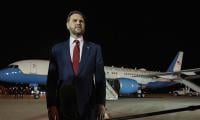
US special envoy Steve Witkoff has arrived in Islamabad to participate in negotiations with Iran, while US Vice President JD Vance, who will lead the US delegation in talks, took off Friday for Islamabad, sources said. From the Iranian side Foreign Minister Abbas Araghchi and Parliament Speaker Mohammad Bagher Ghalibaf have reached the capital.
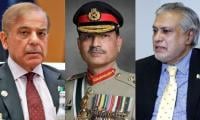
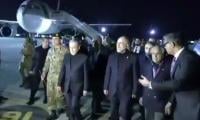
The Iranian delegation was received by Deputy Prime Minister/Foreign Minister Senator Ishaq Dar along, Speaker National Assembly Sardar Ayaz Sadiq, Interior Minister Mohsin Naqvi, Chief of Army Staff & Chief of Defence Forces Field Marshal Asim Munir.
As stage is all set for high-profile talks in Islamabad, Pakistan’s diplomatic push for regional peace gained further momentum on Friday. Deputy Prime Minister & Foreign Minister Ishaq Dar held separate telephonic conversations with his counterparts from France and Netherlands. Dar expressed the hope that parties would engage constructively, and reiterated Pakistan’s desire to continue facilitating the parties towards reaching lasting and durable solution to the conflict. The Foreign Office
Meanwhile, Iran demanded a truce in Lebanon and the release of its blocked assets on Friday, while US Vice President JD Vance warned Tehran not to “play” Washington. “If the Iranians are willing to negotiate in good faith, we’re certainly willing to extend the open hand,” Vance told reporters before taking off for Islamabad from Joint Base Andrews in Maryland. But “if they’re going to try to play us, then they’re going to find the negotiating team is to Israeli attacks in Lebanon, insisting that it too falls under the agreement.
Trump posted on his Truth Social network on Friday that Iran has “no cards” in the talks “other than a short-term extortion of the World by using International Waterways”.
The two-week ceasefire was agreed to allow time for negotiations aimed at ending a conflict that has already killed thousands and plunged the global economy into turmoil.
Deputy Prime Minister & Foreign Minister Ishaq Dar held separate telephonic conversations with his counterparts from France and Netherlands. Both Jean-Noël Barrot and Tom Berendsen congratulated Pakistan on its role in facilitating the initial ceasefire agreement and expressed support for its continued diplomatic efforts to achieve lasting peace and stability in the region.
The discussions focused on evolving regional dynamics, particularly the situation in Lebanon, where both sides voiced concern over serious ceasefire violations and stressed the need for full implementation to ensure durable peace.
During the calls, Pakistan and its European partners reaffirmed their commitment to strengthening bilateral relations, with emphasis on enhancing cooperation in trade, economic, and investment sectors.
Separately, Ishaq Dar announced that Pakistan will grant visa-on-arrival to all delegates, including journalists, attending the Islamabad Talks 2026, directing airlines to allow boarding without prior visas and assuring that immigration authorities will facilitate entry upon arrival.
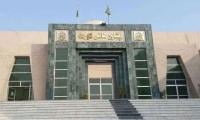
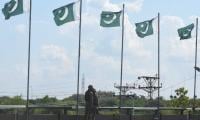
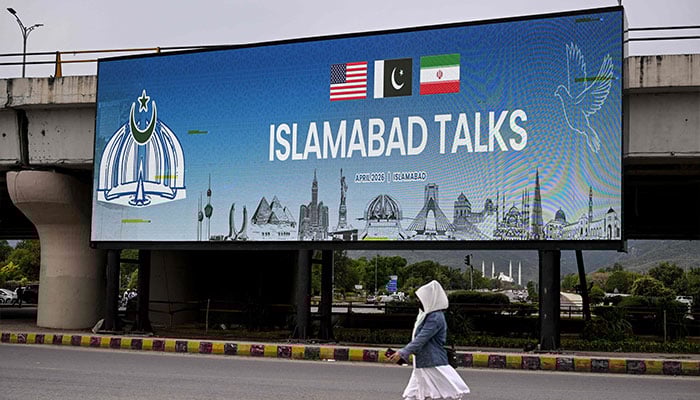
In Islamabad all routes leading to the Serena Hotel, the expected venue for the talks, were blocked off with heavy security, while a large banner and digital signs along the expressway heralded the “Islamabad Talks”.
Federal Interior Minister Mohsin Naqvi finalised a comprehensive, multi-tiered security strategy for the upcoming high-stakes US-Iran negotiations, declaring that the federal capital’s Red Zone will be completely sealed to ensure the safety of visiting delegations.
Chairing a high-level review meeting on Friday, Minister Naqvi stressed that hosting these talks in the wake of a recent ceasefire is a significant diplomatic honour for Pakistan. To facilitate the peace process, the government has moved to a high-alert status, deploying over 10,000 security personnel—including 6,000 Islamabad police officers and thousands from the Punjab Constabulary and Frontier Constabulary—to maintain an impenetrable security cord around the city. Under the new directives, entry into the Red Zone is strictly restricted to authorised individuals and residents with verified credentials.
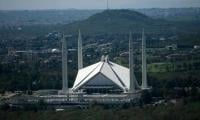
The minister confirmed the establishment of a dedicated central control room at the Ministry of Interior to monitor all movements and arrangements in real-time. This oversight follows a detailed assessment of the security plan, which now includes the hand-over of Red Zone internal security to the Pakistan Army and Rangers, while the Margalla Hills have been secured to provide high-altitude surveillance.
The current security landscape has seen the implementation of VVIP “Blue Book” protocols, involving designated corridors for foreign guests traveling between the airport and the Red Zone. To further minimize risks and manage traffic, the government has declared local public holidays in Islamabad and Rawalpindi, while major arteries like the Express Highway are subject to strict diversions.
Addressing the hospitality aspect, Minister Naqvi instructed all relevant departments to ensure that the visiting delegates receive seamless services and foolproof protection. “We are committed to providing an environment of absolute safety and hospitality for our foreign guests,” the Minister stated, noting that all state-run rescue services and hospitals have also been placed on high alert.
The consultative session was attended by a broad spectrum of top officials, including Minister of State for Interior Talal Chaudhry, the Federal Secretary Interior, the Chief Commissioner and Inspector General of Islamabad, the Commissioner of Rawalpindi, the Director General of the FIA, and representatives from the Rangers, Federal Constabulary, and the Ministry of Foreign Affairs.
Meanwhile, the primary route has been established, a critical decision regarding the motorcade’s movement remains pending. Officials confirmed that the Vice President’s Chief Security Officer (CSO) will make the final determination upon arrival regarding which side of the road the convoy will utilize.
Security sources noted that authorities have prepared for two distinct operational scenarios. The motorcade may either adhere to Pakistan’s standard traffic laws by driving on the left side of the road or adopt the American system by traveling on the right. The Islamabad Traffic Police have maintained readiness for both possibilities, allowing for a real-time adjustment based on the immediate assessment of the visiting security team and prevailing safety protocols.
Meanwhile, an Israeli strike, one of multiple on the southern Lebanese city of Nabatiyeh on Friday, killed 13 State Security personnel, the agency said. The Israeli military said that Iran-backed Hezbollah had meanwhile fired around 30 projectiles from Lebanon into its territory over the course of the day.
Hezbollah said that it had targeted Israel’s Ashdod naval base with missiles “in response to the enemy’s violation of the ceasefire and its repeated attacks on Beirut”.
A Western diplomat said on condition of anonymity that there was ongoing “pressure from European states, Gulf states and Egypt on Israel to prevent renewed Israeli airstrikes on Beirut after ‘Black Wednesday’”.
Israel’s army reported Friday that more than 4,300 Hezbollah sites had been “dismantled” in Lebanon since the start of the war.
Washington has said the Lebanese front will be dealt with under separate talks next week, although neither Israel nor the Lebanese government have publicly confirmed these talks. The UN’s World Food Programme (WFP) warned Friday that food insecurity was on the rise in Lebanon with prices surging and supply chains disrupted. In a separate social media message, Trump said: “The Iranians are better at handling the Fake News Media, and ‘Public Relations,’ than they are at fighting!”
Control of the narrow Strait of Hormuz, through which one-fifth of the world’s crude oil passes, will be at the heart of peace talks between the United States and Iran in Islamabad today. In addition to the Strait of Hormuz, other sticking points include US demands that Iran give up its stockpile of highly enriched uranium, and Iran’s aim to prevent further US and Israeli attacks.
Iran and the United States said the crucial channel would reopen after a two-week truce was announced on Tuesday, but Tehran’s threats mean very few ships are passing through.
Trump said on Thursday that Iran was doing a “very poor job” of allowing oil through the waterway, adding: “That is not the agreement we have!”
His “no cards” comments about Iran echoed his notorious broadside at Ukrainian President Volodymyr Zelensky in the Oval Office in February when he raged that “you don’t have the cards” against Russia.
Separately on Friday, Trump told the New York Post that US warships are being reloaded with weaponry to strike Iran if the talks fail to produce a deal.
“We have a reset going. We’re loading up the ships with the best ammunition, the best weapons ever made—even better than what we did previously and we blew them apart,” the Post quoted Trump as saying by telephone. “And if we don’t have a deal, we will be using them, and we will be using them very effectively.”
In a brief and cryptic social media message earlier, Trump had spoken of the “WORLD’S MOST POWERFUL RESET!!!”
An Israeli strike, one of multiple on the southern Lebanese city of Nabatiyeh on Friday, killed 13 State Security personnel, the agency said, as Lebanon prepared to start ceasefire talks with Israel.
Stock markets were mixed and oil prices steady Friday with investors cautiously optimistic about the US-Iran ceasefire holding, and as a US inflation report was not as bad as feared.
The main international oil contracts were up around one percent, holding just under $100 a barrel even as only a trickle of tankers have so far transited the Strait of Hormuz.
Pope Leo XIV and French President Emmanuel Macron stressed the need for dialogue in the Middle East in their first meeting Friday at the Vatican, while also finding time to chat about basketball.
British Prime Minister Keir Starmer insisted on Friday that Nato was “in America’s interests” as he ended a three-day visit to the Gulf to discuss bolstering the “fragile” Middle East truce. Spain’s foreign minister said that he had spoken with his Iranian counterpart and urged him to negotiate in good faith during talks with the United States in Islamabad.
President Volodymyr Zelensky said that Ukrainian military experts downed Iranian drones in several Middle East countries. He also said he wants energy sanctions to be reinstated on Russia.
The White House considered but decided against a national televised address by President Donald Trump on Tuesday about his ceasefire deal with Iran, with some aides and advisers privately voicing concern about potentially overselling the still-nascent agreement, three US officials told Reuters.
The decision suggests a balancing act by the Trump administration, which sought to project early confidence in the deal to pause fighting and open the Strait of Hormuz even as aides recognized its fragility. Discussions about Trump giving a national address have not been previously reported.
The sources said Trump was talked out of making the speech. But the White House, in a statement, denied the discussions rose to Trump’s level, saying, “This is fake news. This was never even discussed with the president.” The officials spoke on condition of anonymity to discuss internal White House deliberations.
Trump ended up announcing the ceasefire in a social media post just hours before a Tuesday evening deadline, after which he had threatened to destroy Iran’s entire civilization. The reversal was one of the most sudden wartime U-turns by an American president. US President Donald Trump vowed Friday to have the Strait of Hormuz open “with or without” Iran’s cooperation.
“We’re going to open up the gulf with or without them...or the strait as they call it. I think it’s going to go pretty quickly, and if it doesn’t, we’ll be able to finish it off,” Trump told reporters as he left Washington for a domestic trip. “We will have that open fairly soon.”