Pakistan’s daily diesel demand hovers around 16,000 MT while local production stands at 14,000 MT, suggesting local production covers approximately 87 per cent of diesel demand at normal times.
For the record, Pakistan’s ex-refinery prices are set at import parity (meaning local refineries are paid as if they had imported the fuel from the international market, regardless of their actual production cost). Between April 2025 and November 2025, gross refining margins for refineries climbed from $4.5 per barrel to $13.3 per barrel, nearly a three-fold increase.
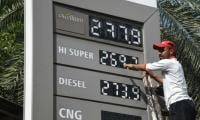
During the current crisis with diesel at Rs520 per litre ex-pump and crude at elevated but lower levels, the refinery margins have almost certainly exploded further. Imagine: Selling refined products at import parity prices that embed elevated international crack spreads and capturing an enormous margin, not because of any efficiency or any new investment, but because the government set the ex-refinery price at import parity.
Red alert: The government justified the diesel hike on international prices, which is legitimate for imports but questionable for domestic production.Yes, the government’s framing is entirely valid for the approximately 13 per cent of diesel that is imported. But, the government’s framing is misleading for the 87 per cent that is produced domestically. Domestic refineries face no Hormuz premium. Domestic refineries face no war-risk insurance surcharge. Domestic refineries face no rerouting cost. And yet they receive the same inflated ex-refinery price.
For Pakistan’s refineries, after accounting for refining costs, the all-in domestic production cost is significantly below ex-refinery price of Rs461. This implies a windfall margin. Refineries do, of course, produce furnace oil at negative margins, which partially offsets these gains. Operating costs, depreciation, and financing charges must also be considered. Even after adjusting for these factors, a conservative estimate places the net windfall margin at around Rs100 per litre.
Using this conservative margin and a combined production of approximately 223 million litres, the resulting windfall profit is in the region of Rs22 billion per month.A windfall profit of Rs22 billion per month makes the case for a windfall tax on refinery diesel profits during the crisis period, exactly as India imposed on private refiners like Reliance in 2022. A 50 per cent windfall tax on Pakistan’s refineries excess diesel margins would generate approximately Rs33 billion over three months — equivalent to funding motorcycle relief for at least 13 million riders at Rs2,500 per month.
India imposed a windfall tax on refiners like Raliance and Nayara. The UK introduced the energy profits levy. Italy imposed a windfall tax on energy companies. Hungary imposed sector-specific windfall taxes.
Red alert: India taxed refining windfalls. Europe taxed energy windfalls. Pakistan is taxing consumers.When markets deliver windfalls without effort, governments must respond with policy. Otherwise, consumers pay and producers pocket.
The writer is an Islamabad-based columnist.