LAHORE: Pakistan is once again confronting a familiar but far more dangerous economic storm of rising inflation under external shock. As geopolitical tensions disrupt global energy and food supply chains, the country’s fragile stabilisation efforts are being tested.
The uncomfortable truth is that while policymakers are trying to manage inflation, their tools are blunt, constrained and increasingly ineffective against the kind of price pressures now building up. At the centre of the response is the State Bank of Pakistan (SBP), which has leaned heavily on high interest rates, tight liquidity and exchange rate discipline. Pakistan’s current inflation is not driven by excess demand; it is driven by costs. Fuel prices, imported commodities, and currency weakness are the primary culprits. Monetary tightening, therefore, is treating the symptom, not the disease.
On the fiscal side, the government’s position is even more conflicted. Bound by commitments to the International Monetary Fund, it has little room to manoeuvre. Energy prices are periodically adjusted upward. At the same time, the government attempts to cushion the poor through programmes like the Benazir Income Support Programme. But these transfers are too small, too delayed, and too narrowly targeted to offset the scale of the inflationary shock.
The real danger now lies in food inflation — and here the outlook is deeply troubling. Pakistan is structurally vulnerable. It imports essential food items such as edible oil and pulses, and remains periodically dependent on wheat imports. Any disruption in global supply chains, particularly during wartime, immediately translates into domestic price spikes. Add to this a weakening rupee, and imported inflation becomes unavoidable.
Even more worrying are domestic inefficiencies. Weak enforcement against hoarding, fragmented supply chains, and the dominance of middlemen ensure that price increases are amplified before they reach the consumer. In such an environment, global shocks do not just pass through — they are magnified.
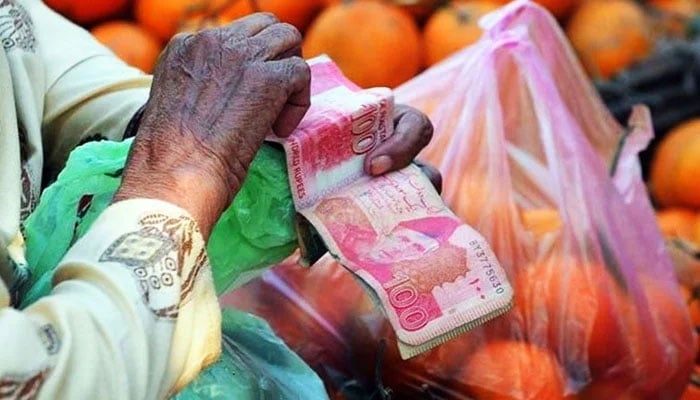
For the poor, it is a matter of survival. Low-income households in Pakistan spend more than half their income on food. When food prices rise, they do not merely cut back, they downgrade their diets. Protein consumption falls, nutrition deteriorates, and long-term health consequences begin to take root. Families cope by borrowing, selling assets or withdrawing children from school. This is how temporary inflation turns into permanent poverty.
To suggest that the poor will “sail through” this period would be dangerously misleading. At best, they will endure it. At worst, millions could slip deeper into deprivation. Yet, inflation does not hurt everyone equally. It redistributes wealth, often upward. Asset holders, particularly in real estate, benefit as nominal values rise.
Traders and stockists gain by holding inventory that appreciates in price. Large businesses with pricing power pass on higher costs to consumers, often protecting or even expanding their margins. Even the government benefits in a perverse way, as inflation erodes the real value of its debt.
The losers, meanwhile, are predictable and powerless: salaried individuals, daily wage workers, and those on fixed incomes. Their earnings lag behind inflation, and their purchasing power steadily collapses.
What is required is a shift in focus. First, the government must prioritize food supply management as a national security issue. Strategic reserves, efficient procurement, and strict action against hoarding are essential. Second, targeted subsidies must be expanded and indexed to inflation so that support rises automatically with prices. Third, energy pricing reforms should be gradual and predictable, not abrupt shocks that cascade through the economy. Finally, there must be a recognition that inflation control cannot come at the cost of social collapse. Stabilization that ignores human impact is neither sustainable nor just. Pakistan is not merely fighting inflation; it is fighting the erosion of its social fabric. If policymakers fail to act decisively, the burden of this crisis will not be shared equally, it will fall, as it always does, on those least able to bear it.