ISLAMABAD: A diplomatic outcast a year ago, Pakistan has become a trusted regional partner and a mediator between the US and Iran to end the war in the Middle East.
Field Marshal Munir has had several meetings with President Donald Trump, including an unprecedented one-on-one lunch at the ?White House, while the government has apprehended an Islamic State bomber accused of killing American troops and handed him over to the US.
In other moves to restore the Islamic nation’s credibility, its diplomats have launched a ?sweeping outreach programme with world leaders, while consolidating ties with principal ally China.
The first breakthrough came in March last year, when Pakistan helped capture a suspect linked to the 2021 Kabul airport bombing in which 170 Afghans and 13 US soldiers were killed, prompting public thanks from Trump and renewed intelligence sharing.
Maleeha Lodhi, a former Pakistan ambassador to the US, said the cooperation was “critical” in reversing decades of mistrust.
In May, a clash with old enemy India reinforced the shift.
Foreign office spokesperson Tahir Andrabi ?said the 90-hour conflict provided a massive boost to Pakistan’s diplomatic credentials because the country’s “military leadership showed tremendous restraint after successfully downing Indian fighter jets”.
After the conflict, Pakistani nominated Trump for the Nobel Peace Prize, acknowledging his move for peace.
Field Marshal Asim Munir’s visit to the White House, the first time a sitting US president had received Pakistan’s military chief without civilian leadership present, signalled that Trump recognised Pakistan’s internal power structure.
Pakistan’s military did not respond to a request for comment on this story.
Government officials have said the country’s makeover has been spurred by a strong civil-military alliance and ability to effectively juggle relationships with ?Gulf countries as well as the US and China.
“If there is one factor above all that has fuelled the widening of diplomatic opportunity for Pakistan, it is the trust and symbiosis between the field marshal and prime minister,” Mosharraf Zaidi, Sharif’s spokesperson, told ?Reuters.
Both Zaidi and Andrabi highlighted diplomatic initiatives from their offices, and a flurry of meetings and almost daily phone calls with world leaders.
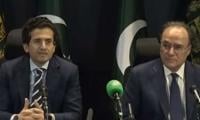
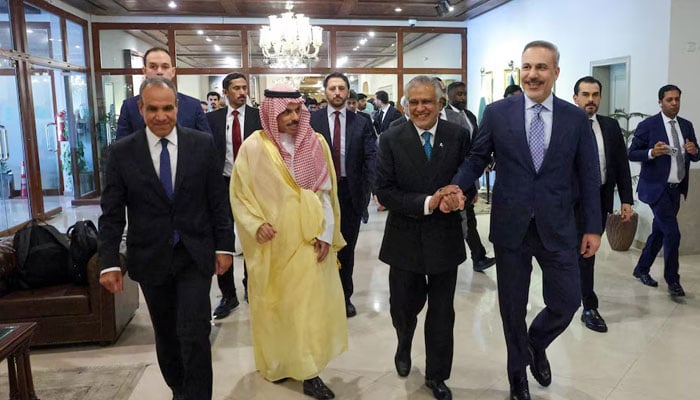
On Sunday, Foreign Minister Ishaq Dar hosted counterparts from Turkey, Saudi Arabia, and Egypt for talks that focused on ending the war in Iran.
“Because of Mr. ?Dar’s frequent interactions ?with these foreign ministers, they can share intimate comments as well as a solemn moment,” Andrabi said.
Ties with Washington have since deepened through frequent engagement between Pakistan’s civil and military leadership and the White House.
Prime Minister Shehbaz Sharif and Field Marshal Asim Munir have held talks with the US that included investment opportunities, anchoring Pakistan’s makeover with a mixture of business deals and geopolitical alliances.
Field Marshal Munir, who Trump has called his “favourite field marshal”, was the only serving military chief at the World Economic Forum in Davos this year.
Sources said he held further interactions with Trump there, and has spoken with Vice President JD Vance multiple times since the Iran war began.
Vance communicated with intermediaries from Pakistan about the Iran conflict as recently as Tuesday, according to a ?source briefed on the matter, making clear that Trump was open ?to a ceasefire if certain demands were met.
Sharif, meanwhile, has ?held repeated meetings with Trump as well as Saudi Crown Prince Mohammed bin Salman and Iranian President Masoud Pezeshkian.
Pakistan signed a mutual defence deal with Saudi Arabia last year.
Pakistan’s ascension on the international stage is however causing heartburn in India, which has usually had the higher diplomatic profile of the two rivals. Its opposition has questioned the government’s hands-off approach in the Middle East war ?and analysts say Islamabad’s rise risks leaving New Delhi on the sidelines of regional diplomacy.
“I have been calling for almost three weeks now for India to take a leading stand, leveraging ?its good relations with both sides ?into a peace initiative,” said opposition lawmaker Shashi Tharoor. “Now, apparently, Pakistan, Egypt and Turkey have done it. Good luck to them...but India gets no credit while Pakistan is holding the peace talks.”
However, Pakistan’s economy remains in the doldrums.
Islamabad is also enmeshed in its own conflict with neighbouring Afghanistan, which surged days before the US and Israel launched strikes on Tehran.
Pakistan “has ?to continue to ?look inwards to bolster its own pillars of national power, especially its economy,” said Uzair Yunus from a strategic advisory firm.
“It also needs to ?build an integrated defence industrial complex in partnership with Saudi Arabia and Turkey.”
Islamabad would need a long-term strategy to balance ties with Iran, its defence partnership with Riyadh and relations with Washington amid an unpredictable and possibly prolonged conflict, said Jawaid from Control Risks.