TEHRAN: Iran has claimed resilience and strategic success as its conflict with the US and Israel enters a fifth week, while insisting it remains open to diplomacy but distrustful after what it calls repeated betrayals, dismissing US claims that Iranian negotiators were “begging for a deal.”
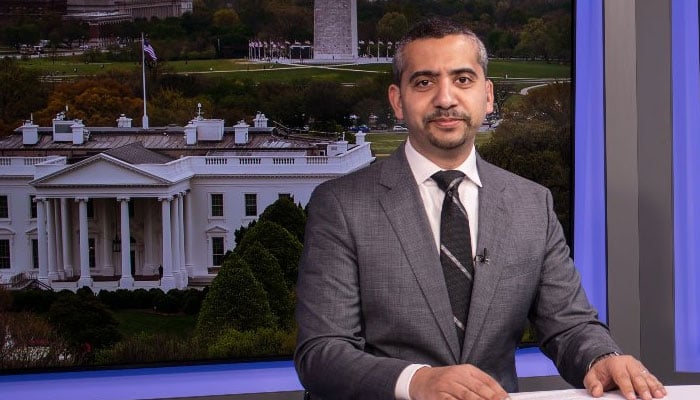
Speaking from Tehran in an interview with British-American broadcaster with Mehdi Hasan, Iran’s foreign ministry’s spokesperson Esmaeil Baghaei said Iran considers itself victorious in the conflict despite facing “two nuclear-armed, technologically superior” adversaries. He framed the current war as the latest phase of a decades-long confrontation with the United States dating back to the 1979 Iranian Revolution.
“I think we have already won this brutal war,” Baghaei said, arguing that Iran’s ability to endure sustained attacks demonstrates strategic success. He described the conflict as an “unjust war of aggression” led by Israel and supported by Washington.
Baghaei signalled deep scepticism about ceasefire arrangements, citing past instances where, he said, Iran was attacked while engaged in negotiations. He suggested Tehran no longer believes in external security guarantees and instead seeks to ensure its own deterrence.
“There is no security guarantee,” he said. “We have to guarantee our security… to make sure that Israel and the United States would not attack Iran again.”
The spokesperson rejected claims by former US President Donald Trump that Iran has been militarily or economically “decimated,” comparing such assertions to rhetoric used during the Iran-Iraq war.
On nuclear negotiations, Baghaei maintained that a deal with the US was “within reach” shortly before the outbreak of war, echoing earlier comments by Omani mediators. He accused Washington of undermining diplomacy, including withdrawing from the 2015 Joint Comprehensive Plan of Action.
He outlined three areas where Iran had shown flexibility: agreeing to dilute highly enriched uranium, committing not to stockpile such material, and limiting enrichment to civilian needs. However, he rejected demands for “zero enrichment,” calling it inconsistent with Iran’s rights under the Nuclear Non-Proliferation Treaty.
Baghaei also dismissed US claims that Iranian negotiators were “begging for a deal,” saying it would be “insane” to trust an administration that had, in his words, “betrayed diplomacy twice.”
Responding to concerns over Iran’s stockpile of enriched uranium, Baghaei insisted Tehran has no intention of developing nuclear weapons. He described higher enrichment levels as a response to the US withdrawal from the 2015 deal.
“Our nuclear programme has been safeguarded,” he said, adding that no international inspection report has proven weaponisation. He reiterated that Iran remains a “nation of principle,” noting that it has not declared any intent to pursue nuclear arms.
Baghaei confirmed Iran had received proposals from the US via mediators, reportedly including limits on missile programmes and regional alliances, but characterised them as “extremely maximalist and unreasonable.” He declined to confirm whether Tehran had formally rejected a reported 15-point plan.
On accusations that Iran has attacked Gulf states, Baghaei denied targeting neighbouring countries directly, saying Iranian strikes were aimed at military bases used by US and Israeli forces. He warned that allowing foreign powers to use regional territory against Iran was “illegal and immoral,” while insisting Tehran seeks to maintain relations with Arab neighbours.
The spokesperson acknowledged that protests earlier this year were partly driven by economic hardship but claimed they were later influenced by external actors. He said 3,170 people were killed, including security personnel, but could not specify how many deaths were caused by Iranian forces.
Baghaei also rejected allegations by human rights groups regarding excessive use of force, questioning their independence and sources.
On claims that Iran used cluster munitions, he said he could not confirm such reports and insisted Iran complies with international law, instead accusing the US and Israel of repeated attacks on civilian targets.
Asked about the possibility of a US ground invasion, Baghaei said Iran was prepared for “every scenario” and would respond with force.
“This is our homeland… we have no choice other than fighting back,” he said. He concluded by appealing directly to the American public, describing the conflict as “a war of choice” driven by political leadership rather than popular will.
“This is not the war of the American people against the Iranian nation,” he said. “This is a war that the United States is dragged into.”