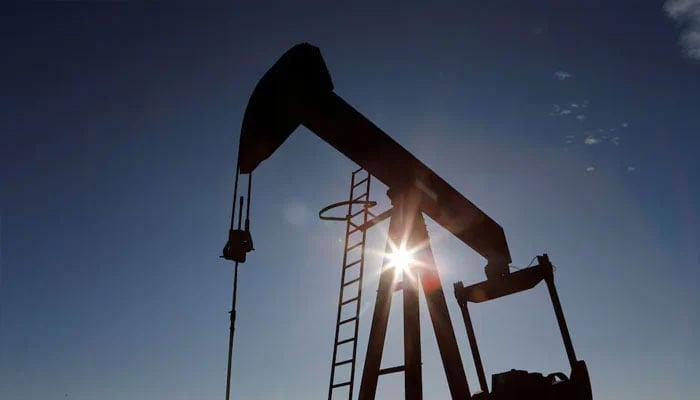
ISLAMABAD: Pakistan’s economic challenges are set to intensify sharply amid rising global oil prices, triggered by the US-Israel attack on Iran and its counter attacks, and disruptions in the Strait of Hormuz, with experts warning that failure to curb petroleum demand could significantly worsen the country’s fiscal position.
Estimates indicate that Pakistan’s oil import bill may surge by $8-9 billion, placing additional pressure on already strained external accounts. Analysts caution that without immediate demand management, the impact could be even more severe. The federal government, facing limited fiscal space, appears to have little choice but to adopt a multipronged strategy to manage the crisis. Over the past three weeks, it has absorbed price shocks by providing relief of Rs125 billion, keeping petroleum product (POL) prices unchanged despite sharp increases in international markets.
Global fuel prices have risen across the board due to geopolitical tensions, with uncertainty surrounding the duration of conflict. Compounding the situation, Russia has announced a temporary halt to gasoline exports from April 1 to July 31, a move expected to tighten global supply and further escalate prices.
Pakistan remains particularly vulnerable as it relies on Dubai and Oman benchmarks for pricing, which are currently trading significantly above Brent crude levels. While crude oil prices hover around $109 per barrel, Dubai benchmarks have reached approximately $135 per barrel, pushing the landed cost for Pakistan close to $145 per barrel after premiums and insurance.
Despite these pressures, the government has continued to shield consumers temporarily. However, officials acknowledge that such measures are not sustainable over the long term given fiscal constraints.
Eminent economist Sakib Sherani has called for a comprehensive policy response involving both federal and provincial governments. He stressed that the burden of relief should be shared through adjustments in NFC allocations or direct contributions from provinces, following consensus among the federating units.
Sherani proposed that up to 50pc of the increase in POL [petrol, oil, lubricants] prices be passed on to consumers, while the remaining burden could be managed through austerity measures, including substantial cuts in non-essential government expenditures.
He also advocated for targeted relief measures, particularly for two- and three-wheelers, including motorcycles, rickshaws and segments of public transport and ride-hailing services. Among his recommendations are the introduction of a fuel rationing system and the rollout of lower-octane petrol (RON-87) as cheaper fuel for older vehicles, motor bike and rickshaws that do not require higher-grade fuel.
On the exchange rate, Sherani urged the government to avoid artificially maintaining the rupee’s value against US dollar and instead pursue a gradual adjustment, enabling better management of imports and exports.
Former managing director of Oil and Gas Development Company Limited, Zahid Mir, highlighted the sharp escalation in global energy prices. He noted that crude oil prices have surged from about $70 per barrel in February 2026 to an average of $145 per barrel in March. Similarly, high-speed diesel prices have risen from $94 to $196 per barrel, while petrol has increased from $75 to $135 per barrel during the same period. He warned that such increases could double Pakistan’s oil import bill, further straining the economy.
Meanwhile, according to the finance ministry officials, discussions between the federal and provincial governments have yet to yield a consensus. A meeting held on March 27 revealed provinces’ reluctance to share the financial burden of relief.
The federal government had sought Rs200 billion in contributions — Rs102 billion from Punjab, Rs60 billion from Sindh and the remainder from Khyber Pakhtunkhwa and Balochistan. However, provincial authorities suggested that the government should pass on rising global prices to consumers to encourage behavioural change and reduce demand.
Officials stated that the federal government has so far arranged Rs158 billion for relief, of which Rs125 billion has already been utilised, with the remaining amount is expected to be exhausted soon.
A key proposal under consideration is to maintain current petrol prices for two- and three-wheelers, while allowing increases for four-wheel vehicles. Provinces may agree to share the cost of relief for smaller vehicles in line with their respective NFC award shares. This will be implemented through Fuel App which is almost finalised. A high-level meeting is expected soon to finalise decisions on relief measures. The meeting is likely to be attended by Asif Ali Zardari, the prime minister, deputy prime minister, federal cabinet members and provincial representatives. With global uncertainties persisting and domestic fiscal space narrowing, policymakers face mounting pressure to strike a balance between consumer relief and economic stability, as the country braces for further energy price shocks.