TEHRAN: US-Israeli strikes hit nuclear facilities and major steel plants in Iran on Friday, as America’s top diplomat left a meeting with his G7 counterparts to declare that Washington expects its military operation to prove victorious within a couple of weeks.
The attacks on key facilities triggered strong warning from Iran’s Foreign Minister Abbas Araghchi who said Tehran would exact a “heavy price for Israeli crimes”.
“Israel has hit 2 of Iran’s largest steel factories, a power plant, and civilian nuclear sites among other infrastructure. Israel claims it acted in coordination with the US,” said Araghchi in a social media post.
Iranian media reported strikes on Iran’s decommissioned heavy-water nuclear research reactor and a factory producing yellowcake uranium, and said there were no radiation leaks or danger arising from either attack. Iran informed the International Atomic Energy Agency there was no increase in off-site radiation levels at the yellowcake facility, the IAEA said on X, adding that it would look into the report.
Iran´s Revolutionary Guards also warned employees of the region´s industrial sites “that have American shareholders as well as heavy industries allied with the Zionist regime... to leave their workplaces immediately” as they vowed to carry out retaliatory attacks.
Markets fell and oil prices rose against the backdrop of ongoing fighting in the Gulf and in Lebanon, with no clear end to the conflict in sight and despite US President Donald Trump’s repeated insistence that indirect talks with Iran are going well. Oil prices climbed, with international benchmark Brent crude rising 2.6 percent to $104.49. The US benchmark oil contract, WTI, jumped 4.1 percent to $98.39.
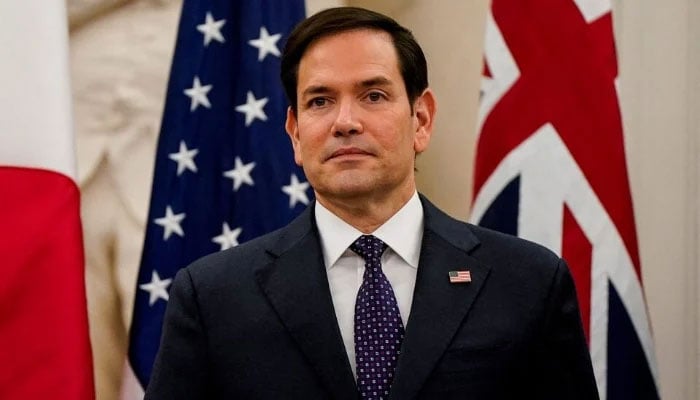
Secretary of State Marco Rubio said the US expects its operation against Iran to conclude within weeks, not months, and Washington can meet all its objectives without using ground troops.
Rubio told reporters after meeting G7 counterparts in France that Washington was “on or ahead of schedule in that operation, and expect to conclude it at the appropriate time here - a matter of weeks, not months.”
While he said Washington could achieve its aims without ground troops, he acknowledged it was deploying some to the region “to give the president maximum optionality and maximum opportunity to adjust the contingencies, should they emerge.”
Washington has dispatched two contingents of thousands of Marines to the region, the first of which is due to arrive around the end of March aboard a huge amphibious assault ship. The Pentagon is also expected to deploy thousands of elite airborne soldiers.
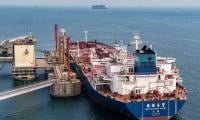
Rubio also said that he had won support from his G7 colleagues to oppose Iran’s attempts to impose a toll on ships crossing the Strait of Hormuz, a key sea lane for oil and gas shipments from the Gulf. “Not only is this illegal, it’s unacceptable, it’s dangerous to the world, and it’s important that the world have a plan to confront it,” Rubio said.
In a joint statement, the G7 foreign ministers “reiterated the absolute necessity to permanently restore safe and toll-free freedom of navigation in the Strait of Hormuz” and called for “an immediate cessation of attacks against civilians and civilian infrastructure”. Iran had sent “messages” to the American side but had not responded to a US-proposed peace plan, Rubio said.
Iranian media reported a US-Israeli attack on the Khondab heavy water complex in central Iran, citing a local official, while the country’s atomic energy agency said a uranium processing plant 600 kilometres away in Ardakan was also hit.
Israel’s army confirmed that it struck the two facilities, while the Iranian sources said there was no release of radioactive material at either site.
US-Israeli airstrikes also damaged two major steel plants in Iran, Iranian media reports said. “Minutes ago, the American-Zionist enemy targeted the Khuzestan Steel (in southwest Iran) and Mobarakeh Steel factories in Isfahan (central Iran) in two separate attacks,” the Fars news agency said, with state broadcaster IRIB also reporting the strikes. The news agency added that initial information suggested an “electrical substation and an alloy steel production line” were targeted at Mobarakeh Steel complex, while a warehouse was hit at the Khuzestan Steel Factory.
Renewed strikes and diplomatic action came after Iran’s Revolutionary Guards warned civilians across the Middle East Friday to stay away from areas near US forces.
Trump has insisted the Islamic republic wants to “make a deal” and extended a deadline for Tehran to open the Strait of Hormuz or face the destruction of its energy assets from Friday to April 6. But the Iranian side, which has made it clear it wants to end fighting on its own terms, indicated no let up in reprisal attacks against Israel and targets across the Gulf.
Civilians should “urgently leave locations where American forces are stationed so that no harm comes to you,” the Guards said.
Iran has reportedly replied to a 15-point US plan with its own demands, including war reparations and recognition of its sovereignty over Hormuz.
“The US, Israel and Iran each think they’re winning the war,” Crisis Group Iran specialist Ali Vaez wrote on X.
“If all three think their plan is working, each also believe(s) it has more cards up their sleeve,” he added, which encourages each side to hold out for more in negotiations.
A month of US and Israeli attacks have damaged at least 120 museums and cultural and historic sites nationwide, a top Tehran official said.
Markets have been upended by Iranian attacks on trade and energy targets in the Gulf, with Kuwait saying Friday its main commercial port was damaged in a drone attack at dawn.
A top Iranian official threatened to attack Saudi Arabia’s Red Sea port of Yanbu, home to the Samref oil refinery, as well as the coastal Fujairah oil complex in the United Arab Emirates, should a ground invasion take place.
“Step onto Iranian soil, and $150 becomes the floor for oil,” Vice President Esmael Saghab Esfahani wrote on X.
Iran’s message on Hormuz was just as defiant, with the Guards saying the strait was “closed” to vessels travelling to and from enemy ports, and that they had turned back three ships seeking to cross.
The Tasnim news agency said Tehran also called for an end to US and Israeli attacks on its territory and on aligned regional groups—a reference to Lebanon’s Hezbollah, among others.
Lebanon was drawn into the war after Hezbollah fired rockets at Israel.
Blasts rocked a largely deserted southern Beirut early on Friday morning and again in the afternoon, with the government reporting two people killed.
Over one million people are displaced in a “deepening humanitarian crisis”, the UNHCR refugee agency’s local representative Karolina Lindholm Billing warned, adding that “the risk of a humanitarian catastrophe... is real”.
Israel has shown no sign of wavering, with Defence Minister Israel Katz vowing to “intensify and expand” strikes on Iran in response to missile attacks on its soil.
The escalation threat came despite opposition leader Yair Lapid warning its military was “stretched to the limit and beyond”.
German Chancellor Friedrich Merz said that the US-Israeli war against Iran is unlikely to lead to “regime change”. “Is regime change really the goal?” he said at a forum in Frankfurt organised by the FAZ newspaper.
“If that’s the goal, I don’t think you’ll achieve it. It’s mostly gone wrong” in past conflicts, he said, pointing to the Afghanistan war.
“I have serious doubts as to whether there is a strategy and whether that strategy is being successfully implemented,” he added. “In that respect, it could take even longer.” He said Germany would be open to helping provide military protection in the Strait of Hormuz
The United Nations said it had launched an $80-million appeal to address the urgent humanitarian needs of nearly two million refugees in Iran and their host communities as the Mideast war rages. Iran hosts the largest number of refugees in the world and has a significant migrant population, including 4.5 million Afghans, according to Tehran, and, according to the UN, hundreds of thousands of Iraqis. ”With the recent escalation of conflict, refugees, other Afghans and host communities in Iran are struggling with concerns for their safety, job losses, psychological distress and urgent shelter needs,” said Babar Baloch, spokesman for UNHCR, the UN refugee agency.
More than 300 US troops have been wounded since the start of the Iran war on February 28, US Central Command said on Friday. “Since the start of Operation Epic Fury, approximately 303 US service members have been wounded. The vast majority of these injuries have been minor, and 273 troops have returned to duty,” US Navy Captain Tim Hawkins said. A US official who asked not to be identified told AFP that 10 troops remain seriously wounded. A further 13 troops have been killed in the war, according to the latest figures, with seven killed in the Gulf and six in Iraq.
In a separate development Friday, Iran’s military said that hotels housing US soldiers in the region would be considered targets.
EU energy ministers will hold video talks on the fallout from the Iran war early next week, as high oil prices remain a source of worry, officials said Friday.
Iraqi Kurdistan has asked federal authorities in Baghdad to stop daily drone attacks by pro-Iran armed groups on the autonomous region, a senior Kurdish official told AFP.
A senior Iraqi Kurdistan official said the United States is not arming Iranian Kurdish opposition groups exiled in his autonomous region, reiterating his government opposes any involvement by these groups in the Middle East war.
Egypt has ordered shops, restaurants and shopping malls to close from 9:00 pm from Saturday, hoping to curb energy bills that have more than doubled because of the Iran war. Prime Minister Mostafa Madbouly announced the curfew and said it would last for a month initially.
Iran’s foreign minister called a deadly strike on an Iranian school on the first day of the Middle East war as a “calculated” US assault. Abbas Araghchi said “more than 175 students and teachers were slaughtered in cold blood” in a “calculated, phased assault” in the February 28 strike on an Iranian elementary school in Minab.
Russian President Vladimir Putin is hoping the war in the Middle East will shift the focus from his “crimes” in Ukraine, the German foreign minister said on Friday.
Iran’s Revolutionary Guards urged civilians across the region to stay away from areas near US forces. “The cowardly American-Zionist forces... are attempting to use civilian locations and innocent people as human shields,” said the Guards in a statement on their Sepah News website. “We recommend that you urgently leave locations where American forces are stationed so that no harm comes to you.”
Iran’s military warned that hotels housing US soldiers across the region would be targets in its war with the United States and Israel. “When all the Americans (forces) go into a hotel, then from our perspective that hotel becomes American,” armed forces spokesman Abolfazl Shekarchi told state television on Thursday. “Should we just stand by and let the Americans strike us? When we respond, naturally we have to strike wherever they are.”
Elon Musk joined a phone call between US President Donald Trump and India’s Prime Minister Narendra Modi on Tuesday about the war in Iran, the New York Times reported on Friday, citing two U.S. officials. It was unclear why Musk was on the call or whether he spoke, the newspaper said.
US and Israeli strikes on Iran have damaged at least 120 culturally or historically significant sites across the country since the start of the war, the head of Tehran city council’s heritage committee said.
Japan’s government plans to temporarily lift restrictions on coal-fired power plants as it seeks to ease an energy crunch caused by the Middle East war, officials said on Friday.
China’s foreign ministry accused the media of publishing “false information” on Friday following a report that said the country’s top semiconductor firm has sent chipmaking tools to Iran.
The report, which cited information from two unidentified senior officials in US President Donald Trump’s administration, said contract chipmaker SMIC “began sending the tools to Iran roughly a year ago”. A US official was quoted in the report as saying they had “no reason to believe that any of this has stopped”.
Kuwait’s main commercial port was damaged in a drone attack on Friday, authorities said. The Shuwaikh port was targeted at dawn “by enemy drones; preliminary reports revealed material damage but no human casualties”, the Kuwait port authority said in a statement on X. The missile and drone attack on the Mubarak al-Kabeer port similarly caused damage but no casualties, the ministry said. The UK’s foreign minister Yvette Cooper urged a “swift resolution” to Middle East war, accusing Iran of holding the global economy hostage by blocking shipping through the Strait of Hormuz. “We are very clear we need to see a swift resolution to this conflict that restores regional stability,” Cooper said ahead of a meeting of G7 foreign ministers in France. Sri Lanka has jailed a man for three weeks after he admitted to hoarding four litres of petrol during a nationwide fuel shortage triggered by the Middle East war, local media reported Friday. The 48-year-old man initially said the fuel was for his lawnmower. India has reduced taxes on diesel and petrol, the government announced Friday, as the Middle East war continues to disrupt global energy supplies. “In view of the West Asia crisis, the central excise duty on petrol and diesel for domestic consumption has been reduced”, Finance Minister Nirmala Sitharaman said in a statement, referring to the Middle East war that began late last month.
An Iranian missile struck the Prince Sultan Airbase in Saudi Arabia on Friday damaging several U.S. refueling aircraft, the Wall Street Journal reported.
While Israeli media said one person was killed and at least two wounded after Iranian missile attack in central Israel.