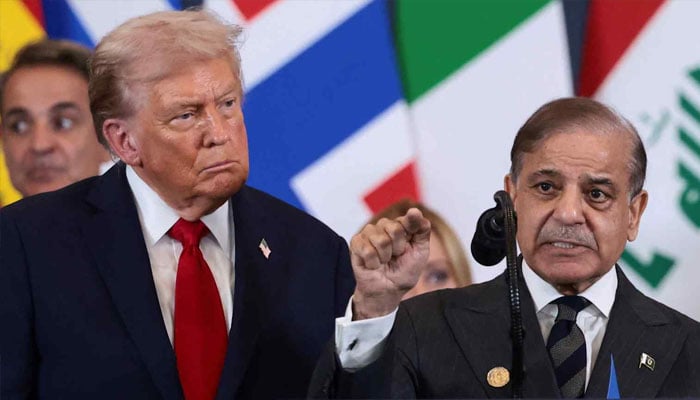
ISLAMABAD: Countries around the world are viewing Pakistan’s efforts to initiate dialogue between Iran and the United States as constructive but constrained, with most governments describing Islamabad as a helpful intermediary rather than a decisive peace broker.
Officials in Washington have quietly acknowledged Pakistan’s role as a communication channel. According to Reuters, US officials have used Pakistani interlocutors to pass proposals to Tehran, signaling a pragmatic willingness to engage through Islamabad despite broader mistrust.
On the Iranian side, authorities have shown openness to indirect engagement through multiple countries, including Pakistan. Iranian officials, cited by Reuters, confirmed that mediation efforts are underway through several channels. However, Tehran’s rejection of initial US proposals, reported by The Guardian, suggests limited confidence in the process so far, regardless of the intermediary involved.
In the Gulf, countries such as Saudi Arabia and the United Arab Emirates have responded cautiously. While broadly supportive of de-escalation, they remain uncertain about the effectiveness of ongoing diplomatic initiatives. Pakistani officials have been in contact with Gulf counterparts, according to Pakistan Today, positioning Islamabad as part of a wider regional push for stability.
Meanwhile, other regional actors including Turkey and Egypt are also engaged in parallel mediation efforts. Analysts cited by Axios note that this reduces Pakistan’s centrality, placing it among a group of intermediaries rather than at the forefront of negotiations.
Major powers such as China and Russia have not explicitly endorsed Pakistan’s role but have broadly supported diplomatic solutions. Their stance reflects a preference for regional mechanisms that could reduce tensions without direct Western leadership.
Across the Global South, Pakistan’s initiative has been received more positively. Many countries see Islamabad’s outreach as aligned with calls for ceasefire and dialogue, particularly within the broader Islamic world and developing nations seeking to avoid further regional instability.
Diplomatic observers say Pakistan’s key advantage lies in its working relationships with both Washington and Tehran, allowing it to function as a backchannel at a time of heightened tensions. However, they emphasise that the core obstacle remains the deep mistrust between Iran and the United States.
“Pakistan can facilitate communication, but it cannot impose compromise,” one analyst noted, summarising a widely held view in diplomatic circles.
While discussions about potentially hosting talks in Islamabad have surfaced in international reporting, expectations remain modest. Most governments agree that any breakthrough will depend less on the mediator and more on whether the two adversaries are willing to make concessions.
For now, Pakistan’s role is seen as significant but limited, an active participant in diplomacy, but not the actor likely to determine its outcome.