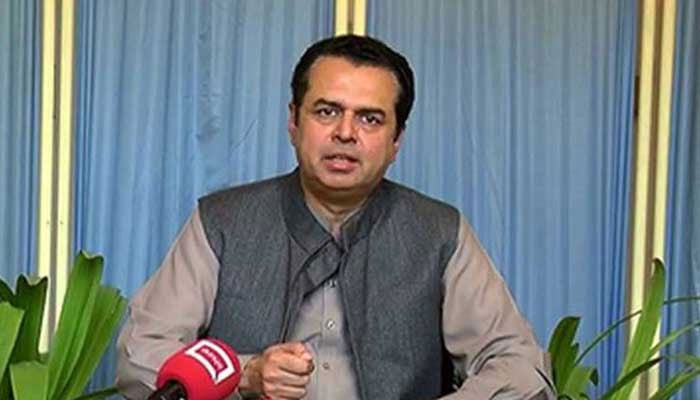
ISLAMABAD: Minister of State for Interior Talal Chaudhary informed the Senate Standing Committee on Interior and Narcotics Control on Thursday that the blocking of CNICs was subject to court orders and could not be carried out immediately under the existing legal framework.
A meeting of the Senate Standing Committee on Interior and Narcotics Control was held under the chairmanship of its Chairman Senator Faisal Saleem Rehman. The members highlighted concerns that some Afghan nationals allegedly possess Pakistani CNICs, while the CNICs of certain Pakistani citizens have reportedly been blocked on the grounds of being Afghan nationals. The panel chairman directed the authorities to resolve the issue at the earliest.
Khyber Pakhtunkhwa Police briefed the committee on the law and order situation in Mardan, highlighting ongoing counter-terrorism operations against TTP-linked groups, anti-narcotics efforts and action against serious crimes. The members were informed that modern tools, including surveillance drones, are being increasingly used and called for greater inter-provincial collaboration on technology. The committee praised the KP Police and urged further strengthening through modern resources and support.
The Senate panel also received a briefing on “tinted vehicle glasses,” and officials said the ban on tinted glasses was imposed due to its misuse. The chairman of the committee recommended introducing a fee-based mechanism for tinted glasses and suggested that parliamentarians and diplomats be exempted from the ban. The committee was also informed that the arms licence policy is currently under review by the federal cabinet and a decision will be announced soon. The committee criticised poor conditions, security and illegal occupancy at Parliament Lodges, terming them dilapidated and sought urgent action. The chairman directed the CDA to submit a report and enforce strict measures, prioritising parliamentarians.
The committee considered the “Islamabad Metro Bus Service Bill, 2026” moved by Senator Sarmad Ali. The senator sought a comprehensive legislative framework for the operation, maintenance and expansion of not only the Metro Bus System but for future public transport initiatives in the Islamabad Capital territory. Officials of the Capital Development Authority (CDA) opposed the bill, stating that the CDA already has a dedicated wing to manage public transport services in Islamabad, and therefore a separate regulatory authority may not be required. The chairman directed the CDA, Ministry of Interior, and Ministry of Law and Justice to reach a consensus and submit the outcome in the next meeting.
The committee also unanimously approved “The Pakistan Penal Code (Amendment) Bill, 2026” moved by Senator Sarmad Ali. The bill seeks to enhance the minimum age of protection for minors in relation to kidnapping and rape from 16 years to 18 years. At present, PPC, 1860, sets the age threshold at 16 years, which creates a legal gap and does not align with international standards. Pakistan is a signatory to the UN Convention on the Rights of the Child, which defines a child as every person below the age of 18 years.
The committee also unanimously passed “The Offence of Zina (Enforcement of Hudood) (Amendment) Bill, 2026,” moved by the same senator. The earlier law defines “adult” differently for males and females and also relies on the attainment of puberty, which has created ambiguity undermining the uniform protection of children. The bill seeks to substitute the definition of “adult” as a person who is 18 years old, thereby removing gender disparity, eliminating subjective reliance on puberty, and ensuring consistency with other statutes such as the Majority Act, 1875, the Child Marriage Restraint Act, 1929, and the Juvenile Justice System Act, 2018.
During consideration of “The Islamabad Real Estate (Regulation and Development) (Amendment) Bill, 2026,” members raised concerns over delays despite the passage of the bill by both Houses. The minister said the government is reviewing the isue to avoid legal overlap and has scheduled a meeting for deliberation, while the chairman directed the Interior Ministry to resolve it promptly and deferred further discussion.
The senate panel also unanimously passed “The National Database and Registration Authority (Amendment) Bill, 2026.” According to the proposed amendment, the Authority may provisionally impound a card for a maximum period of 60 days. NADRA has faced constraints in provisional impounding of CNICs during verification and for blocking those of criminal suspects.