ISLAMABAD: The International Monetary Fund (IMF) has shared the Memorandum of Economic and Financial Policies (MEFP) with Pakistani authorities after outlining the major contours of the next budget for 2026-27; however, the Fund staff has requested frequent adjustments in oil prices.
Pakistan and the IMF have exchanged drafts of the MEFP to reach a staff-level agreement for the third review and the release of the fourth tranche under the $7 billion Extended Fund Facility (EFF) and $1.4 billion under the Resilience and Sustainability Facility (RSF). The IMF has sought a budgetary and fiscal framework for the 2026-27 budget, envisaging the Federal Board of Revenue (FBR)’s tax collection target of Rs15.08 trillion. The current fiscal year’s FBR target has been revised downward from Rs13.79 trillion to Rs13.4 trillion for the end of June 2026. Earlier, the target had been reduced from Rs14.13 trillion to Rs13.79 trillion.
The IMF has also requested Islamabad to readjust petroleum, oil, and lubricant (POL) prices more frequently. The government had recently moved from reviewing prices fortnightly to weekly adjustments. The IMF seeks faster price resets, reflecting fluctuations in international markets. Pakistani authorities are negotiating with the IMF to determine an appropriate timeframe for more frequent adjustments, but it remains unclear whether the Fund expects changes twice a week or on a daily basis, an official said.
Meanwhile, the Planning Commission’s affiliate, the Pakistan Institute of Development Economics (PIDE), in its latest Policy Viewpoint authored by Dr Syed Hasanat Shah (Professor of Economics, PIDE) and Wajid Islam (Research Economist, PIDE), has warned that the ongoing Middle East crisis has evolved into a global economic shock, posing serious risks to Pakistan’s trade, energy security and external sector stability.
The study estimates that Pakistan’s direct exports to GCC countries could fall by $1.5 to $2 billion if disruptions in the Strait of Hormuz persist. Imports from the region, particularly energy imports, could also decline sharply, disrupting domestic production and export activity. At the same time, rising international oil prices could add $4.5 billion to Pakistan’s import bill, further widening the current account deficit and increasing pressure on foreign reserves.
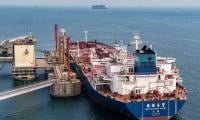
PIDE’s analysis underscores that Pakistan’s vulnerability is structural. The report notes that 81.6 percent of the country’s energy imports transit through the Strait of Hormuz, exposing the economy to severe supply shocks. It further highlights that if global oil prices rise from $80 to $160 per barrel, Pakistan’s trade deficit could expand from $24 billion to $41.8 billion, while inflation may surge from 7.1 percent to 11.1 percent.
Beyond trade volumes, the study warns of broader spillover effects. Rising freight costs, war risk premiums, and disrupted shipping routes could significantly weaken Pakistan’s export competitiveness, particularly in the textile sector, which accounts for nearly 60 percent of total exports. Moreover, any slowdown in remittances from GCC economies would further strain Pakistan’s balance of payments, given the country’s reliance on external inflows.