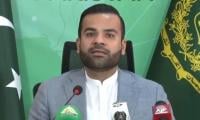
Muttahida Qaumi Movement-Pakistan (MQM-P) Chairman Dr Khalid Maqbool Siddiqui has urged the immediate introduction of the 28th constitutional amendment in the parliament to empower local governments, warning that the country is facing mounting internal and external challenges.
Speaking at a press conference at the MQM-P’s Bahadurabad headquarters on Wednesday, Dr Siddiqui pointed out that the threats and war situation long-forewarned over the past decades are now at Pakistan’s doorstep.
“War is knocking at the door,” he said, adding that wars imposed on nations are not fought by armies alone but by united peoples. In this context, he stressed that devolving powers to the grassroots has become unavoidable.
He also said the MQM-P had expected the proposed constitutional amendment to bring good news for the public by granting them a meaningful share in governance. However, he lamented, dynastic politics and feudal mindsets remain the biggest obstacles to decentralisation.
Addressing the prime minister, Siddiqui said his party’s sole condition for supporting the federal government was the effective implementation of Article 140-A of the Constitution (for empowering local governments), asserting that without empowered local councils, national stability cannot be guaranteed.
He warned that Pakistan’s adversaries would find the country’s largest city, Karachi, an easy target, and urged religious scholars from all schools of thought to promote sectarian harmony to ensure lasting peace. “Karachi, described as the country’s economic lifeline, can neither be governed nor safeguarded under the existing, outdated system.”
He also highlighted the party’s efforts to correct “undercounting” in the census, claiming that seven million residents of Karachi had been duly included after a sustained struggle. He assured people, including those affected by incidents such as the Gul Plaza inferno, that they would not be abandoned.
Calling for unity, he urged all political parties to come together in the national interest, warning that while the enemy cannot defeat Pakistan on the battlefield, it can sow division through conspiracies.
Syed Mustafa Kamal said that given the prevailing regional security situation, the 28th amendment has become indispensable for the country’s strategic and economic security. He noted that governance in Pakistan is effectively controlled by four chief ministers, while more than 400 cities lack basic facilities.
“The army will defend the borders, but empowered local bodies are essential to manage civic life, from sanitation to water supply,” he said, adding that Article 140-A has now become a necessity for the country’s survival.
Dr Farooq Sattar emphasised that citizens must be given the authority to decide their own destinies at their doorstep. He called for the establishment of strong local governments across Pakistan’s 144 districts, and demanded immediate implementation of the Karachi Strategic Development Plan. “Holding city mayors accountable without granting them adequate authority is unjust.”