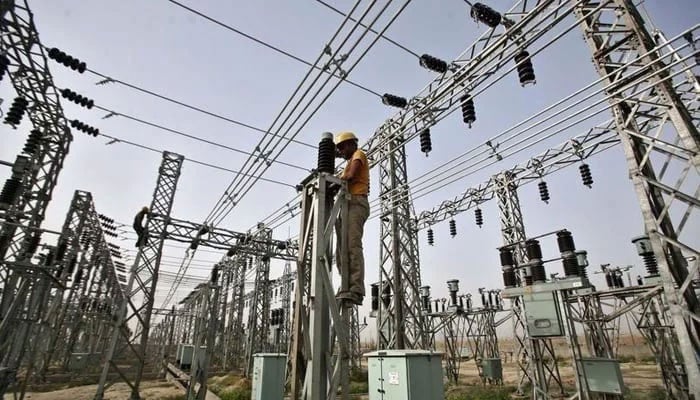
ISLAMABAD: Pakistan has awarded Rs12.67 billion ($45 million) in contracts to local manufacturers for power transmission equipment, cutting costs by about 40 per cent compared with imports, in a move Power Minister Sardar Awais Ahmed Khan Leghari on Wednesday hailed as a “transformative success” for industrial self-reliance.
The contracts, issued by National Grid Company (NGC), mark one of the largest domestically sourced procurements in the transmission sector. The initiative is aimed at reducing reliance on foreign suppliers while strengthening local industry and saving scarce foreign exchange.
An official said that contracts were secured through competitive bidding by Fast Cables, Newage Cables and Pakistan Cables, following a relaxation in qualification requirements under NGC policy. In parallel, educational orders, designed to help firms build technical capacity, were placed with Fast Cables and Pakistan Cables, Telephone Industries of Pakistan, Qaswa Industries, Creative Electronics, KBK Electronics and Accurate.
Leghari said the results validate the government’s indigenisation push, adding that future procurement will prioritise domestic manufacturers to lower costs and spur industrial growth. He described the policy as a “cornerstone for export-led expansion in sectors such as steel, cables and conductors, where local capability has expanded considerably”.
Officials say the framework combines technology transfer through educational orders, joint ventures with foreign firms and the development of local subsidiaries capable of meeting grid standards. So far, nine educational orders worth about Rs900 million have been issued, and 11 companies are being developed under a formal pipeline.
Beyond cost savings, substitution of domestic supply for imports, Pakistan conserves scarce foreign exchange reserves, a chronic pressure point for an economy that has repeatedly sought IMF support.
Faster project timelines add another layer. Officials say local sourcing is enabling earlier completion of critical transmission infrastructure, reducing delay in critical grid expansion projects, a key factor for an economy under persistent external financing pressure.