WASHINGTON/ JERUSALEM/TEL AVIV: Iran denied on Monday that it had engaged in negotiations with the United States, after President Donald Trump postponed a threat to bomb Iran’s power grid because of what he described as productive talks with unidentified Iranian officials.
The stunning about-turn came ahead of a Monday night ultimatum for Tehran to reopen the Strait of Hormuz shipping lane—or see Trump “obliterate” its power plants. With observers scrambling to interpret the latest statements from the US leader, oil prices fell and stocks markets jumped, even though Iran denied that any talks were underway. Trump wrote on his Truth Social platform that the US and Iran had held “very good and productive” conversations about a “complete and total resolution of hostilities in the Middle East”.
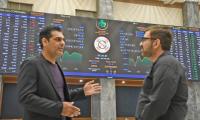
As a result, he said, he was postponing a plan to hit Iran’s energy grid for five days. His announcement sent share prices sharply higher and oil prices sharply lower, a sudden reversal to a market swoon caused by his weekend threats and Iran’s vows to respond.
He later told reporters that his special envoy Steve Witkoff and son-in-law Jared Kushner, who had been negotiating with Iran before the war, had held discussions with a top Iranian official into the evening on Sunday, and would continue on Monday. “We have had very, very strong talks. We’ll see where they lead. We have major points of agreement, I would say, almost all points of agreement,” he told reporters before departing Florida for Memphis.
In Memphis he said Washington had been negotiating with Iran “for a long time, and this time they mean business,” adding: “I think it could very well end up being a good deal for everybody.”
He did not identify the Iranian official in touch with Witkoff and Kushner, but said: “We’re dealing with the man who I believe is the most respected and the leader.”
“We’re dealing with some people that I find to be very reasonable, very solid. The people within know who they are. They’re very respected, and maybe one of them will be exactly what we’re looking for.”
The Axios newsite, citing an unnamed Israeli official, named Trump’s interlocutor as Mohammad Bagher Ghalibaf, Iran’s speaker of parliament, who is one of the most prominent non-clerical figures in Tehran.
But Ghalibaf said “no negotiations” were underway in a post on X, adding that the announcement was intended “to manipulate the financial and oil markets and escape the quagmire in which the US and Israel are trapped.”
Iran’s foreign ministry said that it had received messages through “friendly countries” about a request from the United States for talks, but denied any such negotiations had taken place since the start of the war.
“Over the past few days, messages were received through some friendly countries indicating a US request for negotiations aimed at ending the war,” said foreign ministry spokesman Esmaeil Baqaei, according to the official IRNA news agency.
However, he “denied any negotiations or talks with the United States during the past 24 days of the imposed war”.
Although Oman mediated indirect US-Iran talks in the month before the US and Israel launched the war, other countries have been mooted as possible go-betweens, including Egypt, Qatar or Pakistan.
On a day of whiplash announcements, Iran’s neighbours breathed a sigh of relief after Trump stepped back from the brink over his threat to target Iranian power infrastructure.
Tehran had threatened to deploy naval mines in the Gulf and target power plants and water infrastructure across the region in retaliation—threatening to ramp up an energy crisis of already historic proportions.
“Trump blinked first—out of a clear understanding that striking Iran’s energy infrastructure would trigger a direct and significant retaliation,” Danny Citrinowicz, a security analyst and former Iran expert for Israeli military intelligence, wrote on X.
The US leader said his administration was holding talks with an unidentified “top person”, but not the country’s supreme leader Mojtaba Khamenei, who is believed to be injured.
“We’ve wiped out the leadership phase one, phase two, and largely phase three. But we’re dealing with the man who I believe is the most respected and the leader,” Trump told reporters in Florida.
He described the individual as “very reasonable,” while warning that if the talks failed in the next five days, “we’ll just keep bombing our little hearts out.”
Thousands of US Marines are also headed to the Middle East, reinforcing the American presence there amid speculation at the weekend that Trump was mulling ground operations either to seize Iranian oil assets or to try to reopen the Strait of Hormuz.
“I welcome the talks reported between the US and Iran,” British Prime Minister Keir Starmer told a parliamentary committee, adding the UK was “aware” discussions were happening.
Trump said there were already “major points of agreement” with the Iranian negotiators. US conditions, he said, included Iran abandoning any nuclear ambitions and giving up its enriched uranium stockpiles.
Israeli Prime Minister Benjamin Netanyahu said on Monday that he spoke with U.S. President Donald Trump, who saw a chance of reaching a deal with Iran.
Trump believed there was a possibility of “leveraging the mighty achievements obtained by the IDF (Israel Defence Forces) and the U.S. military, in order to realize the goals of the war in a deal - a deal that will preserve our vital interests,” Netanyahu said in a video statement released by his office.
Britain is sending short-range air defence systems to the Middle East to counter Iranian missile attacks, Prime Minister Keir Starmer said. “We’re deploying short range air defence systems to Bahrain at speed,” Starmer told a parliamentary committee, adding that Britain was “doing the same with Kuwait and Saudi Arabia”.
Britain’s foreign ministry summoned Iran’s ambassador to London, Seyed Ali Mousavi, criticising what it called Tehran’s “reckless and destabilising actions” in the UK and overseas.
“The summons follows the recent charging of two individuals, one Iranian national and one British-Iranian dual national, under the National Security Act, on suspicion of providing assistance to a foreign intelligence service,” a Foreign Office spokesperson said.
Several strong explosions and air alert sirens rang out in Bahrain, according to an AFP journalist, the first to be heard in the Gulf since US President Donald Trump claimed talks to end the war with Iran were underway.
“Citizens and residents are urged to remain calm and head to the nearest safe place,” Bahrain’s interior ministry said on social media.
The International Committee of the Red Cross demanded a halt to the “war on essential infrastructure” in the Middle East, warning of potential “irreversible consequences” including harm to nuclear facilities.
“What we have seen in recent days in the Middle East risks reaching a point of no return,” ICRC President Mirjana Spoljaric warned in a statement.
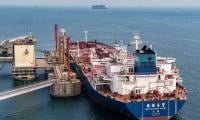
The chief of the UAE’s state energy company ADNOC slammed Tehran’s effective blockade of the Strait of Hormuz, which has caused a surge in oil prices, as “economic terrorism against every nation”. “No country should be allowed to hold Hormuz hostage,” Sultan Ahmed Al Jaber said in virtual remarks to the annual CERAWeek conference in Houston.
Trump claimed “regime change” was effectively underway in Iran, while warning that if talks with Iranian figures contacted by Washington do not succeed then the bombing will continue.
US Energy Secretary Chris Wright said oil market disruptions are “temporary,” as costs surge on the back of the war. Trump told AFP that “things are going very well” with Iran, shortly after announcing a five-day pause on targeting the Islamic republic’s power plants.
A malfunction in the David’s Sling aerial interceptor system allowed two Iranian ballistic missiles to strike southern Israel, wounding dozens of people over the weekend, the military confirmed on Monday.
The towns of Dimona and Arad were hit on Saturday evening, with the former widely believed to hold Israel’s undeclared nuclear arsenal. Most of the wounded were injured by shrapnel or while rushing to shelters, Israeli first responders said. Several buildings were also damaged in the strikes.
Israeli financial daily and website Calcalist first reported that it was David’s Sling, a key component of Israel’s multi-layered air defence shield, that had failed to intercept the incoming Iranian ballistic missiles.
Contacted by AFP, the Israeli military confirmed that it was David’s Sling, named after the Biblical figure who slew Goliath, that had malfunctioned.
The Israeli military announced it struck a site in Tehran on Monday belonging to Iran’s Revolutionary Guards and used for directing battalions of the Basij paramilitary force.
Swedish police said Monday it was heightening security in the area around the US and Israeli embassies in Stockholm, granting officers special powers to search people and vehicles, citing potential fallout from the war in the Middle East.
German Chancellor Friedrich Merz said he was “grateful” to US President Donald Trump for delaying previously threatened strikes on Iranian power plants.
South Korea´s foreign minister urged his Iranian counterpart during a call on Monday to guarantee the safe passage of its fleet through the Strait of Hormuz, Seoul said.
Russia called for a “political and diplomatic” settlement to the Middle East war just as US President Donald Trump claimed Washington and Tehran had held talks on ending the conflict.
Oman, which has mediated nuclear talks between the United States and Iran, on Monday said it was working on securing safe passage in the Strait of Hormuz, which Iran has de facto blockaded. “Oman is working intensively to put in place safe passage arrangements for the Strait of Hormuz,” Foreign Minister Badr Albusaidi said in a statement on X, adding: “Whatever your view of Iran, this war is not of their making.”
Sweden´s government said it was proposing to lower taxes on petrol and diesel temporarily, as energy prices soar due to the war in the Middle East. “All parties need to recognise that what is happening in the Middle East and the rest of the world is putting Sweden´s economy to the test,” Prime Minister Ulf Kristersson told a press conference.
A series of strong explosions were heard on Monday in the Iranian capital, an AFP journalist said, as the war with the United States and Israel raged for its fourth week. It was not immediately what was targeted but the blasts were felt in central Tehran, rattling the windows of buildings in the area, the journalist said.
TotalEnergies chief Patrick Pouyanne said that he expected “very high” prices of liquefied natural gas (LNG) by the summer if the Strait of Hormuz—closed by Iran due to the war—was not reopened.
Iran threatened to deploy “naval mines” in the Gulf if the United States and Israel were to attack any of its coasts or islands. “Any attempt by the enemy to attack Iranian coasts or islands will naturally, and in accordance with established military practice, lead to all access routes and communication lines in the Persian Gulf and coastal areas being mined with various types of naval mines, including drifting mines deployable from the coasts,” said the country´s defence council in a statement carried by state media.
Greek Prime Minister Kyriakos Mitsotakis announced a raft of additional measures to mitigate the energy cost of the Middle East war. In a televised address, Mitsotakis said the government had earmarked 300 million euros ($346 million) in relief for households and farmers in April and May.
China warned that further attacks on the Middle East risk creating an “uncontrollable situation” in the war-torn region. “If the war expands further and the situation deteriorates again, the entire region could be plunged into an uncontrollable situation,” Chinese foreign ministry spokesman Lin Jian told a news conference, when asked about Trump´s threats.
Israel´s military said on Monday morning it was working to intercept missiles fired from Iran, and urged people to take cover.
Saudi Arabia´s Ministry of Defense said it detected two incoming ballistic missiles on Monday, as the kingdom and its Gulf neighbours face Iranian strikes.
U.S. Vice President JD Vance discussed efforts to open negotiations with Iran during a phone call on Monday with Israeli Prime Minister Benjamin Netanyahu, Axios reported, citing a source familiar with the call. The source said the pair also discussed the components of a possible agreement to end the U.S.-Israeli war on Iran, Axios reported.
The United States on Monday advised its citizens in Oman to shelter in place “due to ongoing activity,” according to a security alert from the U.S. embassy in Muscat.
Bahrain has put forward a draft United Nations Security Council resolution that would authorise countries to use “all necessary means” - diplomatic language for force - to protect commercial shipping in and around the Strait of Hormuz, according to a text seen by Reuters on Monday.
Diplomats said the draft text was backed by other Gulf Arab states and the United States, although they said it was unlikely to succeed.
At least seven rockets were launched from the Iraqi town of Rabi’a towards a U.S. military base in northeastern Syria on Monday, two Iraqi security sources, the first attack of its kind since the start of the U.S.-Israeli military campaign on Iran.
A rocket launcher platform, fixed on a top of a burnt truck, was seized in the Rabi’a district, west of Mosul. It is believed that the launcher was used to fire the seven rockets towards the Rmeilan base in Syria, the sources said. It was the first cross border attack targeting U.S. troops in Syria since the start of the U.S.–Israel war with Iran, they added.