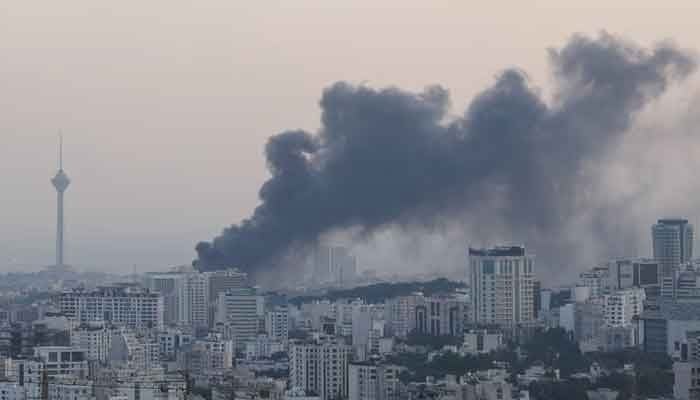
The war on Iran is not Pakistan’s war. But unless it winds down quickly, it may become the most devastating shock to our economy in living memory.
Pakistan is among the countries most exposed to the war’s evolving fallout. That is less a matter of geopolitics than of arithmetic. Its economy sits at the intersection of several fault lines. The country imports most of its fuel and food, depends heavily on remittances from the Gulf, and has no policy space to absorb another external shock. Globally, it is one of the countries most vulnerable to the crisis reverberating across markets.
The country’s misfortune is compounded by timing. This is not an economy facing a shock from a position of comfort. It is one bruised by four years of painful stabilisation, marked by a historic cost-of-living crisis and an unprecedented decline in income that has wiped out the gains of the last decade. In virtually all its previous crises, Pakistan has been tipped over the edge by rising commodity prices. But this usually happens after a period of domestic overheating.
This time, the commodity price shock is hitting Pakistan after austerity. The distinction matters. Shocks that hit an overheated economy can be softened by cooling demand. But those that hit an economy already suppressed by adjustment are far more damaging.
Pakistan’s vulnerability is heightened by the fact that it has virtually no room to respond to an external shock. At less than three months of import cover, its foreign exchange reserves remain thinner than in almost any other country. With government debt north of 70 per cent of GDP and gross financing needs among the highest in the world, its public debt burden is onerous. This still-depleted external and fiscal position leaves little room for countercyclical action. Therefore, a shock that might previously have been manageable will be destabilising this time around.
As a result, the transmission from a protracted regional conflict to domestic hardship will be swift, broad and severe. Persistently high oil, gas and fertiliser prices will quickly feed into transport and food costs, triggering a recession. A prolonged slowdown in the Gulf will weigh on remittances and external financing. And an unsettled regional environment will place extreme pressure on the rupee and restoke inflation. In a plausible scenario under which oil prices average $100 per barrel for the rest of the year, growth could fall to near zero, the rupee could slide by 10-20 per cent, and inflation may surge to mid double-digits. And this is not even the worst possible scenario.
Some will hope that the current IMF programme will cushion the blow. But this is false comfort. Although necessary to prevent default, the Fund programme will not by itself solve the problem. The size of the programme cannot be materially increased because Pakistan’s repeated past borrowing has nearly exhausted limits under the Fund’s access rules. And in the absence of stronger buffers, the last Staff Report has already telegraphed that the program will remain contractionary in the face of a commodity price surge.
Fiscal tightening, higher interest rates and exchange rate depreciation will be unavoidable under current constraints, but they will also compound the slowdown at the very moment when the economy needs breathing space. This policy mix will also fail to protect the most vulnerable from the brute force of this stagflationary shock. The standard IMF playbook for demand compression will be a dangerous gamble that risks provoking unrest and rupturing the already battered social fabric.
A better and safer response can be engineered. But it will require swift action and unabashed candour about the limits of the current policy framework. If the war drags on, Pakistan should not rely on austerity alone. A more optimal policy mix would involve targeted fiscal and monetary stimulus for vulnerable households and firms, together with some foreign exchange intervention and temporary import restrictions to reduce disorderly volatility in the rupee and a surge in inflation.
But such a response requires something Pakistan currently has precious little of -- namely, policy space. And policy space cannot just be wished into existence. It must be created through curbs on wasteful spending and reduced debt-servicing payments that open up fiscal room, as well as through increased foreign-currency inflows that shore up the external accounts. This can be achieved by securing long-term deposits and investments by friendly countries, deferred financing facilities for oil, gas, fertilisers and food imports, and debt reprofiling to lengthen maturities and reduce interest rates. Without such measures, any attempt at cushioning the shock will be too limited to matter.
The debt question, in particular, can no longer be postponed. As I have argued before in this paper, Pakistan’s domestic and external debt burden is no longer merely large. It is constraining every part of the policy response and weighing on the economy’s investment and growth outlook. At 6.0 per cent, Pakistan’s government pays more on interest as a share of its economy than any other country in the developing world. At nearly 65 per cent, it has the second-highest interest payments to government revenue in the world, after Sri Lanka.
As a result of this heavy interest burden, the government has no resources left for social spending or investment, which languishes at the bottom of the world. Pakistan’s government spends almost twice as much on interest as on investment, three times as much on education and almost six times as much on health.
As long as debt service absorbs scarce resources and refinancing risk remains high, the state will struggle to protect growth, maintain stability or shield the vulnerable. Pretending that the debt problem can be managed through endless adjustment only postpones the reckoning. It also raises the eventual cost, because each round of austerity weakens the economy’s capacity to recover from the next shock.
In the final analysis, Pakistan’s tired formula -- austerity first, growth later, debt somehow managed in the background -- has run its course. A country with such weak buffers and such heavy debt cannot hope to absorb one shock after another without eventually breaking the social contract.
Instead, the country needs a new settlement. It needs room to support demand in the short term and to smooth the impact of structural reforms to revive investment and exports in the medium term, room to defend the currency against disorderly moves that spur inflation and increase uncertainty, and room to protect the poor from the consequences of a conflict they did not choose.
How to create this room is the hard question at the centre of our policy dilemma in the wake of the war on Iran. It is the one that our policymakers should urgently raise in their ongoing talks to complete the third IMF review and in the lead-up to the Spring Meetings in Washington next month. Our current IMF programme is not fit-for-purpose and should be redesigned. With the bells of war tolling around us, there is no time to lose.
(Former acting governor of SBP and senior official at IMF)
The writer tweets @murtazahsyed