In March 1940, at Minto Park in Lahore, the historic Pakistan Resolution set in motion the creation of a new Muslim-majority homeland in South Asia. Seven years later, under the leadership of Muhammad Ali Jinnah, Pakistan emerged as an independent state-bruised by Partition, overwhelmed by refugee crises, and deprived of institutional infrastructure. Its birth was turbulent, its resources limited, and its geopolitical environment hostile.
Yet Pakistan was not alone in beginning life amid trauma, scarcity, and uncertainty. Across Asia, the Middle East, and beyond, several nations were born under comparable or even harsher circumstances.

At first glance, the world witnesses South Korea’s remarkable transformation from the ruins of war to a thriving economic powerhouse. In 1953, when the guns fell silent after the Korean War, South Korea was one of the poorest nations in the world. Its infrastructure was destroyed. Millions were displaced. Industry lay in ruins. Its GDP per capita was comparable to that of many African nations at the time. Today, South Korea stands among the world’s leading economies.
The transformation was neither accidental nor immediate. South Korea invested heavily in education, land reform, and export-oriented industrialisation. The state worked closely with private enterprise, prioritising productivity and global competitiveness. While early decades were marked by authoritarian governance, the country eventually transitioned to a stable democratic order in the late 1980s.
South Korea’s policymakers focused on economic strategy regardless of political turbulence. They treated human capital as a national asset. Pakistan, too, has a youthful population; but without sustained investment in education and skills, demographic potential risks becoming demographic pressure.
Another notable example is Singapore. When separated from Malaysia in 1965, Singapore faced daunting odds. It had no natural resources, high unemployment, communal tensions, and an uncertain geopolitical environment. Many doubted its survival.
Under the leadership of Lee Kuan Yew, Singapore adopted a governance model rooted in meritocracy, anti-corruption enforcement, and strategic economic positioning. It transformed into a global financial and trade hub within a generation.
Singapore’s success underscores the importance of clean governance and institutional efficiency. Anti-corruption measures were enforced rigorously, and public institutions were professionalised. Urban planning, public housing, and education were prioritised.
Singapore demonstrates how institutional discipline and clarity of vision can convert vulnerability into strength.
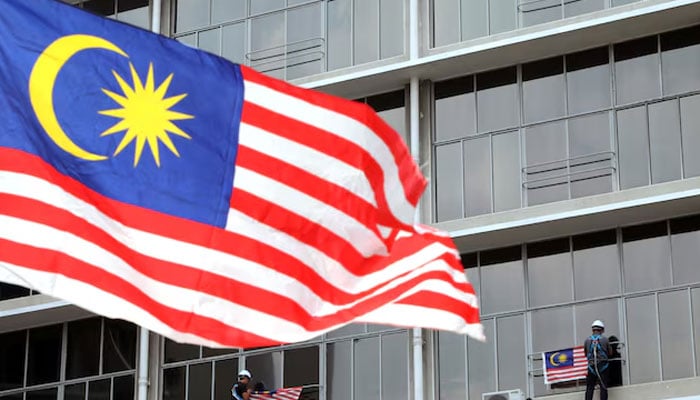
Malaysia’s experience in managing diversity while fostering economic growth provides another pertinent example in this discourse. Like Pakistan, Malaysia is a Muslim-majority country with deep ethnic diversity. At independence in 1957, it grappled with poverty, rural backwardness, and ethnic tensions between Malay, Chinese, and Indian communities.
Malaysia adopted long-term economic planning frameworks, including the New Economic Policy of the 1970s, aimed at reducing poverty and balancing economic disparities. It invested in infrastructure, export-oriented industries, and education. Though not free of political challenges, Malaysia maintained economic consistency and gradually transitioned toward diversified manufacturing and services.
Pakistan, similarly diverse in ethnic composition, could draw lessons from Malaysia’s attempts, imperfect but persistent, to manage diversity through economic inclusion rather than perpetual confrontation.

In the case of Bangladesh, since 1971, the country has made remarkable progress in key human development indicators. It has expanded its garment export sector, enhanced female labour force participation, and achieved significant improvements in primary education and healthcare.
Bangladesh’s experience demonstrates that recovery from severe adversity is possible. The country prioritised grassroots development, microfinance initiatives, and the economic empowerment of women.
For Pakistan, this experience offers a sobering yet encouraging lesson: early setbacks need not determine a nation’s long-term trajectory. With sustained political will and policy continuity, transformative progress remains achievable.

Turkey’s experience in balancing national identity with modernisation represents another significant pathway to development. Following the collapse of the Ottoman Empire after World War-I, Turkey was born amid territorial losses and economic devastation. Under Mustafa Kemal Atatürk, the country embarked on sweeping institutional reforms—legal, educational, and administrative.
Turkey’s experience shows that state-building requires clarity about institutional frameworks and consistent reform—even when political winds shift. national narratives must align with economic realities.
The Pakistan Resolution of 1940 articulated a vision of autonomy, federalism, and the protection of rights for Muslims of the subcontinent. Implicit in this vision was a commitment to constitutional governance. Yet, the experience of countries that have progressed despite adversity reveals certain common traits: strong institutions, long-term economic strategies resilient to political changes, sustained investment in human capital, integration into global markets rather than isolation, and meritocratic governance.
Pakistan’s early years, however, were marked by institutional fragility. The death of Muhammad Ali Jinnah in 1948, coupled with subsequent political instability, undermined constitutional development. The absence of a steady democratic trajectory further impeded consistent economic planning, which often shifted direction with each regime.
In contrast, the countries discussed above, despite experiencing authoritarian periods or internal conflicts, managed to maintain administrative coherence and a sustained developmental focus. Their experiences underscore the critical role of resilient institutions and policy continuity in shaping long-term national progress.
It is important to recognise that geography is not destiny. Some contend that Pakistan’s challenges arise primarily from its geographical location, proximity to conflict zones, ongoing rivalry with India, and entanglement in Cold War dynamics. However, geography alone cannot account for divergent national outcomes. South Korea faced an existential threat from the North, Singapore is situated in a geopolitically volatile region, and Turkey borders areas prone to conflict.
What ultimately distinguishes the trajectories of nations is the quality of governance and the extent of societal consensus around development priorities.
Against this backdrop, a pertinent question arises: is it time to revisit the spirit of Pakistan Resolution of 1940? The Pakistan Resolution was not merely a demand for territory; it represented a call for dignity, representation, and opportunity. Reengaging with this founding vision may offer valuable guidance. Nations that have advanced successfully did not abandon their founding principles; rather, they translated them into practice through robust and functioning institutions.
Examining states that faced conditions similar to Pakistan at the time of independence-but have since become thriving nations, underscores that this is a moment of reckoning for Pakistan.
Pakistan today possesses immense potential: a strategic location linking South Asia, Central Asia, and the Middle East; a large youth population; a resilient diaspora; and untapped natural resources.
Yet potential requires policy coherence. The countries born in poverty and conflict that now thrive did not wait for perfect conditions. They built systems gradually, sometimes imperfectly, often incrementally.
It is important to recognise, in this moment of reckoning, that the story of 1940 was one of possibility; the challenge today lies in execution.
As Pakistan reflects on the legacy of the Pakistan Resolution in Lahore, it may find that the path forward lies not in nostalgia, but in renewed commitment to institutions, to education, to accountability, and to the inclusive spirit that inspired its creation leading to human development.
Nations are not defined by the circumstances of their birth, but by the choices they make thereafter. Given its considerable potential, Pakistan’s future can be viewed with strong optimism.—Pakistan Zindabad
The writer is Associate Professor, Executive Director of HYIERI Australia