DUBAI: Missiles and drone attacks struck across the UAE on Monday, disrupting travel at Dubai airport, causing a fire in a crucial oil hub and killing one civilian, as Iran said it was ready to take the Middle East war “as far as necessary”, while US allies pushed back against Donald Trump’s call for help to reopen a vital shipping lane.
The slew of attacks on the UAE came a day after Iran’s foreign minister Abbas Araghchi said US bases in the Middle East had been used to launch air raids and that missiles had been launched from the UAE to strike Kharg Island. UAE officials have denied the claim.
While Iran’s Revolutionary Guards threatened to target US companies across the region, calling on employees to evacuate the sites. “Employees of American companies... are requested to leave these areas immediately. These areas will soon be targeted by the Islamic Revolutionary Guard Corps,” said the Guards in on their official Sepah News website.
It was not immediately clear which companies would be targeted but last week, the Tasnim news agency published a list of potential targets on Telegram that included the offices of tech giants such as Amazon, Google, Microsoft and Nvidia in Gulf countries.
In another development, several US allies on Monday rebuffed Donald Trump’s call to send warships to escort shipping through the Strait of Hormuz, drawing criticism from the US president, who accused Western partners of ingratitude after decades of support.
The US-Israeli war on Iran is in its third week with no end in sight, largely shutting the Strait of Hormuz, through which 20 per cent of the world’s oil and liquefied natural gas flow, raising energy prices and fears of inflation.
Israel said on Monday it had drawn up detailed plans for at least three more weeks of war as it pounded sites across Iran overnight.
A number of US partners including Germany, Spain and Italy said they had no immediate plans to send ships to help reopen the strategic waterway, which Iran has effectively shut with drones and naval mines.
A Palestinian civilian was killed on the outskirts of the Emirati capital Abu Dhabi when a missile hit a car, the state media office said.
The UAE has reported seven deaths since the war began, including five civilians and two military personnel, who died in a helicopter crash blamed on a technical malfunction.
Iran has been able to hit the UAE regularly during the war, disrupting commercial air travel and targeting energy installations on both sides of the Strait Hormuz. This has piled economic pressure on the oil-rich country, which has long been a lucrative hub for international travel.
Even the usually quiet northern emirate of Umm Al Quwain was not spared, with a drone attack damaging an unspecified building but inflicting no casualties, authorities said.
In the eastern emirate of Fujairah, a drone attack on oil infrastructure sparked a fire, days after an AFP journalist saw smoke rising from a major Emirati energy installation there.
Earlier, Dubai Airports said flights were gradually resuming at what is usually the world’s busiest international hub, following a nearby fuel tank fire sparked by a “drone-related incident”. Authorities said they had contained the fire and reported no injuries.
A witness at Dubai airport told AFP that passengers awaiting their flights had been evacuated to a lower floor for several hours after the attack.
Iran has fired more than 1,900 missiles and drones at the United Arab Emirates, more than any other country targeted by Tehran since the start of the Middle East war. This had upended travel plans in the financial hub despite its air defence intercepting the vast majority of projectiles.
Tehran has taken aim at US assets in the Gulf countries, but also civilian infrastructure, including landmarks, airports, ports and oil facilities, after US-Israeli attacks sparked the war.
AFP journalists also heard explosions in the Qatari capital Doha, where foreign ministry spokesman Majed al-Ansari earlier told reporters talks with Iran are only possible if it ceases its Gulf attacks.
Neighbouring Saudi Arabia’s defence ministry also reported intercepting more than 60 drones since midnight on Monday in the east of the country.
US President Donald Trump said that he does not know whether Iran’s new supreme leader Mojtaba Khamenei is still alive, adding that Washington was unclear whom it could negotiate with in Tehran. “We don’t know... if he’s dead or not,” Trump told reporters at the White House.
“A lot of people are saying that he’s badly disfigured. They’re saying that he lost his leg -- one leg -- and he’s, you know, been hurt very badly. Other people are saying he’s dead. Nobody’s saying he’s 100 percent healthy. You know he hasn’t spoken.” “We don’t know who we’re dealing with” in Iran, Trump said. “We don’t know who their leader is.”
Trump’s statement came as Iran’s new supreme leader appointed the former chief of the Revolutionary Guards as a military adviser, local media reported on Monday. “General Mohsen Rezaei was appointed as military adviser by the order of commander-in-chief Ayatollah Mojtaba Khamenei,” Mehr news agency reported. Other media also reported the appointment.
Rezaei, 71, previously headed the Islamic Revolutionary Guard Corps, the ideological arm of Iran’s military. He has since held several senior positions within Iran’s political system. Under the late supreme leader, Yahya Rahim Safavi held the position of military adviser. It was not immediately clear whether he holds the same position under Mojtaba Khamenei. On Monday, the new supreme leader issued a statement saying officials and heads of state institutions appointed under his father should “continue to carry on with their work”.
President Donald Trump criticized US allies for their lukewarm response to his call to help protect shipping in the Strait of Hormuz during the US war against Iran. Trump called for more “enthusiasm” from other countries, as he said he believed France and Britain would somewhat reluctantly get involved.
Trump said a number of countries that he did not name had committed to help secure the waterway but lashed out at others who were not “enthusiastic.”
“For 40 years, we’re protecting you, and you don’t want to get involved,” Trump said.The US leader was harsher about Prime Minister Keir Starmer, who has previously faced stinging criticism from Trump over Britain’s refusal to send an aircraft carrier to the region. “I was not happy with the UK. I think they’ll be involved, yeah, maybe. But they should be involved enthusiastically,” Trump said. Starmer said earlier that London was working with allies to craft a “viable” plan to reopen the strategic waterway but ruled out a NATO mission. He also stressed Britain “will not be drawn into the wider war.”
While Berlin insisted it “has been clear at all times that this war is not a matter for NATO”. “There was never a joint decision on whether to intervene. That is why the question of how Germany might contribute militarily does not arise. We will not do so,” German Chancellor Friedrich Merz.
Explosions hit the Iranian capital on Monday as air defence systems were activated, an AFP journalist said, and Israel said it had also targeted the cities of Shiraz and Tabriz.
On another key front in the wider war, Israel announced “limited ground operations” against Iran-backed Hezbollah in southern Lebanon “aimed at enhancing the forward defence area”.
The war has engulfed much of the region, with Iran striking at least 10 countries that host US forces. Its Revolutionary Guards say it has fired some 700 missiles and 3,600 drones.
Saudi Crown Prince Mohammed bin Salman and Emirati President Mohamed bin Zayed expressed solidarity against “the continued and blatant Iranian attacks” in a call on Monday, without mentioning US-Israeli strikes, according to a statement published by Emirati media.
Diplomatic talks with Iran are only possible if it ceases its attacks, Qatar’s foreign ministry spokesman said on Monday. “If they stop the attacks, then we can find a way out with diplomacy. But as long as our countries are being attacked, this is not the time to establish committees, it’s the time to take a very principled position (on) protecting our countries and for them to stop attacking us immediately,” Qatar’s foreign ministry spokesman Majed al-Ansari said.
Iran’s military has warned countries in the region against cooperating with the London-based TV channel Iran International, saying media infrastructure used to support the channel would be placed on its list of targets.
Israeli police said they found missile and interceptor fragments at holy sites in Jerusalem’s Old City on Monday, including areas near the Al-Aqsa mosque and the Church of the Holy Sepulchre.
Israeli President Isaac Herzog visited what he said was an Iranian cluster munition impact site in central Israel on Monday, warning the Islamic republic the use of such weapons would bring “more havoc on them”.
Lebanon’s Hezbollah said it launched an attack on Monday targeting the northern Israeli city of Nahariya, where first responders reported a man was wounded.
Oil prices pulled back and equities rose on Monday as investors focused on the crucial Strait of Hormuz and the head of the IEA said more crude could be released on the market if necessary. As the Middle East war entered its third week, Wall Street and most European stock markets climbed after Asian stocks mainly dipped. International benchmark Brent North Sea crude dropped back 1.3 percent to $101.84.
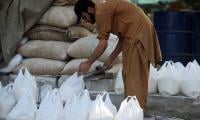
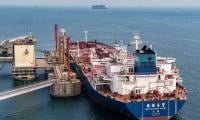
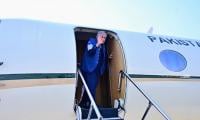
The price falls came after a Pakistani oil tanker became the first non-Iranian tanker to transit the Strait of Hormuz with its automatic transponder system activated, according to monitor Marine Traffic.
Iran vowed at the United Nations on Monday that it would not submit to “lawless aggression”, and said its citizens were in “grave danger” from US and Israeli strikes.
At the UN Human Rights Council in Geneva, where countries were discussing the rights situation in Iran -- notably following its deadly crackdown on protesters in recent months -- Tehran said the focus instead should be on the Middle East war.
“The most urgent and fundamental human rights issue concerning Iran is the imminent threat to the lives of 90 million people whose lives are in immediate and grave danger under the shadow of reckless military aggression,” said Ali Bahreini, Iran’s ambassador to the UN in Geneva. He called it “an aggression that is carried out by some of the most lawless and unscrupulous actors on the international stage”.
Bahreini said that if such “reckless militarism” was met with indifference, “Iran will most certainly not be the last country to suffer such treatment”.The ambassador said more than 1,300 people had been killed in Iran and more than 7,000 injured since the US-Israeli strikes began.
Six Gulf Cooperation Council countries, plus Jordan, condemned Iran’s attacks on their territories, saying they endangered regional security and civilian lives, and “cannot be justified under any pretext”.
The UN Human Rights Council was holding an interactive dialogue between nations and the council’s special rapporteur on rights in Iran and its fact-finding mission on the country.Several explosions were heard across Doha on Monday, according to AFP journalists, with the Gulf state’s defence ministry subsequently saying it had intercepted a missile attack.
Iran’s head of the judiciary said on Monday there should be no leniency or delay in issuing verdicts against those affiliated with Israel and the United States. “We must not delay or show leniency in executing final verdicts against those who, during wartime and unrest, committed crimes and were affiliated with the aggressor enemy,” said Gholam Hossein Mohseni Ejei, according to Tasnim news agency. He added that it was “necessary to accelerate the review and resolution of cases involving elements accused of threatening public security.”
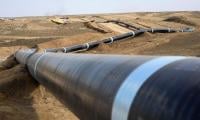
Iraq is hoping to ship up to 250,000 barrels of oil per day to a port in Turkey via a rehabilitated pipeline, its oil minister said, after the US-Israeli war on Iran cut off its main export route.
Some of the world’s biggest central banks meet this week as fears grow the energy shock unleashed by the Middle East war could fuel inflation and weigh on growth. The US Federal Reserve, European Central Bank, Bank of England and Bank of Japan hold previously scheduled meetings on Wednesday and Thursday, with their comments on the conflict’s potential fallout set to be closely scrutinised.
Sri Lanka announced a shorter work week to conserve its scarce fuel reserves as it prepares for a prolonged war in the Middle East, officials said Monday.
The cheapest fuel had run out and a man filled red jerry cans at a petrol station on Sydney’s metropolitan fringe on Monday as drivers anxious about soaring prices queued up.
Twenty Thai crew members of a cargo ship attacked in the crucial Strait of Hormuz arrived in Thailand on Monday, with three of their colleagues still stranded on the vessel in the Gulf.
With Israel accusing Iran of dropping banned cluster bombs on the country in retaliation for the US-Israeli strikes, a senior commander is working to make swathes of territory safe from the long-term threat of unexploded ordnance.
The Iranian men’s football team is still planning to play in the upcoming World Cup in North America, Asian football officials said Monday, despite a warning that they may be at risk.
Iran’s top security official Ali Larijani on Monday accused Islamic countries of abandoning Iran during the war with the United States and Israel, singling out the United Arab Emirates for describing Tehran as an enemy after attacks on Emirati targets, media reports aid.
In a statement addressed to Muslims across the world and to the governments of Islamic countries, Larijani slammed the response of Muslim governments to the US-Israeli attacks which began in late February, regretting that “no Islamic government stood alongside the people of Iran except in rare cases and limited to political positions.”
Larijani urged Muslim countries to reconsider their positions, saying the confrontation today was between “the United States and Israel on one side and Muslim Iran and the forces of resistance on the other.” “Which side of this battle do you stand on?” he asked. Larijani warned that the region’s future depends on greater unity among Muslim states.