Israel’s ambition to establish a “Greater Israel” continually keeps Middle East vulnerable to conflict. In pursuit of this goal, Israel is committing crimes against humanity with impunity. It violates and undermines international laws, norms, and moral values. Palestine is primary target, as it is considered the “Promised Land” by the Zionists. Consequently, Israel has occupied large areas of Palestine and displaced Palestinians. It has also continued to violate sovereignty of other regional countries, including Lebanon, Iraq, Syria, Yemen, Iran, and others. Israel has consistently tried to create divisions between Saudi Arabia and Iran. Unfortunately, United States and Europe continue to support Israel unconditionally.
Against this backdrop, China sought to resolve differences among regional countries. Therefore, China facilitated rapprochement between Saudi Arabia and Iran in 2023. This was a significant achievement, considering history of tensions and influence such reconciliation had on global sectarian divide. Moreover, it was agreed that after rapprochement, Saudi Arabia and Iran would reactivate 1998 and 2001 security and economic cooperation agreements. These agreements were crucial due to their scope and nature of cooperation they envisaged. Unfortunately, this rapprochement was considered contrary to interests of Israel and the US. Israel saw it as a threat to its goal of creating Greater Israel, while the US believed it could undermine its security interests, arms sales, resource acquisition, and economic plans. In the long run, it could even lead to closure of their military bases.
Consequently, only a few months after rapprochement, Israel launched a genocidal campaign in Gaza with full support from the US. Despite advice and resistance from Arab countries, the US, in collaboration with Israel, launched attacks on Iran. Now both countries are working to expand the war across the region. Iranian attacks on US bases in Arab countries have further worsened the situation. In this context, Pakistan is making significant efforts to contain the conflict. Moreover, Pakistan is working to ensure security of Kingdom of Saudi Arabia (KSA), as Pakistan has a security pact with Saudi Arabia. Therefore, Pakistan has engaged with Iran and Saudi Arabia to persuade them to exercise restraint.
These developments establish two important realities. First, Israel has no interest in peace and will do whatever it can to achieve its goal of Greater Israel. Second, United States prioritises Israel’s interests above all else; no agreement with Arab countries can prevent it from supporting Israel. This creates insecurity in the region. Thus, the US is neither a stabilising force nor a reliable partner; instead, it often becomes a source of conflict. Therefore, countries in the region, particularly Arab states, need to rethink their security and economic relationships. They must seek a reliable, peace-loving partner committed to development — one that can also withstand pressure from the US and West.
In this context, China emerges as only country with all these qualities. China carries no historical baggage in the region and has consistently promoted peace and development. It has always supported and cooperated with Arab countries to safeguard their interests, even when diplomatic relations were absent. For instance, when Israel attacked Iraq’s nuclear facilities, it created panic in the region. Countries feared similar attacks and sought protection. Saudi Arabia approached the US for long-range missiles and security systems, but Washington rejected the request. Saudi Arabia then turned to China, which accepted the request and provided assistance — even though diplomatic relations between the two countries did not exist at that time.
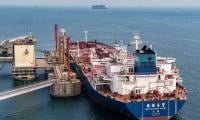
China is also playing a major role in the region’s economic development. In 2025 alone, it invested more than $39 billion in the region under Belt and Road Initiative (BRI). China also imports about 54 percent of its oil from Middle East.
Moreover, China is a trusted partner, as illustrated by its relationship with Pakistan. China is also helping Pakistan counter terrorism and Western-backed proxies. Therefore, Arab countries should engage with China to strengthen both economic development and security cooperation.
Secondly, Pakistan could serve as another important pillar in this partnership. Including Pakistan would be well-founded because it could act as a net security provider. Pakistan has always demonstrated unwavering commitment to security of Arab countries, particularly Saudi Arabia. It has also consistently supported China in safeguarding its core interests. Furthermore, Pakistan’s geographical proximity and its trusted relations with both China and Arab countries make it a strong candidate for such a partnership.
Therefore, a trilateral China–Pakistan–Arab security partnership should be established. As a first step, however, a China–Pakistan–Saudi Arabia security partnership could be formed. This would be an ideal arrangement. China possesses advanced technology, maintains strategic reliability, and avoids external influence. However, China generally does not deploy its military abroad. This is where Pakistan’s role becomes important. Pakistan does not follow such a restriction. It has a battle-hardened military and the capability to produce modern weapons. Moreover, Pakistan has always demonstrated its commitment to protecting Saudi Arabia under all circumstances. Saudi Arabia, for its part, is a resource-rich country and a major trading partner as well as a key oil exporter to China, but it requires advanced technology, modern weapons, and reliable security partners.
Such a partnership would be a win-win arrangement. China would strengthen its role as a stabilising force and development partner while protecting its investments and energy supply routes. Pakistan would emerge as a net security provider in the region. Meanwhile, Saudi Arabia would benefit from dependable security, allowing it to focus on economic growth and the welfare of its people.