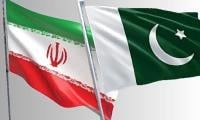
ISLAMABAD: Prime Minister Shehbaz Sharif on Monday announced a wide-ranging austerity and savings plan, saying the measures were necessary to deal with the prevailing global fuel crisis triggered by the ongoing US-Israel-Iran conflict.
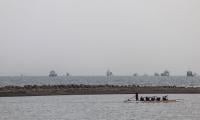
The measures come as Pakistan, similar to other global economies, is facing fuel supply constraints due to the closure of the Strait of Hormuz, a key route for the movement of fuel supplies around the world.
Major oil-producing countries reported hurdles in supplying fuel to buyers after Iran began retaliating against US bases in the Middle East, following joint strikes by the US and Israel. With supply routes disrupted, Pakistan announced a 20pc increase in the price of petrol and diesel, leading to austerity and simplicity measures across the country.
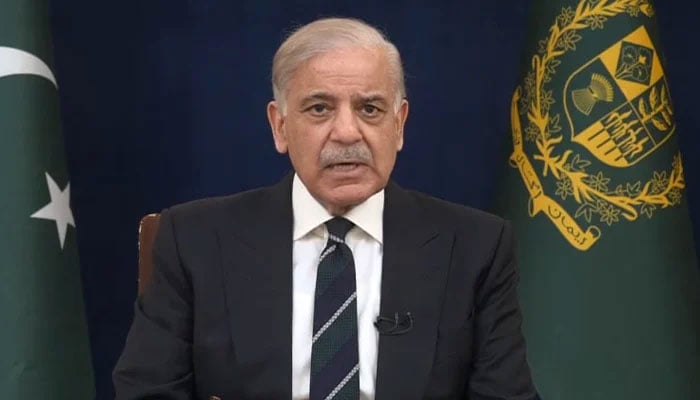
Addressing the nation here, the premier said the entire region had been gripped by conflict and stressed that Pakistan was pursuing diplomatic efforts to help defuse the crisis. “The entire region is currently in a state of war,” the PM said, adding that Pakistan was making every effort through diplomatic channels to help resolve the situation.
The prime minister also highlighted the security challenges faced by Pakistan on its western borders, saying the country continued to confront terrorism. “Pakistan is also facing terrorism on its western borders, and our armed forces are dealing with the situation effectively,” he said, adding that the military was responding under the leadership of Chief of Defence Staff (CDF) Field Marshal Asim Munir.
The PM also condemned the attacks on Iran, which he said resulted in the assassination of Iran’s Supreme Leader Ayatollah Ali Khamenei. At the same time, he also condemned the retaliatory attacks on friendly Gulf countries.
The prime minister said he had spoken with leaders of friendly countries to discuss the evolving situation. “I have held detailed discussions with the leaders of brotherly countries and conveyed that Pakistan stands shoulder to shoulder with them in this difficult time,” he said. He went on to say that the global oil market had reacted sharply to the conflict.
“The price of crude oil in the international market has suddenly jumped from around $60 to more than $100 per barrel,” he said, adding that daily life in Pakistan depended heavily on oil and gas supplies coming from the Gulf region.
The prime minister said the government had taken difficult economic and administrative decisions to manage the situation and reduce the impact of the energy crisis. “We have taken difficult decisions to reduce the energy crisis and stabilise the economy despite challenging circumstances,” he said. The premier acknowledged that the recent increase in fuel prices was a tough decision. “The increase in petroleum prices was a difficult decision taken with a heavy heart,” he said.
“My mind told me that there was no option but to increase fuel prices, while my heart worried that it could place a burden on the poor,” the prime minister added. The premier indicated that fuel prices could rise further in the coming days due to the ongoing global energy crisis, but assured that the government would try to minimise the burden on the public. “I assure the nation that we will make every possible effort to ensure that the burden on the public is kept to a minimum,” he said.
In the same addresses, the prime minister said both the federal and provincial governments had decided to adopt austerity and simplicity to reduce expenditures and conserve energy during the challenging economic situation.
Under the new measures, the government will reduce fuel allocations for vehicles used by government departments by 50pc for the next two months. “For the next two months, the fuel provided to vehicles of government departments will be reduced by 50pc,” he said.
The premier added that 60pc of vehicles in all government departments would remain off the roads for two months to help conserve fuel. He also announced that members of the federal cabinet, advisers and special assistants would not draw salaries for the next two months, while members of parliament would face a 25pc salary cut during the same period.
“All government departments will reduce their expenditures by 20pc,” he said. The prime minister further announced a ban on foreign visits by federal and provincial ministers, advisers, special assistants and government officials, except for those deemed essential for the country. “Only extremely necessary visits for national interest will be allowed,” he said, adding that teleconferencing and online meetings would be prioritised.
PM Shehbaz also announced a complete ban on official dinners and iftar parties, while seminars and official events would be held only at government venues to reduce costs. He said that 50pc of staff in both public and private sectors would work from home, except in essential services.
The prime minister also announced that government offices would operate four days a week, though the decision would not apply to banks. He added that all schools would be closed for two weeks starting at the end of the current week as part of the energy conservation measures. He also warned traders against hoarding essential commodities to exploit the situation.
“I want to warn hoarders not to take unfair advantage of the current situation,” he said. “Today the world is facing new challenges and the balance of power is changing,” he said, adding that new global alliances were also emerging.
He urged the nation to demonstrate unity and responsibility in dealing with the crisis. “Our nation needs unity and a strong sense of responsibility,” he said. Separately, in view of the evolving regional maritime security environment and potential disruptions to critical sea lanes, Pakistan Navy (PN) has launched ‘Operation Muhafiz-ul-Bahr’ to counter multidimensional threats to national shipping and maritime trade.
The initiative has been undertaken to ensure the uninterrupted flow of national energy supplies and the security of Sea Lines of Communication (SLOCs), the Inter-Services Public Relations (ISPR) in a statement said on Monday.
PN Escort operations are being conducted in close coordination with Pakistan National Shipping Corporation (PNSC). Pakistan Navy is fully cognisant of the prevailing maritime situation and is actively monitoring and controlling the movement of merchant vessels to ensure their safe and secure transit, the Pakistan Navy spokesperson said.
With approximately 90 percent of Pakistan’s trade conducted via sea, the operation aims to ensure that vital sea routes remain safe, secure and uninterrupted. Currently, PN ships are escorting two merchant vessels, one of which was scheduled to arrive in Karachi on Monday.
Pakistan Navy remains fully prepared to respond emerging maritime security challenges and is committed to ensuring the safety of national shipping and regional maritime security, the spokesperson said.
Meanwhile, a committee constituted by the prime minister to monitor petrol prices in light of the emerging situation in the region continued its daily review of developments in the energy sector. Chaired by Federal Minister for Finance and Revenue Muhammad Aurangzeb, the committee assessed national preparedness measures in view of the evolving regional situation.
The committee undertook a detailed review of petroleum product stock positions across the country. A comprehensive briefing was presented on the current national inventory of crude oil and refined petroleum products, ongoing import arrangements, and supply chain logistics. This included information on shipments currently en route and additional cargoes being arranged to strengthen national reserves. The committee noted with satisfaction that petroleum product stocks remain at comfortable levels and supply chains are functioning smoothly, with multiple cargoes and import arrangements in place to ensure continuity of supply in the coming weeks.
Members were also briefed on recent trends in global crude and refined petroleum product prices, which have witnessed significant volatility in recent days due to geopolitical developments in the region. The committee reviewed international market indicators, including benchmark crude movements and refined product price trends, and assessed possible scenarios for global energy markets. It was noted that the government is closely monitoring international price developments and undertaking continuous scenario planning to safeguard domestic energy security and economic stability.
The meeting further reviewed logistical and operational arrangements for crude imports, refinery operations, and maritime transportation, including coordination with international suppliers and shipping arrangements. Relevant authorities briefed the committee on steps being taken to facilitate cargo movements and ensure the uninterrupted functioning of refineries and supply infrastructure. The committee emphasised the importance of maintaining optimal refinery throughput and seamless coordination among all stakeholders to sustain national fuel availability.
In addition to supply-side measures, the committee was also presented with a range of targeted energy conservation and demand management options aimed at reducing pressure on fuel imports during periods of global volatility. Various measures relating to efficient fuel consumption, operational adjustments and public sector conservation initiatives were reviewed. It was noted that responsible consumption and targeted conservation could generate meaningful savings in fuel imports while supporting national economic stability.
During the meeting, the committee also took note of operational issues raised by stakeholders from the aviation and logistics sectors and directed the relevant authorities to undertake a detailed review of the matter and present a comprehensive assessment at the next meeting.
The committee also reviewed coordination mechanisms with provincial governments to ensure effective monitoring of petroleum product availability and prevent any disruptions in supply. Provinces briefed the committee on ongoing enforcement measures and inspections at petrol pumps, while federal authorities updated the participants on the development of an integrated monitoring dashboard to further enhance real-time visibility of stock levels and retail supply conditions across the country.
Aurangzeb emphasised that the government’s foremost priority remains ensuring uninterrupted availability of petroleum products across the country. He noted that while global energy markets are currently experiencing heightened volatility, Pakistan’s supply position remains stable and well-managed due to proactive planning and close inter-ministerial coordination.
The finance minister further stated that the committee will continue to closely monitor developments in international energy markets, domestic stock positions, and supply chain dynamics on a daily basis to ensure timely and coordinated policy responses. He reiterated that the government remains fully committed to maintaining market stability, safeguarding national energy security, and ensuring that supply chains remain uninterrupted during this evolving global situation.
The meeting was attended by Federal Minister for Petroleum Ali Pervaiz Malik, Federal Minister for National Food Security and Research Rana Tanveer Hussain, Federal Minister for Commerce Jam Kamal Khan, Federal Minister for Maritime Affairs Junaid Anwar Chaudhary, Minister of State for Finance Bilal Azhar Kayani, along with federal secretaries and senior officials from the concerned ministries, divisions and regulatory bodies.
On the other hand, amid the unstable fuel supply chain on account of closure of Strait of Hormuz, Pakistan has requested the Kingdom of Saudi Arabia to dispatch a Very Large Crude Carrier (VLCC) carrying 2 million barrels of crude oil to the port of Oman on March 23, from where four Pakistani vessels are scheduled to collect the cargo.
However, the Saudi authorities have not yet confirmed whether the VLCC will dock at Oman or deliver directly to Pakistan waters, leaving uncertainty over the fuel supply chain. According to industry sources, two ships from Pak-Arab Refinery Limited (PARCO), one from National Refinery Limited (NRL), and one from Pakistan Refinery Limited (PRL) are expected to take crude from the VLCC once it arrives.
Meanwhile, smaller shipments have already arrived. A PARCO cargo of 67,000 metric tons from Fujairah, Dubai, reached Pakistan Monday night. PARCO’s PNSC vessel is expected at Yanbu port in the Red Sea on Tuesday, March 10 to fetch 70,000 barrels around March 19-20. Another shipment from Fujairah for PARCO carrying 70,000 barrels is scheduled to arrive on March 21. The NRL has arranged 35,000 barrels after a brief pause, while PRL secured crude at a $6 per barrel premium from Fujairah.
Sources said Saudi Aramco is considering selling crude at spot market prices, but Pakistan’s fuel supply chain remains unstable. Crude prices at Dubai and Oman have surged to $125 per barrel, while Brent crude has risen to $118 per barrel. For Pakistan, Dubai and Oman crude are the benchmark, which have jumped $7 per barrel, pushing diesel prices to Rs179 per litre — an increase that could add Rs90 per unit, straining transport and agriculture sectors ahead of the planting season.
Experts warned that such a sharp spike in diesel costs could significantly increase input costs for farmers, undermining agricultural productivity and food security.
Critics have also targeted the government’s use of the petroleum levy (PL). Introduced as a shock absorber to shield consumers from international price volatility, the levy is now being used to generate revenue, with collections expected to exceed Rs1,700 billion by June 30, rather than cushioning the domestic market from fuel price shocks.