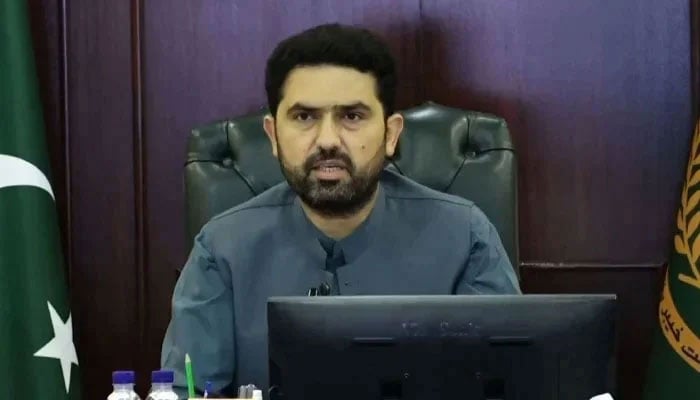
PESHAWAR/ LAHORE/KARACHI: Khyber-Pakhtunkhwa (KP) Chief Minister Sohail Afridi on Sunday strongly criticised the recent increase in petroleum prices by the federal government, terming the Rs55 per litre hike a “petrol atom bomb” on the public, and announced a subsidy package for motorcycle users.
He also announced that Bus Rapid Transit (BRT) fares would not be increased and a relief package for farmers would soon be introduced.
Addressing a press conference at the Chief Minister’s House alongside Finance Minister Muzammil Aslam and Special Assistant on Information Shafiullah Jan, he said the provincial government would take steps to shield citizens from the impact of rising fuel prices which, he said, would directly affect poor households, farmers and transport users.
The CM said Pakistan was facing difficult circumstances due to regional tensions and internal economic challenges as he referred to the ongoing situation involving Iran and Israel as well as tensions between Pakistan and Afghanistan. However, he said the immediate concern was the increase in petroleum prices by the federal government.
“When the price used to increase by Rs12 during the PTI government, the same parties called it a petrol bomb. Today they have increased it by Rs55 per litre, which is nothing short of a petrol atom bomb on the public,” he added.
He announced that the provincial government would provide a subsidy to motorcycle users in the province to offset the impact of the increase in petrol prices. According to him, there are currently between 1.4 million and 1.6 million registered motorcycles in Khyber Pakhtunkhwa. Under the relief package, each eligible motorcyclist would receive Rs2,200 in two instalments of Rs1,100 each to compensate for the Rs55 per litre increase in petrol prices.
However, when asked about the mechanism for distributing the subsidy among registered motorcycle owners, the chief minister did not outline a clear implementation plan or verification process. Officials also did not specify the platform through which the payments would be made or the timeline for disbursement.
“To protect the public from the direct impact of inflation, the provincial government will not increase BRT fares and will bear the additional cost,” the CM said.
Marking the International Women’s Day, he also announced that pink buses would be introduced in the BRT system for women commuters. He said the provincial government had planned to add 140 buses to the BRT fleet, of which 52 buses were ready, while 10 buses would be dedicated as pink buses for women.
He said the provincial government was preparing a special relief package for farmers and would soon announce support measures. The chief minister said the provincial government was also accelerating its solarisation programme under which 130,000 households would be provided solar systems.
Muzammil Aslam said the federal government had increased the petroleum development levy on petrol from around Rs86 per litre to Rs105 per litre. He said the government had already collected Rs822 billion in petroleum levy during the first seven months of the current fiscal year and could collect around Rs1.7 trillion by the end of the year.
Meanwhile, Punjab Chief Minister Maryam Nawaz Sunday met Federal Finance Minister Muhammad Aurangzeb and Federal Minister for Petroleum Ali Pervaiz Malik to review the situation arising from the ongoing war and its potential impact on petroleum supplies.
The meeting examined the supply, demand and available reserves of petroleum products in Punjab, and discussed measures to maintain balance between demand and supply amid the evolving global situation. Participants agreed to adopt a fuel conservation policy to ensure stability in petroleum supplies. The chief minister stressed the need to maintain uninterrupted availability of diesel for the agricultural sector.
Maryam directed the district administrations to closely monitor petroleum supplies and ordered a strict crackdown on hoarding. She also instructed the Punjab Enforcement and Regulatory Authority and Transport Department to keep a close watch on the situation and take action where required.
Officials also briefed the meeting on reserves of petrol, diesel, LNG and other fuels, highlighting the need for prudent consumption and immediate conservation measures in view of the global crisis.
Separately, Sindh Chief Minister Murad Ali Shah Sunday met Federal Finance Minister Muhammad Aurangzeb and Federal Petroleum Minister Ali Pervaiz Malik to review the evolving regional situation and its potential impact on the country’s energy supplies and economy.
Officials briefed the meeting on rising global oil prices and Pakistan’s fuel reserves, warning that crude oil prices could surge to $120 per barrel if the Middle East conflict intensifies. Such a rise could increase Pakistan’s monthly oil import bill by around $600 million, putting additional pressure on the external account.
Participants discussed emergency energy conservation measures to manage fuel consumption while ensuring continuity of economic activity. Murad Shah stressed the importance of responsible energy use and public cooperation, adding that the proposals would be presented to the cabinet for further deliberation.
Aurangzeb said the federal government was closely monitoring global energy markets and preparing contingency plans to deal with the financial impact of rising oil prices. He added that if crude oil prices surged significantly, Pakistan’s monthly oil import bill could increase by up to $600 million, putting pressure on the country’s external account.
Petroleum Minister Ali Pervaiz Malik said fuel conservation measures were essential to ensure that existing reserves lasted longer and remained available for essential sectors.
The petroleum minister informed the meeting that three petrol cargoes were expected to reach Pakistan by Monday (today), though concerns were raised about potential hoarding at petrol pumps. Officials also warned that a force majeure declaration by Qatar could affect LNG supplies, posing additional challenges.
To manage the situation, the federal government is working with the provinces to develop a joint dashboard to monitor fuel stocks and supply, while intensifying diplomatic engagement with Saudi Arabia, Oman and the UAE to secure alternative fuel supplies through routes outside the Strait of Hormuz.
The meeting agreed to strengthen coordination between the federal and provincial authorities to prevent hoarding, ensure smooth fuel distribution and safeguard economic stability.
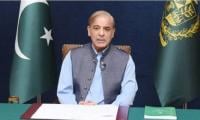
Meanwhile, Prime Minister Shehbaz Sharif Sunday reviewed a set of proposals aimed at implementing austerity and prudent spending, with a final action plan expected to be formally announced on Monday (today) amid widening tensions in the Middle East.
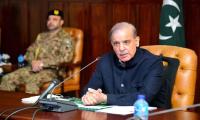
A day earlier, the prime minister chaired a meeting and directed relevant ministries to prepare a comprehensive strategy focused on austerity and savings in view of global economic pressures arising from regional instability. He instructed authorities to devise a plan centred on economic growth, simplicity and efficient use of resources, and asked the concerned committee to present practical and workable recommendations within 48 hours.
According to a statement issued by the Prime Minister’s Office, the high-level meeting reviewed measures to safeguard economic stability in light of recent international developments.
The prime minister was given a detailed briefing on the potential economic impact of the evolving global situation, particularly on Pakistan’s energy supplies and fluctuations in international markets.
“In view of recent international developments, timely implementation of measures to safeguard the national economy is essential,” Shehbaz said, adding that the government was closely monitoring the situation and would take all necessary steps to ensure economic stability.
He assured that all possible measures would be taken to protect public interests during the challenging period and directed the federal cabinet, provincial representatives and senior officials to ensure efficient use of resources while providing relief to public.
The PM stressed prudent management of national resources and said the government would provide greater relief once the situation improves. The statement added that austerity measures would not affect the industrial and agricultural sectors, ensuring that production, exports and food security remain protected.
Shehbaz also stressed that the burden of savings and austerity should be shared fairly, urging the privileged and elite segments of society to set an example in making necessary adjustments.
According to a related energy alert, Pakistan could face a serious gas shortage by the end of March if tensions around the Strait of Hormuz persist, potentially forcing the government to implement strict gas load-management measures across key sectors of the economy.
Energy officials said the country’s remaining LNG supplies are expected to run out by March 24, when two cargoes currently being re-gasified at a reduced rate of 100 million cubic feet per day (mmcfd) — down from the normal 500–600 mmcfd — are fully offloaded. If LNG shipments remain disrupted, Pakistan will have to rely largely on domestic gas production.
Pakistan currently produces about 2.9 billion cubic feet per day (bcfd) of natural gas, far below the national demand. Authorities said around 4.665 billion cubic feet (bcf) of gas stored in the national pipeline network, known as line pack, is helping maintain system pressure but could be exhausted by March 31.
Officials noted that even if tensions ease immediately, LNG supplies may not resume quickly as liquefaction plants require time to restart operations. Most LNG vessels linked to QatarEnergy are currently stationed across global routes or ports, leaving only a limited number of cargoes available for immediate shipment.
To manage the emerging shortage, the government has already started reducing gas supply to several sectors. Gas supply has been suspended to Fatima Fertilizer and Agritech Limited on the Sui Northern network, while supply to Fauji Fertilizer Company in Karachi has been cut by about 50 per cent.
The power sector, currently consuming around 188 mmcfd of re-gasified LNG, is expected to reduce its usage to about 90 mmcfd by March. Gas supply to industries has also been curtailed by 10-15 per cent. Officials said the load-management plan will be reviewed again in the final week of March if the crisis continues. In a worst-case scenario where LNG imports remain suspended, authorities may have to halt gas supply to the industrial sector altogether.
Domestic consumers could also face strict rationing, with gas supply potentially restricted to designated cooking hours. The CNG sector, which currently receives about 45 mmcfd, could see its supply reduced to zero.
Meanwhile, gas supply to the Nooriabad Power Plant, which generates about 100 megawatts of electricity, has already been cut to 20 mmcfd as part of conservation measures.
Energy analysts warn that the situation highlights Pakistan’s vulnerability to geopolitical disruptions affecting critical global energy routes. A prolonged crisis could put additional pressure on electricity generation, fertiliser production and industrial activity, with broader economic consequences.
Also, Pakistan’s inflation could rise to 9-11 per cent in the coming months if global crude oil prices cross $100 per barrel, according to a research report released on Sunday.
The report by Chase Securities Pakistan estimates that sustained oil prices at $100 per barrel could add 2.8-3.7 percentage points to the country’s consumer price index (CPI), lifting inflation from the 7pc recorded in February 2026 to around 9-11pc within the next two to three months.
Global oil prices have surged after US-Israel military strikes on Iran on February 28 and Iran’s subsequent move to close the Strait of Hormuz, a key shipping route that carries nearly 20pc of global oil supply.
According to the report, Brent crude has climbed from $68.70 per barrel at the start of 2026 to $92.69 by March 8, while West Texas Intermediate rose to about $90.90 per barrel, marking one of the largest weekly gains in futures trading history.
The surge has already translated into higher domestic fuel prices. In the largest single fuel price increase in Pakistan’s history, the government raised petrol and high-speed diesel prices by Rs55 per litre effective March 7. Petrol rose to Rs321.17 per litre, while diesel increased to Rs335.86 per litre, reflecting a roughly 20pc jump.
Authorities have also shifted to weekly petroleum price revisions starting March 8 to better reflect rapid changes in global oil markets.
The geopolitical shock has also shaken the financial markets. Pakistan’s benchmark KSE-100 Index recorded its largest-ever single-day drop on March 2, falling 16,089 points (9.57pc) to 151,973, which triggered an automatic circuit breaker within minutes of trading.
Despite the volatility, the report notes that historically Pakistan’s equity market has shown resilience during oil price spikes, except during periods of broader global crises such as the 2008 financial crisis.
Analysts say the current situation differs from past oil shocks as Pakistan’s inflation remains relatively moderate at 7pc, providing policymakers some room to manage the inflationary impact.
The report estimates that higher fuel and transport costs could add about 1.2 percentage points to inflation, while increases in housing, electricity and gas costs may contribute 0.8-1.2 percentage points. Rising transport costs could also push food inflation higher, bringing the total estimated CPI impact to 2.8-3.7 percentage points.
The report described the government’s policy response — including full fuel price pass-through, weekly price revisions, anti-hoarding measures and austerity steps — as broadly appropriate to manage the supply shock.
However, analysts noted speculation that the State Bank of Pakistan, which currently maintains a policy rate of 10.5pc, may consider a precautionary rate hike. They cautioned that since the oil shock represents a supply-side inflationary pressure, any monetary tightening should remain measured rather than aggressive.