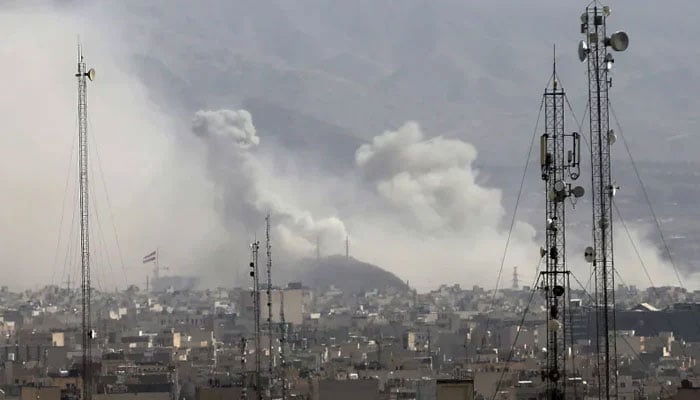
LAHORE: The world appears to be sliding into another period of prolonged instability. The Middle East is once again in turmoil. South Asia, too, remains tense. For Pakistan, geographically positioned at the crossroads of these two volatile regions, the stakes could not be higher.
The current turbulence in the Middle East has placed Islamabad in an awkward position. Iran and several Gulf states find themselves on opposing sides of regional fault lines. Major powers are involved. Emotions run high across the Muslim world. Pakistan’s public opinion, diverse and deeply engaged with global Muslim causes, further complicates the policy landscape. The challenge is to avoid alienating any side while safeguarding national interests.
Unlike distant observers, Pakistan cannot afford the luxury of ideological positioning. It sits uncomfortably between competing interests. To its west lies Iran, a neighbour with whom it shares a long border, religious ties and energy potential. Across the Arabian Sea are the Gulf states — especially Saudi Arabia and the United Arab Emirates — whose economies host millions of Pakistani workers and whose financial support has often provided breathing space during economic crises. To the east stands India, a long-standing rival, while the Afghan frontier continues to demand security attention. In such an environment, one wrong diplomatic move can prove costly.
The first imperative is strategic restraint. Pakistan’s foreign policy must remain anchored in neutrality and diplomacy. Public rhetoric should emphasise de-escalation, dialogue and respect for sovereignty rather than alignment with any bloc. Islamabad’s voice, when raised, should consistently call for ceasefires and negotiated settlements.
Second, economic realism must guide foreign policy. Pakistan’s fragile economy cannot withstand major external shocks. Remittances from the Gulf remain a critical lifeline. Energy imports from the Middle East are indispensable. Trade with neighbouring Iran, though limited by sanctions complexities, holds long-term promise, particularly in energy cooperation. Alienating either side would carry tangible economic costs. In times of fiscal strain, prudence is not weakness — it is necessity.
At the same time, Pakistan must quietly accelerate economic diversification. Expanding trade with Central Asia, deepening ties with China, exploring Southeast Asian markets and strengthening multilateral partnerships can reduce overdependence on any single region. A broader economic base provides diplomatic flexibility.
Domestic stability forms the third pillar of survival in turbulent times. External conflicts often spill inward, inflaming sectarian narratives or political divisions. Pakistan’s society includes communities with emotional and religious affinities across the Middle East. Responsible leadership therefore requires careful messaging — affirming unity at home and discouraging polarisation. The state must ensure that foreign crises do not translate into internal discord.
Equally important is managing existing regional tensions closer to home. Pakistan already faces security challenges along its western border and a complex relationship with India. Opening additional fronts — diplomatic or otherwise — would be unwise. De-escalation in the immediate neighbourhood strengthens Pakistan’s hand internationally.
Another avenue worth pursuing is quiet diplomacy. Pakistan has historically maintained channels with diverse actors in the Muslim world. Rather than dramatic public gestures, behind-the-scenes engagement may prove more productive. Offering support for dialogue initiatives, participating constructively in multilateral forums, and maintaining communication with all sides can help Islamabad remain relevant without becoming entangled.
Crucially, Pakistan must articulate and consistently project an independent foreign policy grounded in national interest. Independence does not mean isolation; nor does neutrality imply indifference to injustice. It means calibrating responses carefully, avoiding emotional impulses, and recognising that the country’s foremost responsibility is to its own citizens’ stability and prosperity.
These are murky waters. The Middle East’s conflicts are complex, layered with history, ideology and power politics. South Asia’s rivalries are equally entrenched. Pakistan cannot reshape these realities, but it can manage how it navigates them. Calm, measured diplomacy; economic diversification; domestic cohesion; and avoidance of unnecessary entanglements form a sensible path forward.
In times of global turbulence, survival often belongs not to the loudest actors, but to the most prudent. For Pakistan, wisdom lies in balance — maintaining cordial ties with Iran while preserving strategic partnerships in the Gulf; advocating peace without being drawn into war; and focusing relentlessly on internal strength.