ISLAMABAD: Amid the Pak-Afghan situation and the widening conflict in the Middle East, Pakistan is recalibrating its political, financial and energy strategies to avoid economic collapse and diplomatic isolation.
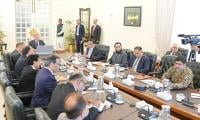
In this regard, Prime Minister Shehbaz Sharif on Wednesday met the parliamentary leaders in the National Assembly and Senate and took them into confidence on the Pak-Afghan situation and recent tensions in the region, especially in the Middle East and the Gulf.
Opposition leaders in the Senate and National Assembly Senator Raja Nasir Abbas and Mehmood Khan Achakzai, respectively were among the invitees who skipped the in-camera meeting, reports Muhammad Anis.
Adviser to the Prime Minister Rana Sanaullah Khan on Tuesday visited the chambers of the two opposition leaders and invited them to attend the meeting. “The prime minister took the parliamentary leaders into confidence on the Pak-Afghan situation and recent tensions in the region, especially in the Middle East and the Gulf,” said the PM media wing in a statement.
A detailed briefing was also given to the parliamentary leaders, highlighting Pakistan’s diplomatic efforts during the recent tensions.
The parliamentary leaders expressed their views openly and emphasised national unity, consensus and solidarity in the current situation. They appreciated Pakistan’s diplomatic efforts for peace in the region and emphasised the need to further accelerate diplomatic efforts. They also gave suggestions on the future course of action.
The participants reiterated their strong commitment to eradicating terrorism from the country and thanked the prime minister for taking the political leadership into confidence in the larger interest of the country.
Deputy Prime Minister Ishaq Dar and a senior official of the Foreign Office briefed the participants on the tense situation in the region and Pakistan’s position in the present circumstances. The meeting was apprised that Pakistan would neither join the war nor would it become a party, rather it was making efforts for making peace.
Meanwhile, speaking on Geo News, Rana Sanaullah said Dar informed the meeting about his discussions with various countries, specifically the Gulf States, to ease tensions in the region. According to Sanaullah, Dar conveyed that Iran will not attack Saudi Arabia if it guaranteed that its territory will not be used against Tehran.
He said Dar apprised the meeting that Pakistan’s exchanges with Iran and other countries were “quite positive”, emphasising that Pakistan was facilitating communication between Iran and Saudi Arabia. He noted that Pakistan’s military and political leadership had played a key role in the previous negotiations concerning Iran.
Chairman Senate Syed Yusuf Raza Gilani, Deputy Chairman Senate Syedal Khan, Speaker National Assembly Sardar Ayaz Sadiq, Deputy Speaker National Assembly Ghulam Mustafa Shah, Deputy Prime Minister and Foreign Minister Senator Ishaq Dar, Pakistan Peoples Party Chairman Bilawal Bhutto Zardari, Jamiat Ulema-e-Islam-F chief Fazlur Rehman, federal ministers Ahsan Iqbal, Azam Nazeer Tarar, Attaullah Tarar, Dr. Tariq Fazal Chaudhry, Abdul Aleem Khan of Istehkam-e-Pakistan Party, Khalid Hussain Magsi of Balochistan Awami Party, Khalid Maqbool Siddiqui, Syed Mustafa Kamal and Faisal Sabzwari of Muttahida Qaumi Movement, Chaudhry Salik Hussain of PML-Q, Rana Mubashir Iqbal, Adviser to the Prime Minister Rana Sanaullah Khan, Special Assistant Talha Burki, Senator Sherry Rehman of Pakistan Peoples Party Parliamentarians, Anwarul Haq Kakar and Manzoor Ahmed Kakar of Balochistan Awami Party, Pervaiz Rashid of Pakistan Muslim League Nawaz, Hafiz Abdul Karim, Jan Muhammad, PPP MNA Syed Naveed Qamar, Dr Farooq Sattar and Amin ul Haq of Muttahida Qaumi Movement, and Pullain Baloch of National Party attended the meeting.
Mumtaz Alvi adds: Talking informally to the media outside the Parliament House, Mehmood Khan Achakzai said they would attend the briefing on security only in the parliament.
“We will definitely attend such a briefing, whether given by the army chief, ISI chief or a representative of the ISPR. They are our people. These are our institutions and our armed forces. We will welcome them and buck them up,” he said.
Asked about boycotting the meeting, he said elected representatives should be given such briefing in parliament. “Such briefings may be held in a joint sitting or the National Assembly and Senate be given separate briefings,” he contended.
To another question, Achakzai extended unconditional support to the government and said if the rulers legislated to strengthen parliament and democracy, the opposition would extend them full and unconditional support.
He emphasised that briefings on security must be given in the legislature and policies must originate from there, as it would enhance the people’s faith and trust. “Policies made in the parliament will be as per aspirations of people and this will be beneficial to all,” he argued.
Asked to comment on the JUI-F chief Fazlur Rehman’s participation in the meeting, he said Fazl was an elderly politician, enjoying respect from the government as well as the opposition.
Achakzai believed that Fazl would talk logically and it would be about the country and people’s interests.
Separately, the Tehreek Tahaffuz Aiyeen-e-Pakistan had on Tuesday conveyed its stance to the PTI after mutual consultations with regard to the meeting convened by the prime minister.
After having the opposition alliance’s viewpoint on the proposed meeting, the PTI political committee held deliberations and decided to boycott it unless the relevant court orders were implemented and meetings were allowed with Imran Khan.
When contacted, TTAP Spokesman Akhunzada Hussain confirmed to The News that the top leadership of the opposition alliance had a huddle immediately after having been invited by Rana Sanaullah and Tariq Fazal Chaudhry to the meeting.
“It was only after getting our viewpoint on the proposed meeting that the PTI political committee met and also shared similar views and decided to stay away,” he maintained.
The political committee meeting, summoned by PTI Chairman Barrister Gohar Ali Khan Tuesday night, discussed the domestic situation and regional scene with special reference to the war imposed on Iran by the US and Israel.
“Until the court orders are complied with and a meeting with the founding chairman Imran Khan is arranged, we will not attend the meeting called by the government. The government’s invitation will be accepted only if the legitimate demand to meet our leader Imran Khan is accepted. PTI demands the supremacy of the orders of judiciary and all the constitutional rights of Imran Khan should be ensured,” a statement issued at the end of the meeting said.
The forum also strongly condemned the state violence, direct firing and use of lethal force against peaceful protesters across the country. “These unfortunate incidents should be investigated transparently and those responsible should be punished to the fullest extent,” the forum demanded.
Mehtab Haider adds: In a related development, Governor State Bank of Pakistan (SBP) Jameel Ahmad and Minister for Finance Muhammad Aurangzeb on Wednesday briefed the Senate Standing Committee on Finance and Revenues chaired by Senator Saleem Mandviwalla. Amid the possibility of oil prices crossing the $100 per barrel mark in the wake of geopolitical tension, Jameel Ahmad warned that the country’s current account deficit could widen and push inflation upwards if the crisis protracted.
Minister for Finance Muhammad Aurangzeb said Pakistan currently had around 28 days of petrol and diesel stocks, about 10 days of furnace oil, and around 15 days of LPG.
He said stocks of petroleum products for March were sufficient but warned that consumption patterns might need a review if the regional situation persisted or prolonged.
The governor SBP said Pakistan’s external account remained vulnerable to oil price volatility and cautioned that a significant increase in the global energy prices could pressure the balance of payments. The current account deficit, he said, may remain around one percent of GDP during the current fiscal year, while the central bank was working to strengthen foreign exchange buffers through market purchases and improved external inflows.
He was of the view that the foreign exchange reserves were projected to touch around $18 billion mark by June 2026 and might exceed $20 billion by December 2026, provided planned inflows materialised, and market conditions remain stable and supportive. He said the central bank had actively purchased foreign currency from the market over the past three years in order to rebuild reserves and stabilise the external account.
He also briefed the committee on macroeconomic indicators, saying inflation during the current fiscal year is expected to remain between 5 and 7 percent, with a similar outlook for the next fiscal year. Pakistan’s GDP growth is projected to hover around 3.7 percent to 4.7 percent, he added.
Sharing broader external sector trends, the SBP governor noted that Pakistan’s external account had expanded significantly in recent years, rising from $55 billion in 2015 to around $102 billion by 2022. On remittances, he said inflows were expected to reach around $42 billion during the current fiscal year, while February remittances were estimated at approximately $3.3 billion.
Aurangzeb briefed the committee on the country’s economic situation and the impact of emerging geopolitical tensions on the region. He said the regional situation had changed significantly in recent days and the government was closely monitoring petroleum supplies and energy security.
The finance minister said the prime minister had constituted a committee to review petroleum stocks and assess possible implications of rising global oil prices and geopolitical developments. He stressed that Pakistan would need to move toward energy conservation measures if the regional situation leads to prolonged disruptions in energy markets.
Aurangzeb also informed lawmakers that engagement with the International Monetary Fund (IMF) was continuing, adding that discussions were currently being held virtually while the State Bank had held constructive talks with the lender. He also assured the committee that Pakistan’s LNG supply situation was stable, noting that an upcoming cargo from Qatar would further strengthen the country’s gas supply position.
The lawmakers also debated the FBR (Amendment) Bill 2026, with Senator Talha Mehmood raising concerns about the powers being granted to the chairman of Federal Board of Revenue. He questioned the appointment of the current FBR chairman and argued that the proposed amendments concentrated excessive authority in a single office. The senator also called for greater scrutiny of the assets of FBR officers, alleging that some officials possessed expensive vehicles and properties.
In response, Aurangzeb said the discussion around the amendment bill was primarily related to the policy structure of FBR and that the appointment of the chairman was not under consideration in that context. He said accountability should apply to corrupt elements wherever they existed but maintained that the formation of a separate sub-committee for scrutiny of officers’ assets was not necessary, adding that such issues could be taken up in relevant parliamentary forums.
The committee subsequently approved the FBR Amendment Bill 2026. The committee also reviewed a proposed amendment bill related to the Securities and Exchange Commission of Pakistan (SECP) presented by Senator Anusha Rahman. During the discussion, concerns were raised regarding the salaries and benefits of SECP commissioners as well as the composition of the commission’s policy board.
The senator proposed reducing the number of private members on the SECP board and increasing representation of government officials as well as members of the National Assembly and the Senate. However, the finance minister opposed the proposed amendments and sought more time for discussion, while officials told the committee that changes in the board structure could conflict with the existing reform commitments.
Israr Khan adds: Amid the rising concerns about energy supply shortages, Pakistan has formally requested Saudi Arabia to reroute oil supplies through the Red Sea port of Yanbu after the closure of the Strait of Hormuz threatened to sever the nation’s primary energy lifeline, with Riyadh pledging full support and immediate dispatch of at least one vessel carrying crude oil.
Federal Minister for Petroleum Ali Pervaiz Malik on Wednesday met with Saudi Ambassador Nawaf bin Said Al-Malki to discuss emergency supply alternatives, as Pakistani officials acknowledged that the vast majority of the country’s energy imports transit the now-closed strait — one of the world’s most critical chokepoints for global oil trade.
“The Government of Pakistan is actively endeavoring to ensure continuity of the energy supply chain for its people,” Malik said, adding that the situation was being monitored “on a daily basis”.
Dispatch of one vessel from Pakistan to Yanbu has already been assured to lift crude oil for Pakistan, the minister said. He further expressed the hope that oil supplies from Yanbu will be prioritised for Pakistan.
The Saudi ambassador reaffirmed the kingdom’s commitment to Pakistan during the crisis, stating that Riyadh was “fully aware of the evolving situation” and would prioritise Islamabad’s energy needs.
Yanbu, situated on Saudi Arabia’s Red Sea coast, offers a strategic bypass to the Hormuz bottleneck. The facility is connected to the kingdom’s vast oil infrastructure via the East-West Pipeline, independent of Gulf shipping lanes.
Khalid Mustafa adds: Amid the Strait of Hormuz closure and reported operational constraints at QatarEnergy facilities, the government has sharply reduced LNG regasification rates and activated a nationwide gas load management plan to conserve the dwindling supplies.
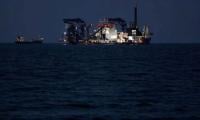
The government has reduced regasification of two LNG cargoes — one docked at the Pakistan GasPort Consortium Limited (PGPL) terminal and the other at Engro Elengy Terminal Limited (EVTL) — to 100 MMcfd (Million cubic feet per day), down from normal higher levels of 500 MMcfd, in a bid to stretch available gas supplies until March 25.
Gas supply to the fertiliser sector has also been suspended. Officials said the decision was taken to prioritise essential consumption and maintain system pressure.
Meanwhile, Sui Northern Gas Pipelines Limited (SNGPL) has proposed cutting gas supply to the CNG sector as well. The proposal is currently under consideration, though no final decision has been announced. Officials maintained that domestic consumers will remain protected under the load management plan, while sectoral adjustments will be made to balance supply and demand in the coming weeks.
Officials said the regasification rate of two LNG cargoes — each carrying LNG of around 3 billion cubic feet (bcf) — had been cut to 100 MMcfd from 500 MMcfd, allowing unloading operations at the Pakistan GasPort Consortium Limited (PGPL) and Engro Elengy Terminal Limited (EVTL) terminals to be stretched until March 25, 2026.
The vessels arrived on March 1 and 2, respectively. Pakistan currently holds about 4.9 bcf of LNG in its main transmission pipeline system.
Meanwhile, 350 MMcfd of local gas, previously curtailed to maintain linepack pressure, has been restored to ease supply pressures. Under the gas load management plan, the government has immediately suspended 78 MMcfd of imported LNG supply to the fertiliser sector, citing the absence of further LNG imports this month.
The SNGPL confirmed the development and indicated that a proposal to cut 45 MMcfd gas supply to the CNG sector was under consideration, though no final decision had been taken.
Officials maintained that the domestic sector will remain protected, ensuring uninterrupted supply to households. Sources said the government had pre-arranged the two LNG cargoes before the Hormuz situation worsened but had now decided not to import additional LNG in March.
Imported LNG prices have already surged by nearly 50 per cent, with fears of further escalation if regional instability persists.
Jamila Achakzai adds: Amid heightened safety risks, the US Department of State on Wednesday ordered non-emergency employees as well as the family members of government personnel in the US consulates in Lahore and Karachi to leave Pakistan. However, the status of the US Embassy in Islamabad will remain unchanged, according to a travel advisory.
The US Embassy in Islamabad and the consulates general in Lahore and Karachi have already cancelled all visa appointments this week, while the US consulate in Peshawar has suspended routine operations in light of the countrywide street protests against the deadly US-Israeli airstrikes in Iran.
Through the advisory, the US Mission in Pakistan shared detailed guidance and safety information for American citizens travelling or residing in the country. It highlighted potential threats from Iranian drone and missile attacks following the outbreak of conflict on February 28, 2026, along with significant disruptions to commercial flights.
The mission also warned of ongoing terrorist risks in Pakistan, including attacks by violent extremist groups in Balochistan, Khyber Pakhtunkhwa and major urban centres, including Karachi and Islamabad. “Terrorists may strike without warning. They target transportation hubs, hotels, markets, malls, military and security forces sites, airports, trains, schools, hospitals, places of worship, tourist spots and government buildings,” it said.
The mission cautioned that participation in protests without permits or posting social media content critical of the Pakistani government, military or officials could result in detention. It warned that security environment in the country remained fluid and that it sometimes changed without notice and could be a serious threat.
The mission stopped Americans from travelling to Balochistan and Khyber Pakhtunkhwa and to the vicinity of the Line of Control due to terrorism and potential for armed conflict.
Travelers were advised to monitor local media, avoid large crowds, vary travel routes and timing, safeguard valuables and maintain an emergency plan independent of US government assistance.
The US Mission recommended enrollment in the Smart Traveler Enrollment Programme for updates and alerts, and encouraged travelers to maintain travel insurance covering evacuation, medical care and trip cancellation. It said consular services were limited in Khyber Pakhtunkhwa, Balochistan, Azad Jammu and Kashmir, and areas outside Islamabad, Lahore and Karachi.
Mehtab Haider adds: In the wake of emerging situation in the region, the Committee to Monitor Petrol Prices, constituted by the prime minister, was on Wednesday cautioned that if the prices in the international market exceeded $100-$110 per barrel, the prices in Pakistan might touch Rs340 per litre. Both the price and availability came under discussion and different proposals were under consideration to control any arising threat.
The committee met at the Finance Division with Federal Minister for Finance and Revenue Senator Muhammad Aurangzeb in the chair.
The committee continued its deliberations on the evolving regional and global energy situation and undertook a detailed review of petroleum stock levels and supply chains across the country.
The participants were briefed on stock levels of crude oil and refined petroleum products, including petrol, diesel, aviation fuels and LPG, along with their respective days of cover and daily consumption patterns.
The meeting was also briefed on global oil market developments, including movements in international benchmark prices, freight and insurance costs, shipping route dynamics and evolving conditions in key maritime corridors.
The committee noted that the international energy environment remained fluid, particularly given the uncertainty surrounding the Strait of Hormuz and its implications for global energy trade.
The participants reviewed developments in LNG and LPG markets as well. The committee was informed that while LNG imports under long-term arrangements remained an important component of Pakistan’s energy supply mix, disruptions in regional shipping routes could affect global LNG logistics.
LPG inflows through cross-border channels are also being closely monitored to ensure uninterrupted domestic availability.
The committee discussed a range of contingency measures to strengthen supply security, including engagement with international partners and exploration of alternative sourcing routes.
In this regard, the members were informed of ongoing diplomatic and commercial engagement with friendly countries and suppliers in the region to secure additional crude and petroleum supplies where necessary.
The committee also noted efforts underway to diversify procurement options through regional energy hubs, including potential arrangements through ports in the Red Sea and the Gulf region, in order to maintain the continuity of refinery operations and ensure supply resilience.
The members further reviewed energy conservation measures as part of broader contingency planning aimed at managing demand efficiently while maintaining orderly market conditions.
The committee emphasised that while supply conditions remained stable, prudent energy use and conservation at all levels would help strengthen national preparedness should international uncertainties persist.
The finance minister emphasized that ensuring uninterrupted availability of petroleum products remained the government’s foremost priority and will continue to guide all policy decisions. He reiterated that the committee was monitoring developments on a daily basis and was prepared to take timely and coordinated measures to safeguard national energy security and maintain stability in domestic markets.
The committee also stressed the importance of preventing hoarding, diversion or smuggling of petroleum products, particularly in times of international volatility. Relevant authorities have been directed to maintain heightened vigilance and strengthen coordination with provincial governments to ensure that domestic supplies remain protected.
It was further decided that the chief secretaries of all the provinces will participate in the committee’s meeting on Thursday (today) to deliberate on the final summary and proposed national action plan. The committee will continue its deliberations to finalise a comprehensive strategy to be implemented at the national level with the cooperation of all stakeholders.
The meeting was attended by Federal Minister for Petroleum Ali Pervaiz Malik, Federal Minister for National Food Security and Research Rana Tanveer Hussain, Federal Minister for Power Sardar Awais Ahmad Khan Leghari, Minister of State for Finance Bilal Azhar Kayani, along with federal secretaries and senior officials from the ministries, divisions and regulatory bodies concerned.
Bloomberg adds: Pakistan’s largest gas distributor is set to cut supplies to some of its industrial customers, suggesting growing strain in one of the economies most dependent on energy exports from Qatar.
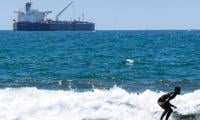
A widening conflict in the Middle East has caused the most extensive disruption to the global energy trade since Russia’s invasion of Ukraine in 2022, blocking the Strait of Hormuz and shuttering giant energy facilities including Qatar’s Ras Laffan liquefied natural gas export plant.
During the last energy crunch four years ago, Pakistan suffered acutely from an economic crisis and was unable to afford sky-high prices and the country was forced to grapple with hours of daily blackouts.
In the short-term, the current crisis comes with an unexpected silver lining for an economy under pressure — it could help the country avoid expensive purchase agreements with Qatar which it no longer needs. Samiullah Tariq, head of research at Pakistan Kuwait Investment, said shifting to cheaper alternatives like imported coal “could be a blessing in disguise”.
Yet Sui Northern Gas Pipelines Ltd. in a notice to customers said it could not provide regasified LNG to fertilizer plants from midnight Wednesday, having been notified of disruptions from its own supplier, Pakistan State Oil, just five days into confrontations in the Persian Gulf. That suggests even lengthier disruptions would almost certainly prove both painful and costly.
The situation “could be serious” if five or more shipments of LNG are affected, according to Masanori Odaka, analyst at Rystad Energy. “Current spot prices are well beyond what Pakistan is likely willing to pay,” he said. “So I will say the alternatives to sourcing LNG cargoes are limited.” A history of deferment and payment difficulties would also put Pakistan at a disadvantage, he added.
For the month of March, the country has received two cargoes, making it likely any gap can be filled with domestic production and coal imports. In April and May, however, the shortfall could extend from around half or one LNG shipment to two or three, according to Evan Tan, LNG analyst from commodities research group ICIS — too much to fill with domestic fixes.
Tied into expensive, long-term LNG contracts with Qatar, the government had been cutting back on domestic production. To manage the cost of the purchases, it had already sought to reduce those imports in 2026, having received an average of nine shipments a month last year, according to shipping data.
For oil, Pakistan has already requested supply via alternative routes including the Saudi port of Yanbu. Saudi Arabia has assured full support, according to a statement by petroleum ministry, citing its minister Ali Pervaiz Malik.
The energy crisis comes as Pakistan is already struggling with a sluggish economy and clashes with neighbour Afghanistan.