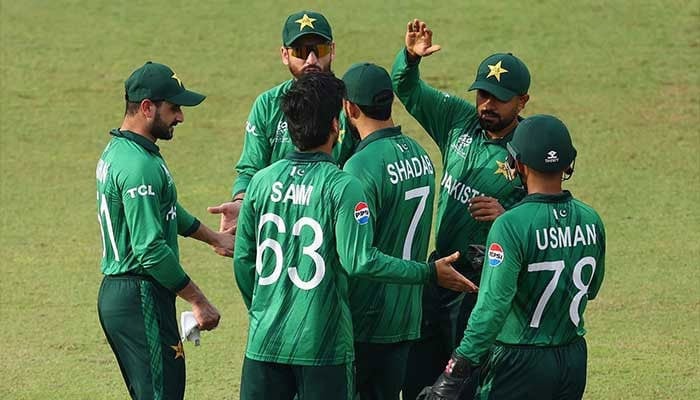
ISLAMABAD: The debate over accountability within Pakistan’s national cricket team has once again surfaced after another disappointing T20 World Cup campaign. Inside the corridors of the Pakistan Cricket Board (PCB), discussions are underway on how to respond to a performance that fell far short of public expectations.
Among the suggestions floated by some within the Board is the imposition of a Rs 5 million fine on each underperforming player, a move seemingly designed to send a strong message. The idea, in essence, is simple: pay Rs 5 million for failing to deliver on the biggest stage and continue representing the country thereafter.
But does such a measure truly address the core issues?
For centrally contracted cricketers who earn substantial sums through match fees, endorsements and league cricket, a Rs 5 million penalty may amount to little more than a temporary financial inconvenience. More importantly, such a move appears to lack legal and contractual standing, as no such clause reportedly exists in the annual contracts signed between players and the Board. Without a clear legal framework, the proposal risks being viewed as reactionary rather than reformative.
Accountability, if it is to mean anything, cannot be selective. It must extend beyond the playing XI. Team management, selectors, support staff and administrators, all form part of the ecosystem that shapes performance outcomes. When results go awry, responsibility cannot rest solely on the shoulders of players. In professional sporting structures worldwide, accountability is embedded within policy frameworks rather than improvised after setbacks. Effective governance systems do not rely on public gestures or financial penalties as eyewash; instead, they implement measurable performance benchmarks, fitness standards and transparent selection criteria long before crises emerge.
Modern international cricket has evolved into a fully professional enterprise. The era when 60 percent fitness could suffice at the elite level is long gone. Today’s top athletes operate at peak physical thresholds, often maintaining fitness levels above 90 percent year-round. Across leading cricketing nations, players invest in personal trainers, physiotherapists and dietitians to remain match-ready even outside national camps. Preparation is continuous, not seasonal. Fitness is a lifestyle commitment rather than a camp-based obligation.
In contrast, Pakistan’s system often sees players striving for match fitness only when national duty approaches. This reactive approach inevitably leads to recurring injuries and inconsistent performances. A sustainable accountability model must include mandatory domestic participation. The PCB should consider introducing a policy requiring national aspirants to participate in at least 80 percent of domestic competitions. Consistent domestic cricket sharpens technique, preserves match temperament and sustains fitness levels. Players who bypass domestic circuits frequently suffer dips in form and rhythm. In this regard, Sahibzada Farhan’s recent assertion that his success stems from extensive domestic participation carries weight. Year-round competitive exposure naturally enhances performance at the international stage. A concerning trend has emerged in recent years: key players entering major tournaments carrying injuries or operating below peak fitness. Names such as Shadab Khan, Fakhar Zaman, Shaheen Shah Afridi, Haris Rauf, Abrar Ahmed and Saim Ayub have all battled fitness concerns at different stages.