ISLAMABAD: While Pakistan seriously suffers because of terrorism from Afghanistan, key counterterrorism commitments under the 2020 Doha Agreement between the United States and the Afghan Taliban are being openly violated by Kabul, while Washington takes no visible steps to enforce accord’s compliance.
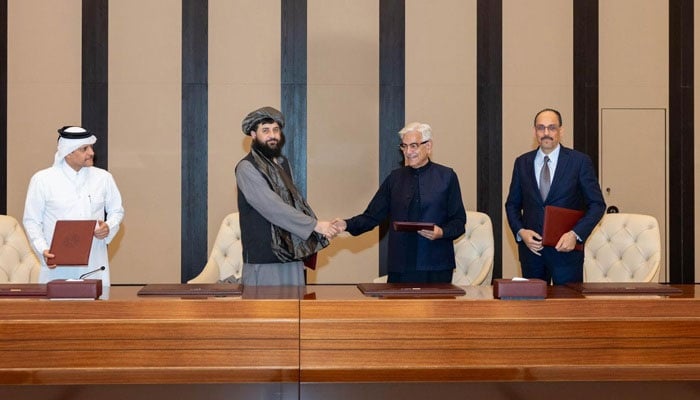
The agreement, signed in Doha, Qatar, required the Taliban to ensure that Afghan soil would not be used by any group or individual to threaten the security of the United States and its allies.
Part Two of the Doha Agreement explicitly states that the Taliban would not allow any of its members or other groups, including al-Qaeda, to use Afghan territory to threaten the security of the United States and its allies; Prevent recruitment, training, fundraising, and hosting of such groups; deny visas, passports, or other legal documents to individuals posing a security threat, and; Send a “clear message” that such actors have no place in Afghanistan.
The language of the agreement does not limit protection solely to the United States but extends to its “allies.” Pakistan, which served as a frontline US ally during the war on terror, falls within that category.
However, despite these commitments, terrorist groups hostile to Pakistan are openly operating from Afghan territory. Cross-border attacks and infiltration attempts increased during the recent years under Taliban’s rule in Kabul. The continued presence and activity of such groups raise serious questions about whether the Taliban are meeting their obligations under the Doha framework. The agreement required not just passive non-support, but active prevention of recruitment, training, and safe haven.
If Afghan soil is being used to launch attacks against a US ally, critics argue, the core counterterrorism guarantee of the agreement stands compromised. While the United States fulfilled its primary obligation under the agreement - the complete withdrawal of forces - it has shown no interest in initiating enforcement measures or accountability mechanisms regarding Taliban government’s glaring violation, hurting Pakistan seriously. Instead, while leaving Afghanistan, it left behind loads of modern arms and ammunition, which the terrorist groups are now using against Pakistan.
The Doha Agreement does not spell out detailed enforcement tools beyond the conditional nature of withdrawal. However, Pakistani official sources said that diplomatic pressure, sanctions mechanisms, and international forums remain available to Washington but it did not use pressure on Kabul to stop it from hurting Pakistan. As the original negotiating party, the United States secured explicit assurances from the Taliban regarding counterterrorism, which is openly violated to target Pakistan.
The Doha Agreement was structured as a withdrawal-for-guarantees arrangement. The United States exited Afghanistan based on assurances that Afghan territory would not serve as a base for threats against it or its allies. New Delhi-backed terrorist organisations including TTP and BLA are using Afghan soil for terrorist activities in Pakistan. Kabul was asked repeatedly for the last three four year not to allow its soil to be used against Islamabad but it showed no interest to do what it had committed in the Doha Agreement.