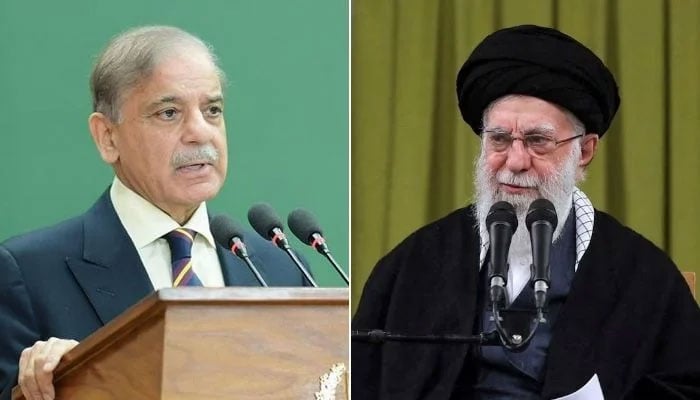
ISLAMABAD: Prime Minister Shehbaz Sharif on Sunday expressed profound grief and sorrow over the martyrdom of Ayatollah Seyyed Ali Khamenei, while voicing serious concern over what he described as a violation of established norms of international law.
In a statement posted on X, he said it is an age-old convention that heads of state or government must not be targeted. He stated that the government and people of Pakistan stand with the people of Iran in their hour of grief and extend their most sincere condolences on the martyrdom of Ayatollah Ali Khamenei.
“We pray for the departed soul. May Allah Almighty grant patience and strength to the Iranian people to bear this irreparable loss,” the PM said.
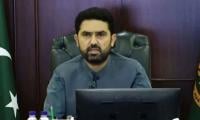
Later, Prime Minister Shehbaz Sharif chaired a high-level meeting in Islamabad to review the regional and internal security situation. According to a statement issued by the Prime Minister’s Office, the meeting undertook a comprehensive assessment of the evolving regional environment and overall security dynamics.
The meeting was attended by Deputy Prime Minister Ishaq Dar, Chief of Army Staff Field Marshal Syed Asim Munir, Federal Ministers Ahsan Iqbal, Mohsin Naqvi, Azam Nazeer Tarar, Ahad Khan Cheema, Attaullah Tarar, Ali Pervaiz Malik, Special Assistant Tariq Fatemi and senior civil and military officials.
The participants discussed Pakistan’s role and possible measures to promote peace and stability in the region. The situation in Afghanistan also came under detailed review, alongside a briefing on the country’s internal security arrangements to ensure law and order.
On the PM’s directives, the meeting also reviewed measures for the evacuation of Pakistani nationals from Iran. The Foreign Office provided a detailed update on ongoing efforts to ensure their safe return, informing participants that evacuation is being facilitated through Azerbaijan.
In view of the prevailing regional and domestic situation, PM Shehbaz Sharif decided to postpone his scheduled official visit to Russia. The PM office stated that the decision was taken after consultations, considering recent developments on both regional and internal fronts.
The planned visit, originally scheduled from March 3 to 5, was regarded as significant for advancing bilateral relations between Pakistan and Russia. New dates for the visit will be finalised through mutual consultations at a later stage.
Meanwhile, PM Shehbaz Sharif held separate telephonic conversations with Bahrain’s King Hamad bin Isa Al Khalifa and Jordan’s King Abdullah II to address the rapidly deteriorating situation in the Middle East.
In his call with His Majesty King Hamad bin Isa Al Khalifa, the PM conveyed Pakistan’s unwavering solidarity with the brotherly people of Bahrain amid the ongoing crisis. He prayed for the safety and security of Bahrain’s citizens following Iran’s retaliatory missile attacks on several Gulf countries, including Bahrain, which hosts the US Navy’s Fifth Fleet. PM Sharif stressed the need for restraint, strict respect for international law and an urgent push toward dialogue and diplomacy to de-escalate tensions and restore peace and stability.
Similarly, in discussions with King Abdullah II of Jordan, the prime minister expressed Pakistan’s deep concern over the escalation sparked by Israeli attacks on Iran, followed by Iran’s counterstrikes targeting Jordan and other brotherly nations. The leaders exchanged views on the evolving regional dynamics, with Pakistan highlighting the risks of broader conflict and advocating for immediate diplomatic efforts to prevent further violence.
Also, Deputy Prime Minister/Foreign Minister Senator Ishaq Dar Sunday spoke with Oman’s Foreign Minister Sayyid Badr bin Hamad Al Busaidi. They expressed serious concern over the ongoing escalation in the region and underscored the urgent need for restraint, dialogue and de-escalation to preserve peace and stability. Both agreed to remain in close contact over the evolving situation.
Meanwhile, widespread protests erupted across major Pakistani cities on Sunday, as demonstrators reacted to the martyrdom of Seyyed Ali Khamenei in coordinated US-Israeli strikes on Iran. The unrest, marked by attempts to storm diplomatic missions, left 25 protesters dead and scores wounded.
In Karachi, hundreds of demonstrators gathered outside the US Consulate General on Mai Kolachi Road to condemn the attack on Iran’s leadership. The rally, which initially began as a protest against foreign strikes, quickly escalated into violence when portions of the crowd attempted to breach the consulate perimeter. There were at least 10 deaths and dozens of injuries, according to hospital officials and local authorities.
Protesters in Karachi chanted slogans against the United States and Israel, hurling stones at law enforcement officers trying to contain the situation. Police and paramilitary Rangers mobilised heavily to secure the area and protect diplomatic missions across the city.
Unrest spread quickly to other urban centres, including Islamabad, Lahore, Peshawar and Gilgit- Baltistan, where demonstrators rallied in solidarity with Iran and voiced strong condemnation of the assassination of Khamenei. Twelve deaths were red from Gilgit- Baltistan and two from Islamabad, bringing the death toll across country to 25.
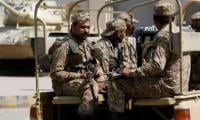
The federal capital’s high-security Red Zone transformed into a battlefield on Sunday as hundreds of demonstrators turned violent, leaving at least two dead and 17 others injured.
The unrest peaked near Serena Chowk and Constitution Avenue where an angry mob was attempting to breach the Diplomatic Enclave. Sources at the Pakistan Institute of Medical Sciences (PIMS) reported that several wounded protesters claimed they were struck by rubber bullets. Demonstrators reportedly pelted security forces with stones, resulting in injuries to five police officers.
The authorities invoked Section 144, banning public gatherings and sealing off the heavily guarded Red Zone to prevent marchers from approaching the US Embassy.
In Skardu, Gilgit-Baltistan region, protests turned destructive as demonstrators torched the United Nations office and other buildings in outrage over the incident.
Meanwhile, a decision has been taken to deploy military troops and impose a curfew in Gilgit and Skardu districts. The Home Department has issued a letter for the deployment of the army. The curfew will remain in force from 12 midnight until March 4. The Home Department has also issued a schedule for relaxation in the curfew. In both districts, the curfew will be relaxed today from 12 noon to 4pm.
At least 10 protesters were killed and more than 15 others injured in violent clashes in Gilgit-Baltistan.
Spokesperson for Chief Minister Shabbir Mir stated that the situation is now under control, with security forces beefed up across the area. The government is engaging with top clerics to help calm the protesters and prevent further escalation.
In a video message, Caretaker Chief Minister Justice (retd) Yar Muhammad appealed for calm and restraint. He urged citizens to exercise their democratic right to protest peacefully while refraining from damaging public or private property.
Officials and political leaders appealed for calm, urging people to express their sentiments peacefully. Interior Minister Mohsin Naqvi called on the public to refrain from taking the law into their own hands, noting the deep grief shared by many Pakistanis in response to the unfolding regional crisis.
Hospitals treating the injured confirmed that many suffered from gunshot wounds, teargas exposure and injuries from clashes.
As the situation continues to evolve, authorities have heightened security around sensitive installations and diplomatic missions nationwide, urging residents to avoid protest zones and comply with legal directives aimed at maintaining public order.
Protests erupted outside the US Consulate on Shimla Hill in Lahore on Sunday. Tensions escalated when additional barriers were placed near a Nadra office, leading to clashes between police and demonstrators. Protesters reportedly attempted to remove the barriers.
The situation further intensified after Allama Hasan Zafar Naqvi was subjected to a search, which drew a reaction from some participants.
A rally, led by Allama Jawad Naqvi, marched from Charing Cross towards the US Consulate, with hundreds of people taking part in it. Authorities placed containers around the consulate to restrict movement. Demonstrators chanted slogans against the United States and Israel during the march.
Several organisations held a protest rally in Mandi Bahauddin on Sunday and men, women and children participated in it. The procession started from Imambargah Hussainia and continued to College Chowk.
Also, hundreds of people gathered outside the Imambargah Hussainia in Gujrat on Sunday evening to mourn Ayatollah Ali Khamenei’s martyrdom. The rally was organised by Millat-e-Jafaria.
The Shia Ulema Council, Vehari, staged a protest against the US attack on Iran and the martyrdom of Ali Khamenei. The rally was led by the council’s provincial vice-president Allama Naseem Abbas Jawadi and others. A large number of scholars and citizens from different schools of thought also participated.
Protest rallies were carried out in most cities of Sindh, including Sukkur, Khairpur, Shikarpur, Ghotki, Nawabshah, Mehar and other cities against the attack by Israel and the United States and martyrdom of Ali Khamenei.
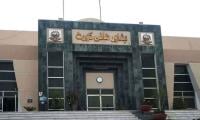
A protest was held outside the Peshawar Press Club by Millat-e-Islamia Pakistan in support of Iran and against the attacks by the United States and Israel. A large number of protesters participated in the demonstration, expressing solidarity with Iran. The participants raised strong slogans against the United States and Israel, describing the attacks on Iran as open aggression.
Separately, Pakistan has warned the United Nations Security Council (UNSC) that the US-Israeli attack on Iran and the ensuing retaliatory strikes, could undermine the security of the entire region “with far-reaching consequences”.
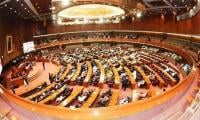
“We are deeply alarmed at the risk of regional conflagration,” Ambassador Asim Iftikhar Ahmad, Pakistan’s permanent representative to the United Nations, told the 15-member Council, which met in an emergency session at the request of France, China, Russia, Bahrain and Colombia on Saturday evening.
The Pakistani envoy, in his address, regretted that the joint attacks — which he said were in violation of international law — took place at a time when renewed diplomatic efforts were underway to reach a peaceful and negotiated solution.
At the same time, Ambassador Ahmad condemned Iran’s strikes on Saudi Arabia, Bahrain, Jordan, Kuwait, Qatar and the United Arab Emirates and stressed that Pakistan stands in solidarity with them and underscored the need for all sides to exercise maximum restraint.
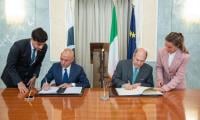
The spokesperson of the ministry of foreign affairs said Deputy Prime Minister/Foreign Minister Senator Mohammad Ishaq Dar spoke with Deputy Prime Minister & Foreign Minister of Iraq, Fuad Hussein They discussed the rapidly evolving regional situation and stressed the need for sustained efforts to contain tensions, promote de escalation, and advance peace and stability in the region. Both agreed to stay in close contact.
Meanwhile, the US Embassy, Islamabad, issued a security advisory for its citizens in Pakistan as protests continue near American diplomatic buildings in major cities.
In an official statement, the embassy confirmed it is closely monitoring reports of ongoing demonstrations at the US Consulates General in Karachi and Lahore. Furthermore, the mission noted calls for additional gatherings near the US Embassy in Islamabad and the Consulate General in Peshawar.
The embassy has urged US citizens currently in the country to exercise heightened vigilance and adopt personal security practices. It has advised Americans to stay alert to their surroundings and monitor local news outlets for real-time updates. The citizens are advised to stay away from areas where large groups have gathered.
The mission also stressed ensuring registration in the Smart Traveller Enrolment Program (STEP) is up to date.
Separately, President Asif Ali Zardari and PPP Chairman Bilawal Bhutto Zardari conveyed heartfelt condolences to the government and people of Iran on Sunday, reaffirming Pakistan’s unwavering support during this time of national mourning.
President Zardari expressed profound sorrow over the martyrdom of Ali Khamenei and other members of Iran’s senior leadership who were martyred alongside him. He stated that Pakistan stands shoulder to shoulder with the Iranian nation in this moment of grief and shares in their immense loss.
The president observed that the passing of a leader of such stature, along with other senior figures, would be deeply felt across the Muslim world. He prayed for the departed souls and asked Almighty Allah to grant patience and fortitude to the people of Iran during this difficult time.
Chairman PPP Bilawal Bhutto Zardari also conveyed profound grief over the martyrdom of Syed Ali Khamenei, stating that the news had sent shockwaves not only across Iran but throughout the world. He prayed for patience and strength for the bereaved family and all those mourning the loss globally.