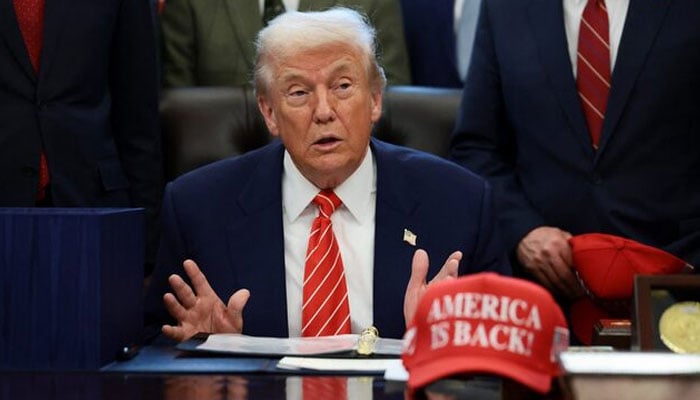
WASHINGTON: With his large-scale attack on Iran, Donald Trump has seized a legacy-defining moment to demonstrate his readiness to exercise raw U.S. military power. But in doing so, he is also taking the biggest foreign policy gamble of his presidency, one fraught with risks and unknowns.
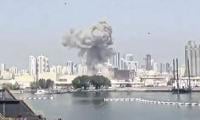
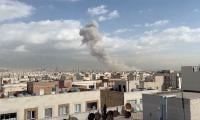
Trump joined with Israel on Saturday to plunge into war with Iran, providing little explanation to the American public for what could become the biggest U.S. military campaign since the wars in Afghanistan and Iraq.
Trump has pivoted away from a preference for swift, limited operations like last month’s lightning raid in Venezuela to what experts warn could be a more protracted conflict with Iran that risks escalating into a regional conflagration engulfing the oil-rich Middle East.
He has also set out a daunting objective of regime change in Tehran, pushing the idea that air strikes can incite a popular uprising to oust Iran’s rulers.
It is an outcome that outside air power has never directly achieved without the involvement of some kind of armed force on the ground, and which most analysts doubt will succeed this time.
“Most Americans will wake up Saturday morning and wonder why we are at war with Iran, what is the goal, and why U.S. bases in the Middle East are under attack,” said Daniel Shapiro, a former senior Pentagon official and U.S. ambassador to Israel who is now at the Atlantic Council think-tank in Washington.
Trump’s fixation on Iran has emerged as the starkest example yet of how foreign policy, including his expanded use of military might, has topped his agenda in the first 13 months of his second term, often overshadowing domestic issues like the cost of living that public opinion polls show are much higher priorities for most Americans.
His own aides have been privately urging him for weeks to focus more on voters’ economic worries, highlighting the political dangers ahead of this November’s midterm elections in which Trump’s Republican Party is at risk of losing one or both chambers of Congress.
The brief pre-dawn video that Trump posted on his Truth Social platform announcing what the Pentagon has dubbed “Operation Epic Fury” provided only broad reasons for going to war now with a country the U.S. has tussled with for decades while averting all-out hostilities.
He insisted he would end what he said was Tehran’s ballistic missile threat – which most experts say does not pose a threat to the U.S. - and give Iranians a chance to topple their rulers.
Trump said that to accomplish his goals U.S. forces would lay waste to much of Iran’s military as well as deny it the ability to have a nuclear weapon. Iran denies that its nuclear program has military aims.
Trump’s sudden resort to force, using huge U.S. military assets built up in the region in recent weeks, appeared all but certain to close the door for now on diplomacy with Iran. The latest round of nuclear talks in Geneva on Thursday failed to achieve a breakthrough.
Some Trump aides have previously suggested that he might be able to bomb Tehran back to the negotiating table to force deep concessions. Instead, Iran responded on Saturday by launching missiles at U.S. allies Israel and oil-producing Gulf Arab countries.