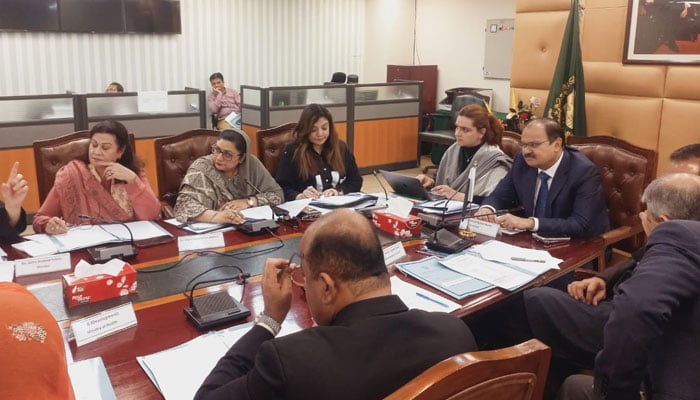
ISLAMABAD: The National Assembly Standing Committee on National Health Services, Regulations and Coordination on Tuesday criticised what members called misplaced priorities in the federal health sector, urging the government to focus on patient care instead of rolling out new brick and mortar projects while public hospitals struggle with broken equipment, delayed surgeries, illegal clinics and a growing burden of diabetes, HIV and hepatitis.
The concerns were raised during a meeting chaired by Dr Mahesh Kumar Malani while reviewing PSDP proposals and the performance of ongoing health projects. Members questioned why fresh infrastructure schemes were being pushed when existing tertiary care hospitals were failing to provide basic diagnostic and treatment services.MNA Dr Shazia Sobia Aslam Soomro highlighted the prolonged breakdown of MRI facilities at PIMS, saying one machine had remained non-functional for three months, causing serious delays in care, including the postponement of a child’s surgery.
Officials told the committee that two MRI machines were functional, but members remained dissatisfied, noting repeated disruptions at one of the country’s largest public hospitals.
The committee also raised concerns about regional disparities in healthcare facilities. Dr Shazia Sobia pointed out that Sheikh Zayed Hospital had only one CT scan machine which frequently broke down and was often excluded from upgradation plans.
She urged the ministry to ensure that hospitals outside major cities were not sidelined in allocation of equipment and resources.Members took notice of reports of kidney transplant procedures in Chak Shahzad and illegal medical practices in G-13, warning that weak regulatory oversight was allowing sensitive procedures and quackery to flourish.
The committee decided to summon healthcare regulators in the next meeting for a detailed briefing.Serious concern was expressed over the unchecked growth of illegal clinics.Members said unqualified individuals posing as doctors were fuelling unsafe practices, including reuse of syringes, contributing to the spread of HIV and other infections.Regulatory officials told the committee that 110 quack clinics had been sealed in recent enforcement drives and notices issued to blood banks. Members, however, questioned the sustainability of these actions, citing cases where sealed facilities later resumed operations.On development projects, members criticised persistent delays and cost escalations, recalling that a project approved in 2021 was still incomplete with rising costs and completion now pushed to 2027.They rejected most newly proposed PSDP schemes, directing the ministry to prioritise completion of ongoing projects to avoid wastage.The committee flagged Pakistan’s rising burden of diabetes and hepatitis, particularly in Punjab, and warned that prevention and disease control were being neglected in favour of infrastructure.It directed the ministry to treat diabetes, HIV, hepatitis C, neonatal mortality and malnutrition as national emergencies.Priority projects identified for completion included the National Institute of Rehabilitation Medicine, strengthening of the Federal Medical College, upgradation of Basic Health Units for 24/7 services, Jinnah Medical Complex Karachi, the Mithi hospital project, anti sera laboratory, vaccine related facilities, Sheikh Zayed Hospital projects and selected rural health upgradations.Members criticised what they termed incomplete briefings by the ministry, noting lack of clarity on approvals, costs and timelines. They directed that projects awaiting CDWP or ECNEC clearance should not be prematurely listed in PSDP documents.On disease control, the committee expressed alarm over reduced allocations for hepatitis C screening and treatment, seeking hotspot data and clear treatment plans. Officials said screening would initially cover Islamabad, AJK and Gilgit Baltistan before expansion. Regarding HIV, members were told that around 84,400 patients were on treatment against an estimated burden of over 300,000. The panel called for higher funding, better provincial coordination and a time bound roadmap.The committee also sought reports on the functional status of Basic Health Units and Rural Health Centres, manpower gaps and enforcement against illegal clinics, laboratories and blood banks. The chairman said parliamentary oversight must push the health sector away from cosmetic development towards measures that actually save lives.