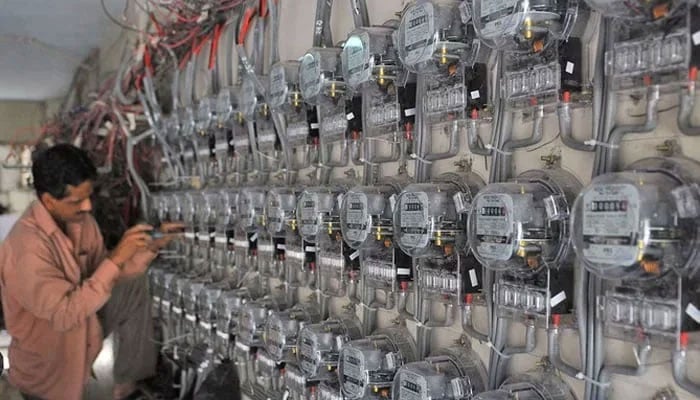
Red alert: Pakistanis are now eating less to keep the lights on. Over the past decade, the share of food in household spending has fallen from 43 per cent to 37 per cent, while utility expenses have surged from 15 per cent to 25 per cent of household budgets.
Rashid Ahmad earns Rs96,000 a month. Ayesha Ahmad manages the house. They have three children: Ali, 13, Sana, 9 and Hamza, 5. One rented portion. Two rooms. Two meters outside the door. Last month, the electricity bill was Rs22,800. Three years ago, it was Rs6,400. Gas has doubled. School fees have risen. Transport costs more.
Rashid’s salary has not quadrupled. His bills have. These are not natural burdens. There was no drought inside their kitchen. There was no flood in their grocery basket. There was no earthquake in their school fees. These are government policy burdens. These are state-imposed weights.
Ayesha now buys meat once a month, down from once a week. Milk is stretched with water. Fruit is no longer routine – it is occasional. Protein is the first casualty. Lentils replace chicken. Eggs once a week. Nutrition is the first adjustment. No announcement. No drama. Why is nutrition the first adjustment? Because the electricity bill cannot be negotiated. Because the landlord cannot be delayed. Because the gas connection cannot be argued with. So the family negotiates with food. Yes, Pakistanis are now eating less to keep the lights on.
Red alert: Fewer grams of protein per child slows cognition. Fewer grams of protein per child weaken immunity. Fewer grams of protein reduces attention space.
Ayesha notices Hamza’s cough lingers longer now. Sana’s arms are thinner. Ali used to play cricket after school. No more. The school has sent two reminders. 'Outstanding dues'. Then a final notice. Rashid delays for one month. Then two. Electricity cannot wait. Rent cannot wait. Gas cannot wait. School can. One uniform now hangs unused. One school bag rests in a corner. A neighbour offers Ali work at a mobile repair shop. Rs7,000 a month. “Temporary”, they say. “Just to help”. It rarely remains temporary.
First, protein was cut. Then schooling was interrupted. Now childhood enters the labour market. This is how tariffs are rewriting a Pakistani child’s future. Is this resilience? Not at all; this is silent liquidation. Liquidation of nutrition. Liquidation of schooling. Liquidation of health. All to keep the lights on.
The Ahmad family is not an exception. Pakistan has some 40 million households. If even half are adjusting food to pay utilities, that is twenty million kitchens shrinking protein to finance tariffs. Every tariff increase is a government decision. Every indirect tax is a government decision. Every delay in reform is a government decision. And decisions have consequences.
Right now, the bill is being paid in protein, in classrooms and in futures. Nations do not decline in one dramatic collapse. They decline one child at a time – quietly, gradually, inside ordinary homes like the Ahmads’.
The writer is a columnist based in Islamabad. He tweets/posts @saleemfarrukh and can be reached at: [email protected]