The global ESG conversation has largely been shaped by Western frameworks, international rating agencies and sustainability standards designed for mature markets.
Pakistan, like much of the Global South, has adopted these frameworks wholesale – often without interrogating whether they address our most pressing challenges or leverage our unique strengths. Having recently designed a sustainability campaign for one of Pakistan’s largest banks, I’ve come to believe we are sitting on enormous untapped potential. But realising it requires a fundamental shift in how we approach ESG.
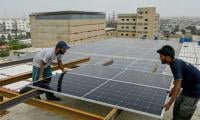
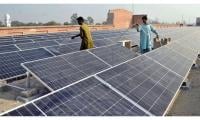
The bank in question had done extraordinary work – reaching millions of families through financial inclusion, financing renewable energy at scale, supporting agricultural transformation and empowering women entrepreneurs. Yet it struggled to translate this impact into visibility and recognition. Competitors with far smaller footprints were winning awards and shaping narratives. The problem wasn’t substance. It was storytelling, certainly. But more fundamentally, it was the absence of a systematic approach to data, reporting and strategic communication that connects local impact to broader frameworks.
This is not an isolated case. Across Pakistan’s corporate sector, genuine impact remains invisible because organisations treat sustainability reporting as a compliance exercise rather than a strategic asset. Annual reports become dense PDFs that no one reads. CSR activities get buried in press releases. The result is a credibility gap that undermines Pakistani businesses when seeking international partnerships, sustainable finance or ESG-conscious investment.
The irony is that Pakistan’s challenges are precisely what global capital is looking for. Climate adaptation, financial inclusion, gender equity, youth employment: these are the themes that dominate international development finance. Pakistani institutions are addressing them daily, often with innovative models that outperform imported solutions. But without rigorous data, transparent reporting, and compelling narratives, this work remains illegible to the audiences that matter.
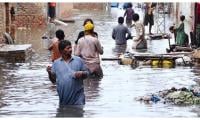
Consider climate change. Pakistan contributes less than one per cent of global emissions yet ranks among the countries most vulnerable to climate impacts. Our adaptation strategies – from climate-smart agriculture in Punjab to mangrove restoration in Sindh – emerge from lived experience and local knowledge. A farmer in Rahim Yar Khan understands water scarcity in ways that no Geneva-based consultant ever will. When Pakistani banks finance these farmers, when local NGOs provide advisory services, when community organisations lead behaviour change, they are building climate resilience from the ground up. This is precisely the kind of locally-led adaptation that international climate finance claims to prioritise. Yet Pakistani institutions struggle to access these funds because they lack the reporting infrastructure to demonstrate impact in terms funders recognise.
The same pattern holds for education and the future of work. Pakistan’s youth bulge is frequently described as either a demographic dividend or a ticking time bomb. The solutions being developed locally – vocational training aligned with market demand, digital platforms that connect informal workers to opportunities, and microfinance that enables youth entrepreneurship – are often more contextually appropriate than programmes designed in Washington or London. But they remain fragmented, underdocumented and therefore unfunded at scale.
What would it take to change this? Three things, primarily. First, Pakistani corporations and nonprofits must invest in data infrastructure. Impact measurement cannot be an afterthought. It requires dedicated resources, clear methodologies, and longitudinal tracking. The organisations that build this capacity now will have significant advantages as ESG scrutiny intensifies globally and regulatory requirements tighten domestically.
Second, we need localised ESG frameworks that complement international standards rather than simply adopting them. The SDGs provide a useful common language, but materiality in Pakistan looks different than in Europe. Water scarcity, energy access, informal employment and gender-based mobility constraints are our material issues. Our reporting should centre them.
Third, strategic communication must be recognised as integral to sustainability, not peripheral to it. Impact that isn’t understood doesn’t build trust. It doesn’t attract investment. It doesn’t shift behaviour. Pakistani organisations have historically underinvested in this area, treating communication as an expense rather than an asset. This must change.
The opportunity here extends beyond individual organisations. If Pakistani institutions collectively strengthen their ESG practices – data, reporting, communication – they can position the country as a destination for sustainable investment. Development finance institutions are actively seeking partners in climate-vulnerable countries with demonstrated local capacity. Impact investors want deployment opportunities that combine financial returns with measurable social outcomes. Pakistan can be a preferred market for this capital, but only if we make our impact visible and credible.
During my work on the banking sustainability campaign, I encountered dozens of stories that deserved global audiences: farmers whose yields doubled through climate-smart practices, women entrepreneurs who built businesses with microloans and remote villages that accessed formal finance for the first time through mobile agents.
These stories exist across Pakistan’s corporate and nonprofit landscape. They represent solutions to challenges the world is desperate to address. The question is whether we will develop the systems to tell them.
The writer is the CEO of Campaignistan and founder of the Islamabad Science Festival. He tweets/posts @farhadjarralpk and can be reached at: [email protected]