_akhbar.jpg)
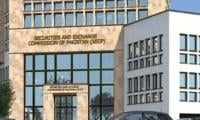
KARACHI: The Pakistan Stock Exchange (PSX) witnessed a sharp decline on Monday, as lower-than-expected earnings and geopolitical uncertainty dragged the market down 5,150 points.
The benchmark KSE-100 index plunged by 5,149.79 points or 2.87 per cent to 174,453.94 points from 179,603.73 points recorded in the last session. The highest index of the day remained at 179,969.23 points, while the lowest was 173,574.26 points.
Mohammed Sohail, CEO of Topline Securities, said the PSX was collectively down 5.0 per cent in the last three sessions, including a sharp 3.0 per cent drop on Monday — largely driven by aggressive foreign selling.
“As per National Clearing Company of Pakistan Limited data, foreign corporates were net sellers of nearly $25 million in the last two sessions,” he said in a social media post. “However, foreign investors have been consistent sellers for years — offloading ~$400 million in 2025 alone — yet the market rallied 50 per cent last year on the back of macro stability, stable rupee and lower interest rates. This correction appears more flow-driven than fundamentals-driven.”
The KSE-30 index lost 1,629.79 points, or 2.97 per cent, to 53,198.53 points from 54,828.33 points. Traded shares rose by 65 million shares to 773.291 million shares from 708.968 million shares. The trading value increased to Rs46.242 billion from Rs38.887 billion. Market capitalisation narrowed to Rs19.781 trillion against Rs20.359 trillion. Of the 487 companies active in the session, 65 closed in green, 378 in red, and 44 remained unchanged.
The highest increase was recorded in SS Oil Mills Limited, which rose by Rs47.34 to Rs520.77 per share, followed by Service Industries Limited, which increased by Rs25.11 to Rs1,850.01 per share. A significant decline was noted in Unilever Pakistan Foods Limited, which fell by Rs579.33 to Rs26,675.17 per share. PIA Holding Company Limited B followed it, which closed lower by Rs355.99 to Rs18,339 per share.
Muhammad Hasan Ather, an analyst at JS Global, said the market witnessed a bloodbath. This aggressive sell-off was primarily triggered by institutional offloading positions in blue-chip sectors like banking and energy.
Broader sentiment was further weighed down by persistent political uncertainty and lower than expected corporate earnings that failed to meet market expectations. While upcoming relief packages for the textile and construction sectors offer a glimmer of hope, the market remains technically fragile. “We expect continued volatility until institutional selling stabilises and the IMF’s third review provides a clearer macroeconomic roadmap,” he said.
Ali Najib, deputy head of trading at Arif Habib Ltd, said the PSX endured a sharp sell-off. Notably, the benchmark has now declined 9.49 per cent from its January 2026 peak of 191,000, reflecting a meaningful correction.
The session was characterised by heavy selling pressure, as profit-taking, partly attributed to the Barrick security review narrative, combined with seasonal Ramadan slowdown in cyclicals, limited expectations of a near-term rate cut, geopolitical uncertainties, and an underwhelming earnings season. These factors collectively contributed to fragile investor sentiment.
Index heavyweights including UBL, ENGROH, FFC, HBL, BAHL, OGDC, MEBL, NBP, LUCK, and HUBC were the major contributors to the decline. “Today’s sharp decline has pushed the market below the 175,000 level, weakening near-term technical structure,” said Ali Najib. “Going forward, the 172,000–170,000 range is likely to serve as the next strong support zone, while 180,000 has now turned into the immediate resistance level for any potential recovery.”
K-Electric Ltd remained the volume leader with 63.826 million shares, which closed lower by 42 paisas to Rs8.13 per share. WorldCall Telecom with 62.243 million shares, followed it, which closed lower by 10 paisas to Rs1.53 per share.
Other significant turnover stocks included BO Punjab, Hum Network, Trust Brokerage XR, F. Nat. Equities, Beco Steel Ltd, Pak Int. Bulk, Nishat ChunPower and Hascol Petrol. In the futures market, 322 companies recorded trading, with 12 increasing, 309 decreasing and one remaining unchanged.