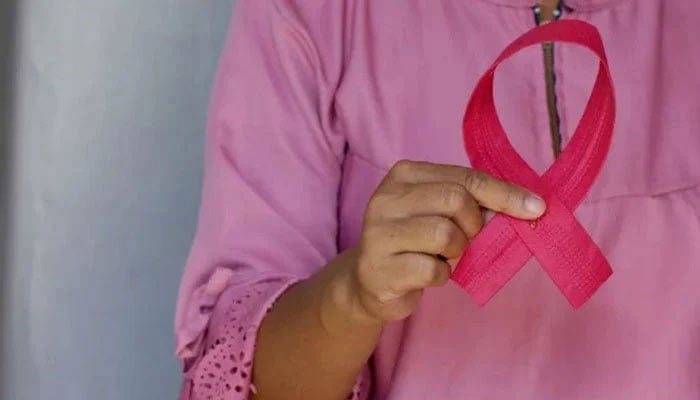
Every year on World Cancer Day (which falls today), I find myself listening again to the national conversation on cancer, to its reassurances, its optimism, its insistence that we are doing better. And we are. Treatments have improved; survival has improved; new technologies now allow more patients to live longer than before.
But there is another side to this conversation, one that is rarely spoken aloud. It is about what cancer does to a family: its rearrangement of daily life, its narrowing of horizons, its long vigil, and the grief that arrives before death and does not depart afterwards. A family can live with grief and death yet still feel unable to speak of either. Mourning, in our society, is expected to remain private. Silence settles as a norm.
And yet grief does not obey the boundaries we try to draw around it. The boundary between private grief and shared mourning is thinner than we think. Mourning requires others. Loss travels through a community, carried by gestures, anniversaries, ghazals sung by Iqbal Bano, and the quiet recognition of what need not be explained. Speaking honestly about grief, about lighting a diya, and about living on without denial is why I write this. If this eases, even slightly, the isolation of families living through something similar, if it helps them find meaning in what must be carried, and helps them make the small and large choices that allow life to move forward, then it will have served its purpose.
‘Meaning’, we are told by Elisabeth Kübler-Ross and the later literature on loss, comes from finding a way to sustain your love for the person after their death. It does not arrive on its own. It is what you make happen. And yet, some peace comes with time, never complete, never final, but enough to allow life to continue. Loss changes its meaning, yes. The sharpest edges soften. But loss remains, not subject to stages, paradigms or checklists, an ongoing process that never fully ends. What can be overcome, perhaps, is not grief itself, but the habit of turning inward, circling the same questions without answers. One learns, slowly, to push back against grief’s pull without denying what happened, or dissolving the past, finding, in time, a way to carry love forward.
Seventeen years ago, we received the message every family dreads. Our 26-year-old daughter, then studying at Yale University, was diagnosed with brain cancer. Much of the tumour was removed by a team led by Yale’s most senior neurosurgeon at the newly opened Smilow Cancer Hospital. He took a personal interest in her care, drawn by her research achievements at the FDA’s Center for Biologics Evaluation and Research and by her promise as a young scientist. It was not the cure we hoped for. The cancer had already dug deep.
Earlier, during her Master’s in cancer genetics at Georgetown University, a professor told her small class that statistically, one of them would one day get cancer and carry the cross for the others. The odds were against her. Only a small fraction of those diagnosed with this disease survive five years. She faded faster. The anguish of untimely death settles like a dense fog and does not lift. Its continuing presence poses questions that admit no ready answers: how does one find peace after loss? How does one reckon with what Robert Frost called the ‘countless silken ties of love and thought,’ now torn?
Across cultures, people reach for consolation. In Pakistan, we are taught to accept loss as God’s will. The Greeks say those loved by the gods die young; the Bible speaks of seasons and turning: ‘to everything there is a time.’ Yet no saying fully contains the experience. Every grief is its own, and each of us must find a way of living on. When death rearranges your inner life, you either retreat or you decide what your love must become in the world.
For us, that decision has meant giving time, attention, care and possibility to young girls in remote, underserved villages in what the novelist Zia Haider Rahman would call ‘a corner of a corner’ of southern Punjab, and building Zoya Science Schools for them. The region is shaped by vast feudal landholdings and by the lives of poor and struggling peasants and landless workers long deprived of justice. Their daughters, more than 3,000 of them, study in these schools.
Here, little else reaches. Many girls are hungry and repeatedly sick with water-borne disease. A child who is unwell cannot learn. In our villages, caring for the child’s health must be part of education itself. We provide a daily hot meal in one school, and potable water in children’s homes and in underserved government schools. This work has benefited more than 80,000 children so far.
But it is an uphill struggle. There are more setbacks than successes: feudal sabotage, fictitious FIRs, heavy-handed scrutiny by FBR and SECP, betrayals of trust by those we try to help, and constant attempts to game our work. At times, we are forced to shut down schools. Still, we go on.
It is in this context that our STEAM (science, technology, engineering, arts, and math) initiative takes root, through hands-on workshops that I design and conduct. My aim is simple: to spark curiosity, make learning joyful and help the girls imagine lives larger than survival, so they can navigate the world with confidence. In these workshops, we trace the evolution of numbers, work through key formulas, play with patterns such as the Fibonacci sequence and calculate the Earth’s circumference, until math begins to feel less like fear and more like a language of thought. I also show them films such as Moana, a celebration as bright as their discoveries.
Some excel in one thing, others in another. Each is unique in her swirl of ideas, talents, ambitions, and promise, and in the milestones she has yet to reach. Watching them, I am reminded of how fragile and precious every such journey is, and turn, once again, to Baqi Siddiqui’s words: “Yehi rasta hai ab yehi manzil / Ab hamein dil kisi bahane lage”.
The writer is a freelance contributor. He can be reached at: [email protected]