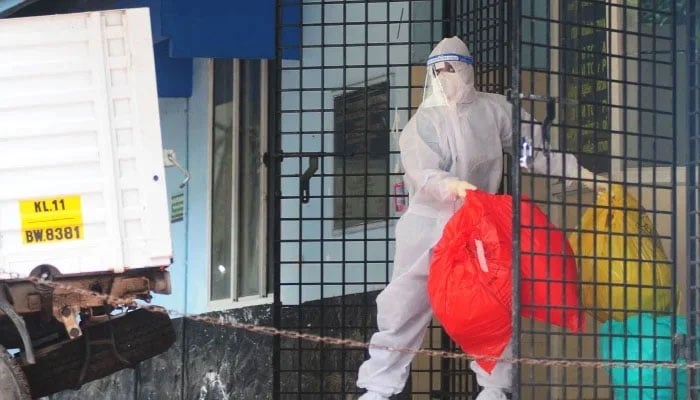
Rawalpindi:Recent emergence of Nipah virus, a deadly zoonotic virus, has caused uproar among media and public after its outbreak in India’s eastern state of West Bengal and as the virus spreads from animals to humans, person to person and through consumption of contaminated food, it is likely that outbreaks can continue to spread.
Keeping in view the presence of Nipah virus in Pakistan, there has not been any evidence of active Nipah virus circulation, at least to date, but still the health planners are on high alert and the federal government has already ordered a strict and enhanced surveillance at all entry points of the country.
Nipah virus is a serious infection with a fatality rate ranging from 40 percent to 70 percent. It affects the brain and lungs, causing swelling to the brain and developing breathing problems. Almost half of the patients contracting the virus die of the disease. Health experts say that it is time to think about developing an urgent strategy to avoid possible appearance and spread of Nipah virus in Pakistan.
The most important message for the public is to follow infection prevention control standard operating procedures at all levels, at home, work places and at hospitals, said Head of Department of Infection Diseases of Rawalpindi Medical University at Holy Family Hospital Professor Dr. Muhammad Mujeeb Khan while talking to ‘The News’ on Friday.
He added the three RMU allied hospitals including HFH, Benazir Bhutto Hospital and Rawalpindi Teaching Hospital are well prepared to deal with Nipah virus suspects or cases. The RMU has also planned to issue an advisory, a protocol to manage Nipah virus suspects if reported, said Professor Mujeeb.
As looking into the disease’s appearance and possibility of its transmission in Pakistan, we epidemiologically know that international air travel remains a most important risk factor, he said. The most common symptoms of Nipah virus disease are fever, headache, muscle pain, sore throat, fatigue, vomiting while the severe symptoms include encephalitis.