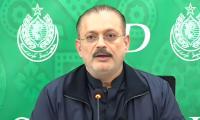
KARACHI: Senior Vice President of Federation of Pakistan Chambers of Commerce and Industry (FPCCI) Saquib Fayyaz Magoon has termed the recently finalised free trade agreement between India and the European Union a “serious challenge” to Pakistan’s export base.
In a statement on Thursday, Magoon said that after facing defeat on the battlefield, India has now “opened an economic front” by signing trade agreements with multiple countries, including the EU. He cautioned that the deal could erode Pakistan’s competitive edge in European markets.
Despite Pakistan’s GSP Plus status, which allows duty-free access for nearly 80 per cent of its exports to the EU, the country’s textile exports stand at $6.2 billion, only marginally higher than India’s $5.6 billion, despite India facing a 12 per cent tariff. “Once India secures zero-rated access under the EU deal, Pakistan’s advantage will vanish and our exports could suffer a severe blow,” he warned.
Magoon stressed that Pakistan risks losing its foothold in the European market if urgent corrective measures are not taken. “Once a market is lost, regaining entry is extremely difficult,” he said, urging the government to act decisively.
He called for immediate steps, including reducing electricity tariffs to nine cents per unit, simplifying the tax regime, and offering incentives to exporters. “The government must declare an export emergency and adopt industry-friendly policies to safeguard Pakistan’s economic interests,” he emphasised.
Drawing a parallel with military success, Magoon remarked: “Just as the armed forces secured victory on the battlefield, the business community now needs government support to win this economic war.”