KARACHI: As the Federal Constitutional Court upheld the legality of the super tax on Tuesday, analysts warned that while the ruling provides short-term fiscal stability it could weigh on long-term investment and wealth creation.
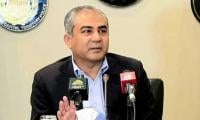
Ehsan Malik, former chairperson of the Pakistan Business Council (PBC), said the tax, initially intended as a one-time measure, has now become an indefinite levy at higher rates. In his comments to The News, he said that his “comment is not about the verdict but about the justification of perpetuating a tax that was levied for a year for a special purpose but has now become an indefinite levy and that too at an enhanced level than when first introduced.”
He added that “by burdening the formal sector with predatory taxes like the super tax, the government is discouraging wealth creation and encouraging fragmentation. Thus, taxpayers would rather remain small or else move abroad if they can. There is another tax called the capital value tax levied on declared foreign assets. To avoid that as well as the super tax, many potential investors have moved abroad.”
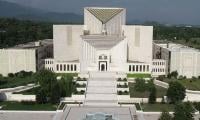
On Tuesday, the three-member bench, led by Chief Justice Aminuddin Khan, ruled that Sections 4-B and 4-C of the Income Tax Ordinance, 2001, are constitutionally valid and within parliament’s exclusive authority to legislate taxation. The ruling reverses earlier high court decisions that had challenged the taxes on grounds of alleged retrospectivity, discrimination and double taxation.
Senior counsel Hafiz Ahsaan Ahmad Khokhar, who was representing the Revenue Division secretary, said the FCC safeguarded an estimated Rs310 billion in public revenue.
The ‘super tax’ is the additional taxation that the government applies on the corporate sector for a specific purpose. The tax was initially imposed by the PML-N government in 2015 as a one-time measure under a money bill, with the stated purpose of rehabilitating areas affected during Operation Zarb-e-Azb against terrorists.
Previously, an additional 5.0 per cent super tax was levied on annual profits exceeding Rs300 million. But in 2022, the super tax, also dubbed ‘poverty alleviation tax’, was applied to individuals earning over Rs150 million annually, with a maximum rate of 10 per cent.
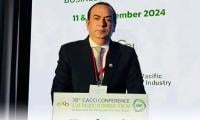
Former adviser to the Ministry of Finance Dr Khaqan Najeeb said that the “verdict upholding the super tax by the Federal Constitutional Court brings overdue legal certainty at a moment when fiscal clarity is critical. In the short term, the decision clearly helps. It secures much-needed revenues, supports fragile budget arithmetic and reinforces Pakistan’s credibility with external partners, including the International Monetary Fund. By closing a prolonged period of litigation and ambiguity, the ruling strengthens the government’s ability to manage near-term macroeconomic risks and maintain stability.”
But he added that “the super tax should be viewed strictly as an extraordinary and temporary instrument, not a permanent feature of the tax system. Continued reliance on ad-hoc levies on already documented and compliant sectors risks dampening investment, squeezing retained earnings and deepening perceptions of policy unpredictability. In an economy grappling with weak private investment and jobless growth, these signals are costly.”
In 2022, when the government increased the tax rate, analyst Tahir Abbas, in an interview to Geo, had said that the super tax would have a negative impact of around 13-15 per cent on the profitability of listed companies.
Then, the government had imposed the super tax on the following 13 sectors: cement; steel; banking; airlines; textile; automobile assembling; sugar mills; beverages; oil and gas; fertiliser; cigarettes; chemicals; and LNG terminals.
The News reached out to the Pakistan Banks Association (PBA) but it said it could not provide a comment within the requested timeframe.
Per Malik, “Notwithstanding the judgment, the government should provide a clear roadmap to phase down and then withdraw both super and capital value taxes to encourage wealth creation and investment. Pakistan’s investment to GDP ratio is half that of India and Bangladesh. Moreover, the corporate and the marginal personal tax rates need to be brought down to 25 per cent to be in line with regional benchmarks.”
Najeeb also thinks that “over the medium term, Pakistan must shift away from emergency taxation towards a broader, more neutral tax base with improved compliance and lower marginal rates. The real test now is not enforcing the super tax indefinitely, but phasing it out responsibly as fiscal space improves, ensuring short-term stability does not undermine long-term growth.”