LAHORE: Whenever reform initiatives falter in Pakistan, whether it concerns taxation, energy pricing, documentation or state-owned enterprises, the explanation offered is that the poor will resist; and political backlash and instability will increase.
The poor and the general public are not the principal opponents of reforms in Pakistan. In fact, they are its primary victims. The real resistance comes from powerful, organised and well-connected interest groups that benefit from the status quo and possess the means to block change.
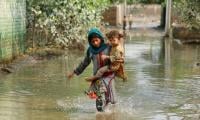
Pakistan’s poor have little capacity to obstruct reform. They do not finance elections, control markets, influence media narratives or mobilise trade associations. Their political voice is weak, fragmented and largely reactive. When they protest, it is not against reform itself but against sudden price shocks that threaten survival. This distinction matters. A daily wage earner objecting to an abrupt electricity tariff hike is not defending inefficiency or corruption; he is reacting to the absence of protection against inflation in an already fragile household budget.
In contrast, the most effective resistance comes from organised business lobbies and cartelized sectors. Industries such as sugar, cement, fertilizer, real estate, transport and retail trade have developed deep-rooted mechanisms to block competition, taxation, and regulation. These groups are small in number but highly coordinated. They fund political campaigns, influence policy design, and possess the ability to create artificial shortages or market disruptions when threatened. Their interests are routinely presented as national interests — employment, food security or industrial survival — while the cost is borne by consumers and taxpayers.
Politicians play a crucial, though often misunderstood, role in this dynamic. They are not always the originators of resistance but its facilitators. Pakistan’s electoral politics is heavily dependent on financing by traders, industrialists, and large landowners. As a result, reforms that impose losses on these groups are diluted, delayed, or quietly shelved. Short electoral cycles further discourage politicians from pursuing reforms whose benefits accrue in the long term while costs are immediate.
The bureaucracy adds another layer of inertia. Resistance here is rarely ideological; it is institutional. Reforms that reduce discretion through automation, transparency and rule-based systems threaten informal authority and rent-seeking opportunities. Moreover, in an environment of weak legal protection and aggressive accountability, civil servants often respond to reform by slowing implementation to avoid risk. Files move, committees are formed, but outcomes remain unchanged.
Elite rent-seekers — particularly in land, real estate and agriculture — also play a significant role. Agricultural income remains largely untaxed, property is undervalued, and speculative gains escape scrutiny. These sectors generate unearned income protected by political influence, not productivity. Their opposition to reform is strategic and sustained.
By comparison, blaming the poor for reform failure is both inaccurate and unfair. The poor have consistently demonstrated an ability to adapt when reforms are credible and evenly applied. Pakistan has repeatedly seen public acceptance of difficult measures when they are perceived as fair — such as documentation drives tied to service delivery or targeted subsidy programs like BISP. What generates resistance is not reform, but selective reform: when elites are exempt and burdens fall disproportionately on those least able to bear them.
The persistence of informality further complicates reform. Informality is not confined to the poor; it extends across traders, professionals and even large firms. It creates a system where visibility is penalised and evasion rewarded. In such an environment, reform threatens not livelihoods but privileges. The fear of becoming visible — of paying taxes, complying with regulations and competing fairly — drives resistance far more than poverty ever could.
Pakistan’s reform problem, therefore, is not the readiness of its social society but political economy. The country does not lack sound policy proposals. It lacks reform coalitions strong enough to overcome organized resistance. Successful reform requires confronting privilege before asking for sacrifice, sequencing change to protect the vulnerable, and ensuring that rules apply uniformly. Pakistan’s poor are not standing in the way of reform — they are standing at the receiving end of its absence.