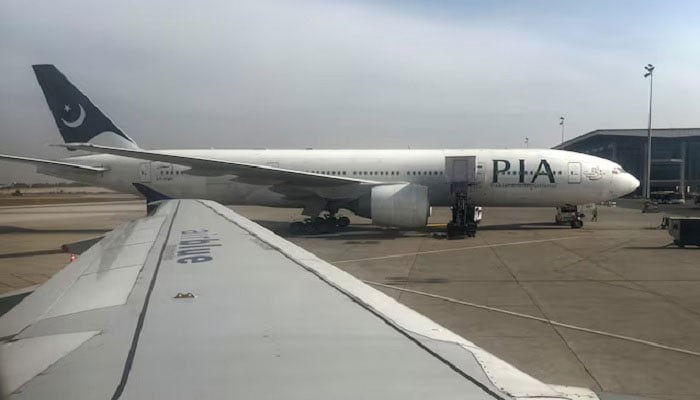
Early last year, the Competition Commission of Pakistan (CCP) issued a press release celebrating the recovery of a long-standing penalty of Rs10 million from Pakistan International Airlines (PIA), originally imposed in 2009 for abusing its dominant position by excessively increasing Hajj fares in 2008.
The announcement was projected as a regulatory success story, proof that the commission could enforce its decisions even after years of litigation. However, the press release told only half the story.
What it failed to disclose was that the CCP’s original order went far beyond imposing a monetary penalty. On account of discriminatory pricing between Hajj pilgrims and regular passengers on scheduled flights, PIA had been explicitly directed to calculate the difference in fares and refund the excess amount to affected Hajjis. These were pilgrims who had travelled with PIA during the short-duration Hajj season of 2008 and had paid significantly higher fares compared to ordinary passengers. The order required PIA to work out a mechanism to identify all such pilgrims, ensure refunds within two months, and submit a compliance report to the commission within four months.
There is little public information on whether this consumer restitution was ever implemented. The CCP had found that PIA misused its dominant position by unreasonably increasing Hajj airfares from Rs38,500 to Rs70,000 for southern routes and from Rs46,200 to Rs85,000 for northern routes compared to the 2007 Hajj season. Despite establishing abuse of dominance, the commission imposed what it described as a ‘token’ penalty of Rs10 million, taking a lenient view in line with its stated policy of promoting good market conduct rather than penalising undertakings. Even this modest penalty took more than 17 years to reach recovery.
The case spent years moving through the Competition Appellate Tribunal (CAT) and also reached the Supreme Court of Pakistan, which ultimately affirmed that CAT was the appropriate forum for adjudication. Following multiple hearings, the appeal was eventually dismissed due to the non-appearance of PIA’s counsel. Only after the lapse of the appeal period did the CCP exercise its enforcement powers by attaching the airline’s bank accounts to recover the penalty amount.
By the time enforcement concluded, the consumers at the heart of the case – the Hajj pilgrims – had effectively disappeared from the regulatory narrative. The penalty was recovered, but the promise of compensation remained undocumented. This highlights a persistent flaw in Pakistan’s regulatory enforcement: penalties are pursued, but consumer restitution is treated as secondary, if not optional.
This long wait for compensation is mirrored in another high-profile aviation case that remains far from a final resolution. In a landmark ruling, an Islamabad District and Sessions Court ordered another Pakistani airline to pay Rs5.41 billion in compensation to victims of a 2010 plane crash, rejecting all appeals filed by the carrier. The Pakistan Civil Aviation Authority’s investigation classified the crash as a “Controlled Flight into Terrain (CFIT)”, attributing it to pilot error, violations of standard operating procedures, poor cockpit resource management and challenging weather conditions.
Despite these findings, justice for victims’ families has been slow and exhausting. The district court dismissed eight separate appeals filed by the airline, imposing a fine of Rs1 million per appeal for wasting judicial time. Yet appeals filed by the victims themselves remain pending before the Islamabad High Court, prolonging an already painful process. More than a decade after the tragedy, full and final compensation is still elusive.
These cases highlight a deeper structural problem. Compensation in consumer and civil cases is meant to restore individuals to the position they were in before the harm occurred. However, prolonged litigation and endless appeals dilute the very purpose of compensation. Delays erode the value of monetary relief and impose additional emotional and financial burdens on consumers.
The imbalance between businesses and consumers is stark. Corporations retain teams of lawyers on permanent payrolls and draft contracts carefully designed to minimise liability. Consumers, on the other hand, must arrange legal representation at their own expense, often without the resources to sustain long legal battles. This disparity discourages individuals from approaching judicial or quasi-judicial forums.
It is therefore no surprise that in many regulatory proceedings, consumers are not the complainants. Instead, cases are initiated suo motu or on the basis of media reports, leaving regulatory authorities with broad discretion over whether – and how vigorously – to pursue enforcement. While such powers are important, they should not substitute for a system that actively enables and protects consumer participation.
Until Pakistan’s legal and regulatory institutions prioritise timely enforcement and meaningful consumer restitution alongside penalties, justice will remain procedural rather than substantive.
The writer is the CEO of TheNetwork for Consumer Protection and a member of the 19-member Advisory Council of Consumers International. He can be reached at: [email protected]