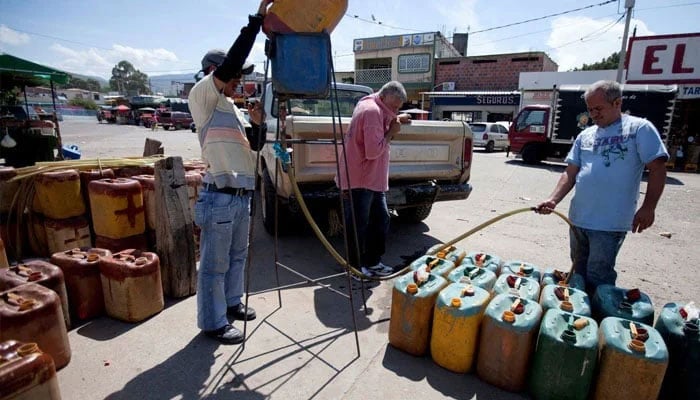
KARACHI: Around four billion litres of petroleum products, out of a total annual consumption of 18 billion litres, are smuggled into the country, a government report has revealed.
According to a report by a government committee formed to probe the low offtake of petroleum products, particularly high-speed diesel (HSD), last year, smuggling across porous borders has severely disrupted the country’s fuel demand-supply balance and caused substantial revenue losses.
The report noted that the influx of smuggled fuel has adversely affected the legal sales of oil marketing companies (OMCs), forcing them to cut upliftment from local refineries amid depressed market conditions. Conversely, abrupt declines in smuggling — such as during the Iran-Israel conflict, when border closures were imposed — have led to localised shortages, particularly in Balochistan.
To assess the scale of the issue, a joint team from the Oil and Gas Regulatory Authority (Ogra) and the Petroleum Division visited Quetta and held meetings with the local administration, OMC representatives and dealers.
The report estimated that of the approximately 18 billion litres of annual petroleum product sales, motor spirit (MS) and HSD, between two and four billion litres are smuggled from Iran, resulting in annual revenue losses of Rs200–400 billion. Of this volume, around 85 per cent comprises HSD and 15 per cent MS, entering the country through both land and sea routes.
Provincial consumption data showed that 45 per cent of petroleum products are consumed in Sindh, 25 per cent in Punjab, 25 per cent in Khyber Pakhtunkhwa (KP) and 30 per cent in Balochistan. Smuggled MS from Iran is consumed predominantly in Balochistan, with estimates placing the share at around 90 per cent.
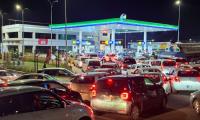
The report highlighted the significant impact of smuggling on both the fuel market and government revenues, noting that an anti-smuggling drive targeting illegal petrol stations has already been launched in collaboration with the Federal Board of Revenue, the Directorate General (Oil), Ogra, the Department of Explosives and the Ministry of Interior.
In parallel, Ogra has initiated a phased digitisation programme for the oil supply chain. In the first phase, a GIS-based mobile application, Raahguzar, has been introduced to identify illegal pumps. In the second phase, Ogra, with support from the Punjab Information Technology Board, is integrating enterprise resource planning systems and oil tanker trackers into a centralised monitoring system at Ogra and the FBR.
The third phase, both cost- and time-intensive, envisages the digitisation of around 12,000 licensed OMC outlets. For this purpose, Ogra has engaged software firms to pilot projects that will retrieve sales data from mechanical dispensers and transmit it to a digital platform within 120 days.