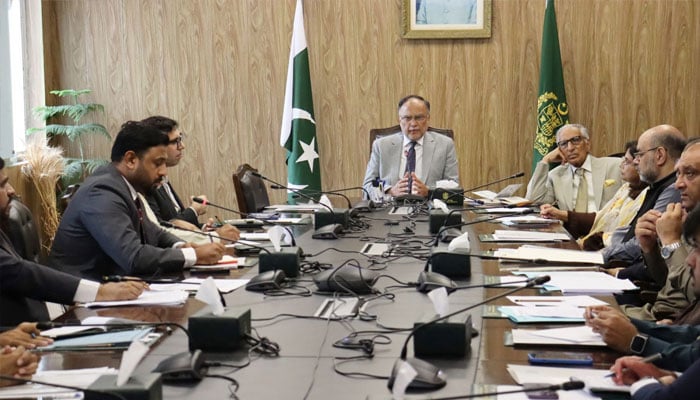
ISLAMABAD: The Committee on Civil Service Reforms has studied human resource practices of Pakistan Army, corporate sector and global experience to reshape the country’s civil bureaucracy to meet the modern-day challenges with emphasis on reforms in areas like training, recruitment, performance management, compensation and institutional restricting.
The committee, under the chairmanship of Minister for Planning, Development and Special Initiatives Ahsan Iqbal, has found the present system outdated and, therefore, is in the process of finding a solution for overhauling the civil service structure of the country.
It found the Pak Army human resource practices quite impressive where structured pyramid hierarchy is strictly followed on strong institutional basis. Unlike the civil bureaucracy where every government servant considers it his right to be elevated to the top-most echelons, in army if 100 percent Captains are promoted to the post of Major, 64 percent get to the ranks of Lt-Col, 11 percent to Brig and only 5 percent as Maj General. Army has the system psychometric, emotional intelligence and leadership assessments during recruitment whereas top performing cadets are posted in various arms in an equitable manner and have equal opportunities for career progression; cadets are matched with available posts on the principle of “Right person for the right job”, emphasising specialisation; premium is placed on rigorous and mandatory trainings through ensuring quality faculty/trainers; multi-tier evaluation of evaluator performance in staff, field and training roles; evaluation of evaluator, and; promotions are based on objective evaluations by promotion boards through collective wisdom not individual discretion i.e. 60 percent ACR/Ground Performance, 20 percent training, 10 percent discipline and 10 percent war.
Learning from Army’s model, the committee recommends that the promotion board in the case of civil servants may evaluate the performance of officers well before board meetings. Board may interact with reporting and counter signing officer of each officer. Feedback may be included in PER of reporting and counter signing officers if their assessment is grossly deviant from an officer’s overall career performance. The committee also suggests introduction of a differentiated three-tier rating system with performance ceilings. The committee is also inclined to follow the Army model for training of civil servants. It recommends that selection for management courses -- MCMC/SMC/NMC -- of candidates should be made through exam based competitive process with up to three attempts to qualify for each course. Officers who do not qualify after three attempts may be given the option of early retirement.
Training duration, training methodology, quality of instructors and curriculum may be enhanced with 50 percent duration of training for domain specific. In each grade from BS-17 to BS-20, officers may be required to complete two domain-specific short courses developed by their respective Specialized Training Institutes. Insights from corporate sector organisational performance were also studied by the committee to prepare the reforms for civil service. It suggests that performance be linked with individual KPIs to ensure accountability and strategic goal delivery at all levels; hiring of best “professional” talent and developing them into strategic leadership roles through targeted capacity-building, career progression frameworks and succession planning; performance-driven system where hiring, retention and separation decisions are based on transparent and data-driven performance evaluations; flexible work options, recognition programmes, mental health initiatives and values-based culture-building platforms for greater inclusion particularly for females; results-oriented performance system, integrating regular feedback, annual reviews, 360 evaluations and calibrated ratings to ensure fairness and alignment with institutional goals. The committee also looked into the global experience of civil service in countries like UK, India, Malaysia, New Zealand, South Korea, the UAE, Canada, Singapore, South Africa and other countries.