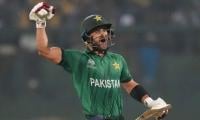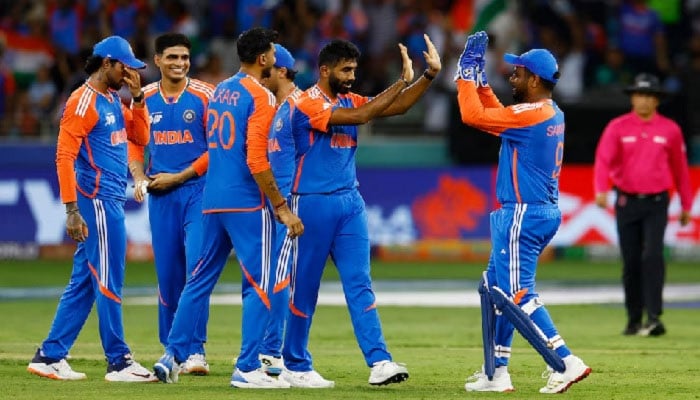
For a country that likes to project itself as the world’s largest democracy and a responsible global player, India’s growing habit of weaponising sport – particularly cricket – tells a far less flattering story. Under the Modi government, politics has seeped into every arena, and cricket is now being turned into another instrument of petty point-scoring. This pattern is neither new nor subtle. From unilaterally holding the Indus Waters Treaty in abeyance after the Pahalgam attack, to refusing to travel to Pakistan for the Champions Trophy, to the now-infamous refusal of Indian players to shake hands with their Pakistani counterparts during the Asia Cup, India has repeatedly blurred the line between sport and state policy. The role of the Board of Control for Cricket in India is central to this story. The BCCI’s outsized financial clout and influence within the ICC have long been criticised, but recent developments expose an even more troubling trend. The pressure reportedly exerted on the Kolkata Knight Riders to release Bangladesh bowler Mustafizur Rahman, widely seen as punishment for Bangladesh’s political stance against the India-backed Sheikh Hasina autocracy, crosses a dangerous line. It is one thing to manage team combinations; it is quite another to settle political scores through franchise cricket. Bangladesh’s response has been clear: an indefinite ban on the telecast and promotion of the IPL, followed by a formal request to the ICC to move its T20 World Cup matches out of India. That Bangladesh has said it will not travel to India under current conditions for the 2026 T20 World Cup should be a wake-up call.
The irony is that India’s own conduct is steadily isolating it. While it may still dominate the ICC’s finances, goodwill is eroding. The perception that the BCCI acts at the behest of the Modi government and its Hindutva ideology is gaining ground. The attempt to sabotage international cricket in Pakistan, the bullying of smaller boards, and now the targeting of Bangladeshi players all feed into this. Those who argue that politics should be kept off the sports field are, in principle, right. Cricket diplomacy once played a constructive role in easing tensions between India and Pakistan. But it is precisely the Modi regime that has abandoned this tradition. After its setbacks in the May conflict, the regime appears to have found comfort in petty postures – a snub here, a handshake refused there. Even former Indian cricketers have expressed discomfort at their captain’s political posturing during the Asia Cup.
There is also a broader cost that India seems unwilling to acknowledge. As scrutiny of its human rights record and treatment of religious minorities intensifies, the possibility of sporting boycotts is no longer unthinkable. If countries begin to reconsider tours or demand neutral venues, the reputational damage to Indian cricket will be immense. Financial muscle cannot indefinitely compensate for moral isolation. Cricket has always been more than a game in South Asia. To reduce it to a tool of vindictiveness is to cheapen it. If India continues down this path, it will discover that even the most powerful boards can find themselves playing alone.